Hey there, fellow machining enthusiasts! I’m a supplier of lathe chucks, and I’ve been getting a lot of questions lately about how lathe chuck indexing works. So, I thought I’d put together this blog post to break it down for you in a way that’s easy to understand. Lathe Chuck
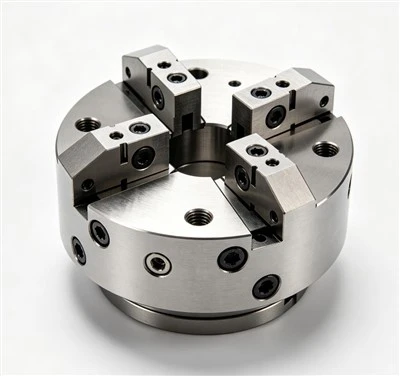
Let’s start with the basics. A lathe chuck is a device used to hold a workpiece securely in place on a lathe. Indexing, on the other hand, is the process of rotating the workpiece to a specific angle or position. Lathe chuck indexing allows you to perform multiple operations on different sides of a workpiece without having to remove and re – position it manually. And that’s a huge time – saver.
The Mechanics of Lathe Chuck Indexing
The key to understanding how lathe chuck indexing works is to look at the components involved. Most lathe chucks used for indexing are either three – jaw or four – jaw chucks.
Three – Jaw Chucks
The three – jaw chuck is super popular because it’s self – centering. The jaws move in unison when you turn the chuck key. For indexing on a three – jaw chuck, some models come with graduations marked on the chuck body. These graduations help you to approximate the rotation angle.
You can also use a dividing plate or an indexing attachment. The dividing plate has a series of holes or slots arranged in a precise pattern. By using a pin or a locking mechanism that fits into these holes, you can accurately rotate the chuck to the desired angle. For example, if you want to divide a circle into six equal parts, you’d find the appropriate hole spacing on the dividing plate and use it to index the chuck six times around the rotation.
Four – Jaw Chucks
A four – jaw chuck, unlike the three – jaw one, offers more flexibility as each jaw can be adjusted independently. This means you can hold irregularly shaped workpieces. But when it comes to indexing, it can be a bit more involved.
One common way to index a four – jaw chuck is by using a dial indicator. You first set up the workpiece in the chuck and use the dial indicator to make sure it’s centered as accurately as possible. Then, to rotate the workpiece, you can use a set of reference marks. Some four – jaw chucks have built – in scales on the jaws or the chuck body. You can also use external devices like an indexing head.
An indexing head is a separate accessory that can be attached to the lathe. It has a set of gears and a crank. By turning the crank, you can rotate the chuck and the workpiece to a precise angle. The gears in the indexing head are designed in such a way that they allow you to achieve different indexing ratios. For instance, you can easily divide a full rotation into 2, 3, 4, or even more equal parts depending on the gear configuration.
The Importance of Accurate Indexing
Accurate indexing is crucial in many machining operations. If you’re making a hexagonal bolt, for example, you need to turn the workpiece exactly 60 degrees between each flat surface you cut. If the indexing is off even by a small margin, the bolt won’t fit correctly into its corresponding nut.
In the production of gears, accurate indexing is even more critical. Gears need to have teeth that are evenly spaced and of the correct shape. Any error in indexing during the machining process can lead to gears that don’t mesh properly, which can cause noise, vibration, and premature wear in the machinery they’re used in.
Common Challenges in Lathe Chuck Indexing
Of course, like any machining process, lathe chuck indexing isn’t without its challenges.
One of the biggest problems is backlash. Backlash occurs when there’s a small amount of play or movement in the gears or components of the indexing system. When you try to rotate the chuck to a specific position, the backlash can cause the actual rotation to be slightly different from the intended one.
Another challenge is workpiece slippage. If the chuck doesn’t grip the workpiece tightly enough, the workpiece can slip during the indexing process. This can throw off your measurements and ruin the accuracy of your machining.
To deal with backlash, you can use anti – backlash devices. These devices are designed to take up the slack in the gears and minimize the effects of backlash. For workpiece slippage, you can make sure the jaws are clean and free of debris, and that they’re properly adjusted to grip the workpiece firmly.
Maintenance for Optimal Indexing Performance
To keep your lathe chuck indexing in top shape, regular maintenance is a must.
Clean the chuck regularly. Use a brush and some cleaning solvent to remove chips, dirt, and coolant residue from the jaws and the chuck body. This not only helps to prevent workpiece slippage but also keeps the moving parts functioning smoothly.
Lubricate the chuck as well. The moving components, such as the gears in an indexing head or the screw mechanisms that move the jaws, need proper lubrication to reduce friction and wear. Use a high – quality lubricant recommended by the chuck manufacturer.
Check the accuracy of the indexing system periodically. You can use tools like a precision protractor or a coordinate measuring machine. If you find that the indexing accuracy has decreased, it might be time to adjust or repair the chuck or its accessories.
Why Choose Our Lathe Chucks for Indexing
Now, I know what you’re thinking: "Why should I buy a lathe chuck from you?" Well, let me tell you.
Our lathe chucks are made from high – quality materials. We use premium alloys for the jaws and the chuck body, which means they’re durable and can withstand the rigors of heavy – duty machining.
When it comes to indexing, our chucks are designed with precision in mind. Whether it’s the graduations on the chuck body or the compatibility with different indexing attachments, we’ve made sure that you can achieve accurate indexing easily.
We also offer excellent customer support. If you have any questions about how to use the chuck for indexing or if you run into any problems, our team of experts is always ready to help. We’re not just selling you a product; we’re providing you with a solution and ongoing support.
Milling Tool If you’re in the market for a lathe chuck for your indexing needs, don’t hesitate to get in touch. Whether you’re a small – scale hobbyist or a large – scale manufacturing company, we have the right chuck for you. Reach out to us for a quote and let’s discuss how we can meet your specific requirements.
References
- Machinery’s Handbook: A comprehensive reference for all things related to machining, including lathe chuck indexing.
- Lathe manufacturers’ technical documentation: Provides detailed information about the design and operation of lathes and their chucks.
- Industry magazines and online forums: Often contain real – world experiences and tips from other machinists about lathe chuck indexing.
Shun Wei Precision Technology Co., Ltd.
With abundant experience, we are one of the most reliable lathe chuck manufacturers and suppliers in China. We warmly welcome you to buy durable lathe chuck at competitive price from our factory. If you have any enquiry about cooperation, please feel free to email us.
Address: Room901, Building2, Yijing Apartment, Northeast side of the intersection of Central Avenue and East Fifth Road, Tianjin Free Trade Zone (Airport Economic Zone)
E-mail: sale@sw-csd.com
WebSite: https://www.tjswprecisiontool.com/
