If you’ve ever ordered a small, heavy item from an online shop, or stacked a handful of boxes on a pallet for a local shipment, you’ve probably come across mini stretch film—even if you didn’t realize it. For years, I’ve been supplying this material to small businesses, e-commerce warehouses, and even local manufacturers, and one question I get asked more than any other is: “What is mini stretch film made of?” It’s not just a random plastic wrap, and the answer ties directly to why this stuff works so well for tight, small-scale applications versus the big industrial rolls you see on warehouse pallets. Mini Stretch Film
Let me start with a quick personal anecdote: Last month, a customer who runs a craft soap studio reached out because she’d been using regular household plastic wrap to bundle batches of her soap bars for shipping. It kept tearing, and she’d end up wasting half a roll per week. When I sent her a sample of our mini stretch film, she texted me three days later saying it only took her 10 minutes to wrap 50 soap boxes, and not a single one had split open mid-transit. That difference boils down entirely to what the film is made of.
Most mini stretch film, the kind used for small bundles, individual items, or small pallets, is built from linear low-density polyethylene, or LLDPE for short. If you’ve heard of regular plastic wrap, that’s usually low-density polyethylene, or LDPE—so LLDPE is a close cousin, but with a very different chemical structure that makes it better for stretching and holding tension. Here’s why that matters: LDPE is soft, easy to tear with a little force, and doesn’t snap back when stretched. LLDPE, on the other hand, has short, uniform side chains attached to its main polymer backbone. When you pull LLDPE into stretch film, those chains slide past each other smoothly, instead of breaking, which lets the film stretch up to 300% of its original length without splitting. That’s exactly the quality that makes mini stretch film so useful—you can wrap it tight around a bundle, and it stays secure without needing a lot of extra material.
Now, not all mini stretch film is 100% LLDPE. Some lower-cost variants add a small amount of LDPE to cut production costs, but that comes with tradeoffs. A few years back, I tested a budget mini roll from a big box store for a client who wraps small metal parts. That film stretched just fine at first, but after being stored in a humid backroom for a week, it turned brittle and cracked when he tried to use it. The LDPE added in that mix didn’t hold up to moisture, and it didn’t have the same tear resistance as pure LLDPE. For most customers, especially those shipping items that need to stay protected, pure LLDPE is the way to go.
Another key ingredient in mini stretch film is additives. These aren’t harmful chemicals, by the way—they’re compounds mixed into the polymer resin during manufacturing to tweak the film’s properties for specific uses. Let’s break down the most common ones:
First, slip agents. If you’ve ever tried to wrap a bundle and had the film stick to itself before you could pull it tight, you know how frustrating that is. Slip agents are tiny molecules that coat the surface of the LLDPE, creating a thin, smooth layer that lets the film unwind evenly from the roll and stretch without sticking. For our mini stretch film, we use a food-grade slip agent, which is why it’s safe to wrap items that will come into contact with food—like the soap studio’s bars, or pre-packaged bakery goods a local café ships out.
Then there are anti-block agents. Anti-block agents do the opposite of slip agents: they prevent layers of the film from sticking together when it’s wound up onto the small rolls we supply. Without anti-block, the end product would be a solid, unrollable lump of plastic. We use fine, food-grade silica as an anti-block agent in our film, which is inert, so it doesn’t affect the structural quality of the film or what it’s wrapped around.
For customers who need their film to work in extreme temperatures—like a warehouse that gets cold in the winter, or a shipment going to a hot climate—we add heat stabilizers or cold stabilizers. Last winter, a customer in a northern retail shop called me because his standard mini film was tearing when he tried to wrap ice sculptures for holiday displays. We sent him film with a cold stabilizer, and he told me it worked perfectly even when the temperature was 15 degrees outside. That stabilizer keeps the polymer chains flexible, so they don’t get stiff and break in cold weather. We also add UV stabilizers for customers wrapping items that will be stored or shipped outside, so the film doesn’t turn yellow or crack from sunlight exposure.
A question I get a lot is: “Is mini stretch film recyclable?” That’s a big one right now, as more small businesses want to reduce their environmental impact. The short answer is: yes, most pure LLDPE mini stretch film is recyclable, but only if it’s kept separate from other plastic types. When we produce our film, we mark every roll with a #4 plastic recycling symbol, which is the standard for LLDPE and LDPE. That said, I always advise customers to check with their local recycling facility first, because many curbside programs don’t accept stretch film—it’s too thin and gets caught in recycling machinery. That’s why we also offer a small selection of post-consumer recycled LLDPE (PCR) mini film for customers who want to be even more sustainable. Our PCR film is made from 80% recycled LLDPE from industrial stretch film scrap, and 20% virgin LLDPE to keep its strength consistent. It works exactly the same as virgin LLDPE film, but it reduces waste by keeping plastic out of landfills.
I should also clarify what mini stretch film isn’t. A lot of people confuse it with shrink wrap, which is a different material entirely. Shrink wrap is usually made from polyethylene terephthalate (PET) or PVC, and it shrinks when heat is applied. Mini stretch film, by contrast, is stretch-activated—you pull it tight around an item, and it retracts just enough to hold that tension securely. That makes it much faster to use for small bundles: you don’t need a heat gun, which saves time and money, especially for small businesses that don’t have a lot of space for extra equipment.
Over the years, I’ve learned that the best mini stretch film isn’t just about the material, but about how that material is processed. The way LLDPE is extruded and stretched during manufacturing makes all the difference in its performance. When we produce our film, we use a blown extrusion process, where the molten LLDPE is blown into a thin bubble and stretched both vertically and horizontally as it cools. That biaxial stretching aligns the polymer molecules, which gives the film its unique strength and stretchability. If a manufacturer uses a lower-quality extrusion process, the film will be uneven, tear easily, and not hold its tension as well. That’s why I’ve built my business on working with just a few trusted suppliers who use the right equipment to process LLDPE properly—cutting corners on production equals a bad product, and I never want to sell something that will let a customer down.
Let me share another example from last year: a customer who runs a small e-commerce store selling handmade jewelry. He was using cheap mini film from a discount supplier, and customers were returning items because the jewelry boxes were getting scratched during shipping. The cheap film was made with a mix of LDPE and LLDPE, and it had a lot of tiny, irregular spots that left tiny marks on the soft cardboard boxes. When he switched to our pure LLDPE film, he not only eliminated return issues, but he also started using less film per order because it was stronger—so his shipping costs went down too. That’s the kind of small win that makes this work worth it for me.
I think a lot of people overlook how much detail goes into a material as simple as mini stretch film, especially when you’re a small business trying to keep operations smooth. It’s not just plastic—it’s a product built to solve specific problems: keeping small bundles together, protecting items from dust and moisture, making shipping faster and cheaper. The base material is LLDPE, mixed with small amounts of food-grade additives to make it easy to use, durable, and safe for most applications, processed with care to ensure it performs when it matters most.
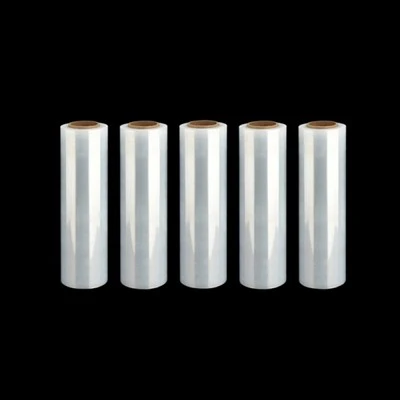
If you’re a small business owner, warehouse manager, or anyone who needs a reliable, easy-to-use stretch film for small bundles, give us a chance to supply your needs. Whether you’re shipping handmade goods, bundling hardware parts, or wrapping small pallets, we can help you find the right film that balances strength, cost, and sustainability. Don’t hesitate to reach out to discuss your specific needs—we’re here to work with you to find a solution that fits.
Weed Barrier Fabric References
- Plastic Industry Association. "Linear Low-Density Polyethylene (LLDPE): Properties and Applications." 2022
- European Plastics Converters. "Additives for Flexible Packaging Films." 2021
- Institute of Scrap Recycling Industries. "Post-Consumer Recycled Plastic Film Specifications." 2023
- Society of Plastics Engineers. "Blown Extrusion Processes for Stretch Film Manufacturing." 2020
Linyi Dongyi Import&Export Co., Ltd.
As one of the most professional mini stretch film manufacturers and suppliers in China, we offer a wide range of products with superior quality. We warmly welcome you to wholesale bulk customized mini stretch film from our factory. If you have any enquiry about quotation, please feel free to email us.
Address: 4 F, Zone A, Zhangjia Zhuxu Village, Lanshan District, Linyi City.
E-mail: donglai01972@gmail.com
WebSite: https://www.donglaipack.com/
