If you’ve ever stood in a commercial building lobby waiting for an elevator, glancing at a digital display to track car arrivals, you’ve interacted with an elevator guide system— the quiet, behind-the-scenes tool that moves thousands of people efficiently every day. As a supplier of these systems, I get asked a lot by building managers, architects, and even facility directors: “Are there local rules that dictate how I design, install, or maintain this technology?” The short answer is yes, and missing these regulations doesn’t just lead to fines—it can also create safety risks for building occupants. Let me break down what I’ve learned over 12 years in this industry, from working with small retail centers to 50-story office towers, about how local regulations shape elevator guide system use across the U.S. and beyond. Elevator Guide System

First, it’s important to clarify that elevator guide systems fall under two distinct regulatory umbrellas in most regions: building codes and accessibility standards, both of which are enforced at the local, state, and national levels. I’ve seen firsthand that many first-time building owners confuse the two, leading to costly oversights. For example, a few years back, a hotel developer in suburban Atlanta approached us after their initial guide system install failed local inspections. They thought their digital lobby displays were enough to meet code, but Georgia’s accessibility rules (aligned with the Americans with Disabilities Act, or ADA) required additional elements for non-visual users, like audio announcements for each elevator car’s location. That mistake set their project back two weeks and added $12,000 in rework costs—all because they didn’t check local nuances.
Let’s start with building codes, which are the backbone of elevator guide system regulations. In the U.S., most jurisdictions adopt the International Building Code (IBC), updated every three years, but they often add local amendments that can shift requirements. For instance, in New York City, the Department of Buildings (DOB) has stricter rules for high-rise buildings compared to other parts of the state. NYC’s Local Law 10 of 2019, which applies to buildings over 10 stories, mandates that elevator guide systems in lobbies, parking garages, and secondary entry points must provide real-time updates on car direction and load status—something the base IBC only recommends for structures over 40 stories. Why? NYC has 6,000+ high-rise buildings, and the DOB found that outdated, inconsistent guide systems led to 15% more pedestrian delays and a higher risk of crowding during peak hours. As a supplier, we had to redesign our standard guide system dashboard for NYC clients to include load alerts, a feature that’s optional in other markets.
Another key part of building codes is installation and maintenance standards. Local governments don’t just care about what the guide system does—they care about how it’s set up and serviced. Take Chicago, where the DOB requires annual inspections of all electronic elevator components, including guide system software, for buildings with more than 10 elevators. Last year, a coworking space in the Loop tried to skip a required software update for their guide system, assuming it was just a “digital tweak” that didn’t need city sign-off. They got a $5,000 fine—and worse, their guide system failed to sync with elevator cars during rush hour, leading to 20+ complaints from tenants about missed work meetings. We had to send a technician overnight to fix the sync, which was a big hit to their reputation and our timeline. This taught me that local regulations often treat elevator guide systems as safety equipment, not just convenience tools—so any change to the system, even a software update, needs to be documented and approved.
Accessibility standards are another critical layer, and here, local rules often align with ADA, but again, there are local twists. The ADA’s Accessibility Guidelines (ADAAG) require elevator guide systems to have both visual and audio components for people with visual impairments, but some states add specific rules for public spaces. For example, in California, the California Building Code (CBC) mandates that audio announcements for elevator guide systems must be at least 65 decibels in lobbies, but no louder than 80 decibels in quiet areas like hospital patient wings. Why? California’s Office of the State Architect (OSA) found that overly loud audio announcements can disrupt patients recovering in nearby rooms, while too quiet ones are impossible for people with hearing aids to pick up. Last year, we sold a guide system to a hospital in San Diego that had to adjust its audio output for two wings—something we never would have known if we hadn’t collaborated with local code officials during the design phase.
It’s not just commercial buildings, either. Residential properties have their own local rules for elevator guide systems. For example, in Washington, D.C., new apartment buildings with elevators must have guide systems that let residents use a smartphone app to call elevators from their units. The D.C. Department of Consumer and Regulatory Affairs (DCRA) says this reduces waiting times for residents with mobility issues, who often struggle to navigate crowded lobbies. A developer we worked with in D.C. tried to use a standard guide system without the app, and it failed initial inspections. We had to integrate our system with the building’s property management app, which added a few hundred dollars to the project cost but ensured compliance. This shows that even regulations targeting residential buildings shape how we design our systems—we now include a basic app integration as an optional feature for all D.C. clients, since we know it’s a standard requirement.
One of the biggest misconceptions I see is that local regulations only apply to new installations, not existing buildings. That’s not true—many cities have retrofit requirements for older structures. For example, Boston’s Local Law 126 of 2017 requires all buildings built before 1990 with elevators to update their guide systems to include ADA-compliant audio announcements by 2025. A senior living facility in Cambridge came to us last year, panicking because their current guide system only had digital displays, no audio. They were facing a $10,000 fine per quarter if they didn’t retrofit by the end of the year. We worked with their maintenance team to design a low-cost audio module that could sync with their existing elevator system, avoiding the fine and keeping residents safe and informed. This is why I always tell clients: regardless of whether you’re building new or retrofitting, you need to check your city’s timeline for elevator guide system updates.
So, how can building owners, managers, and even suppliers navigate these regulations without the costly mistakes I’ve seen? Here’s what I’ve learned over the years. First, never rely on national codes alone—always check your local building department’s amendments. For example, the IBC might not mention high-rise load alerts, but your city’s DOB might require them. Second, work with a local code consultant during the design phase, not after installation. We partner with independent code experts in every region we serve, which lets us flag requirements early—saving our clients time and money. Third, keep detailed records of all system installations, updates, and inspections. Local regulators often ask for proof of compliance, and having organized docs can avoid fines.
As an elevator guide system supplier, my goal isn’t just to sell hardware and software—it’s to make sure every client’s system is safe, efficient, and compliant. I’ve seen too many projects derailed by skipping the regulatory research, and I don’t want that to happen to any of my partners. If you’re a building manager, architect, or developer working on a project in need of a reliable, code-compliant elevator guide system, I’m here to help. We’ve designed, installed, and maintained systems for hundreds of properties across North America, and we know the local rules that apply to your area.
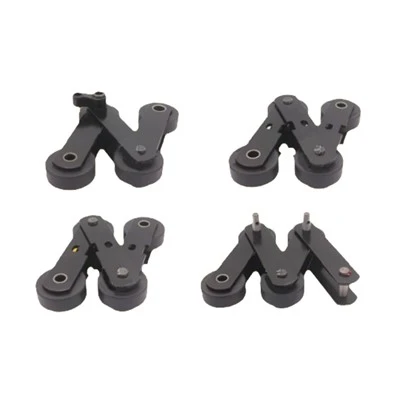
For more information about our elevator guide systems and how we can help you meet local regulations, connect with our team to discuss your project details. We’re ready to answer your questions, walk through compliance requirements, and deliver a solution that fits your building’s needs.
Elevator Guide System References
International Code Council. (2021). International Building Code.
U.S. Access Board. (2023). ADA Accessibility Guidelines for Buildings and Facilities.
New York City Department of Buildings. (2019). Local Law 10 of 2019: High-Rise Elevator Safety.
California Office of the State Architect. (2022). California Building Code Accessibility Provisions.
Boston Inspectional Services Department. (2017). Local Law 126: Elevator Retrofit Requirements.
Huzhou Kenai Elevator Technology Co., Ltd.
As one of the most professional elevator guide system manufacturers and suppliers in China, we also support custom service. We warmly welcome you to wholesale advanced elevator guide system made in China here from our factory. For more cheap products, contact us now.
Address: No. 6666, Qianghua West Road, Dongqian Street, Nanxun District, Huzhou City, Zhejiang Province, China
E-mail: info@kenailift.com
WebSite: https://www.kenaielevator.com/
