If you’ve driven past a wind farm at dawn, when the turbines are spinning but local homes still aren’t running their AC or charging EVs, or stared at a city’s blackout map during a summer heatwave, you’ve seen two of the biggest headaches holding our energy grids back: variable renewable energy and unpredictable demand spikes. As someone who runs a Battery Energy Storage System (BESS) supply business, I’ve spent years explaining to municipalities, utilities, and industrial clients that the solution isn’t just more solar panels or bigger power lines—it’s the smart battery systems that turn grid chaos into control. Let’s break down exactly what BESS does, why it’s non-negotiable for the smart grid of today and tomorrow, and why working with a partner who builds these systems to fit real-world needs is the difference between a functional grid and one that can keep up. Battery Energy Storage System

First, let’s ground this in what a smart grid actually is, because I still meet people who think “smart grid” is just a buzzword for fancy thermostats. A smart grid is an interconnected energy network that uses digital tech to monitor, distribute, and adjust power flow in real time—no more one-way delivery from a centralized power plant to your home. It’s supposed to reduce waste, lower costs, and keep the lights on, but it can’t do any of that if the energy coming in is inconsistent. Wind only blows when it blows, solar only works when the sun shines, and fossil fuel plants take hours to ramp up or down to meet sudden demand. That’s where BESS steps in as the smart grid’s storage and decision-making backbone.
The most obvious role of BESS is time-shifting energy—what a lot of folks call “peak shaving” and “valley filling.” Let’s take a concrete example: in a city like Los Angeles, demand for power hits a peak every weekday between 4 and 8 PM, when everyone gets home, turns on their AC, cooks dinner, and starts charging their EVs. Before BESS, utilities would crank up the dirtiest, most expensive peaker plants (usually natural gas or even diesel) to meet this demand, wasting fuel and passing those costs to customers. BESS solves this by storing excess energy during the “valley” hours—midnight to 4 AM, when demand is low and renewable energy is often abundant—then discharging that stored energy during the peak window. I recently worked with a municipal utility in Arizona that installed our BESS units at their substation; they cut their peak demand costs by 28% in the first year alone, and avoided running two of their three peaker plants entirely during summer months. That’s not a hypothetical number—that’s real savings for ratepayers, and real cuts in carbon emissions.
Then there’s the problem of intermittent renewables, which is the biggest barrier to scaling wind and solar to 100% of the grid. When a cloud passes over a solar farm, or a wind dies down, grid operators have to compensate fast—or risk voltage drops that cause blackouts. In Texas during the 2021 winter storm, for example, wind turbines froze solid, solar output dropped to nearly zero, and grid operators had no way to store the little power they had, leading to widespread outages that lasted days. BESS fixes that by acting as a fast-acting buffer. Our lithium-iron-phosphate (LFP) BESS units can charge or discharge in milliseconds, far faster than even the most responsive gas peaker plant, so they can smooth out those short-term dips and surges in renewable output. A client in Iowa, where wind generates 60% of the state’s electricity, told me that before our BESS, they had to curtail (waste) 15% of their wind energy on days with strong winds because there was nowhere to put it. Now, they store that excess energy and discharge it during calm periods, cutting curtailment to less than 2% and unlocking millions in extra revenue for the wind farms. That’s a win for everyone: wind farm operators get more money, customers get cheaper power, and the grid stays stable.
Another critical role for BESS in a smart grid is frequency regulation and voltage support. Grid stability depends on two core metrics: frequency (which should stay at 50 or 60 Hz, depending on the region) and voltage (which needs to stay within a narrow range) to keep appliances from getting damaged and to avoid outages. Traditional power plants adjust their output to keep these metrics steady, but they’re slow—they take seconds or minutes to react. BESS, on the other hand, can inject or absorb power in milliseconds, making it perfect for real-time grid adjustments. For example, if a large factory suddenly shuts down half its load, that would cause a frequency spike; BESS can absorb that excess power instantly, preventing a voltage surge that could blow out transformers or trip power lines. On the flip side, if a transmission line goes down, BESS can kick in within seconds to supply power to the affected area, a capability called “black start” support for smaller grids or microgrids. We recently deployed a 10 MWh BESS system for a hospital campus in Florida that acts as a microgrid backup; during Hurricane Ian last year, the main grid went down for 12 hours, and the BESS kicked in immediately, keeping the ER, refrigeration for vaccines, and critical care units running. Without that BESS, that hospital would have had to divert patients to other facilities or rely on noisy, polluting diesel generators.
Wait, but let’s be honest—BESS isn’t just for big utilities or hospitals. It’s a core part of making the grid accessible to everyone, especially when it comes to distributed energy resources (DERs). That’s the term for rooftop solar, small wind turbines, home batteries, and even EV chargers that regular people and small businesses own. A smart grid is supposed to integrate these DERs, but most homeowners with rooftop solar still export excess energy back to the grid at below-market rates, because there’s no way to store it locally. BESS solves that by acting as a bridge between individual DERs and the larger grid. For example, a small business with rooftop solar can pair it with a small BESS unit, store excess solar during the day, use it at night, and sell any extra back to the grid during peak hours—instead of sending it for pennies during the day. We’ve worked with a coffee roaster in Portland that installed our 500 kWh BESS unit alongside their rooftop solar; they now power 80% of their operation with solar and stored energy, cutting their monthly electricity bill by 45% and reducing their carbon footprint by 60%. That’s not just a business win—it’s how regular people and small businesses become part of the smart grid, not just passive customers.
I’ve also heard a lot of debate lately about whether BESS is reliable, especially when it comes to lifespan, safety, and scalability. That’s why I built my business around designing BESS systems for real-world use, not just lab tests. Too many suppliers sell generic battery packs that work fine in a climate-controlled warehouse but fail in extreme heat or cold. Our LFP batteries are tested to operate in temperatures from -20°F to 120°F, which is why we’ve got clients in Arizona, Alaska, and the Florida panhandle. We also build our BESS units with built-in fire suppression systems and real-time monitoring software that tracks every cell’s performance, so we can catch a potential issue before it becomes a hazard. Lifespan is another big one—our BESS units are designed to last 15 to 20 years, with a 80% capacity guarantee after 10 years, which means our clients get a solid return on investment, not a disposable battery that needs replacement every 5 years.
But let’s circle back to the core question: why is BESS non-negotiable for a smart grid? The smart grid’s whole purpose is to make energy more resilient, affordable, and sustainable. Without BESS, you can’t have high penetrations of renewables—you’re stuck with fossil fuel peaker plants and curtailment. You can’t have reliable backup during outages, especially as extreme weather events get more common. You can’t let regular people and small businesses participate in the grid, turning them from ratepayers into grid partners. BESS is the technology that turns a one-way, fossil-fuel-reliant grid into a flexible, two-way network that works for everyone.
Now, if you’re a utility exploring grid modernization, a business looking to cut energy costs, or a municipality planning for extreme weather resilience, you don’t need a one-size-fits-all battery—you need a BESS partner that listens to your specific needs. Maybe you need a 50 MWh system for a substation to handle peak demand. Maybe you need a small, scalable unit for a hospital or a small business. Maybe you need a microgrid solution for a remote community. Whatever your needs are, our team has the experience to design, install, and support a BESS system that fits your goals, not a pre-packaged solution that doesn’t work for your site.
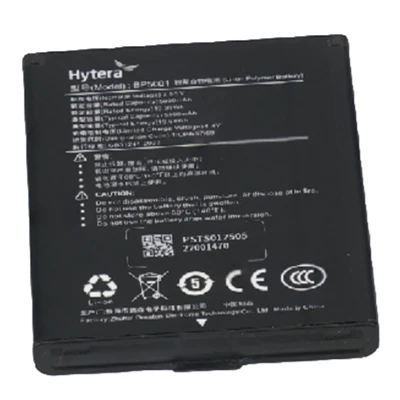
If you’re ready to stop dealing with outdated grid constraints, reduce your energy costs, and build a more resilient, sustainable energy network, reach out to our team to discuss your BESS needs. We’ll work with you to assess your current grid, design a custom solution, and provide ongoing support to make sure your system operates at peak performance for years to come.
Two Wheeler Battery References:
- International Energy Agency (IEA). Global Battery Energy Storage Outlook 2023: Grid Integration and System Flexibility.
- U.S. Department of Energy (DOE). The Role of Energy Storage in Modernizing the Electric Grid.
- North American Electric Reliability Corporation (NERC). Frequency Response Requirements for High Penetration Renewable Energy Grids, 2022.
- National Renewable Energy Laboratory (NREL). Distributed Energy Resources and Battery Energy Storage: Enabling the Smart Grid Transition, 2021.
Zhuhai Greaton Electronic Technology Co., Ltd.
As one of the most professional battery energy storage system manufacturers and suppliers in China, we have world-leading production equipment and strong manufacturing capabilities. Please rest assured to wholesale advanced battery energy storage system in stock here from our factory. Customized orders are welcome.
Address: 2nd Floor, Building A3, No. 6, Liulu, Xinqing Science and Technology Industrial Park, Jing’an Town, Doumen District, Zhuhai City
E-mail: wangchen1@psbattery.cn
WebSite: https://www.cngreaton.com/
