Hey there! As a supplier of FKM O Rings, I often get asked about the compression force of these little but crucial components. So, let’s dive right into it and break down what the compression force of FKM O Rings is all about. FKM O Ring
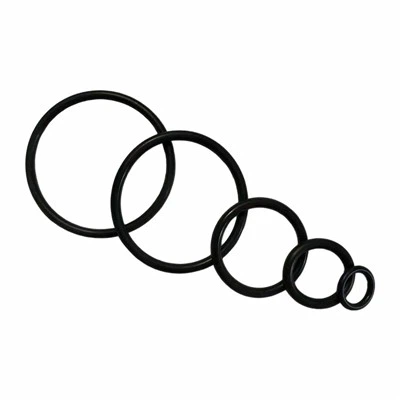
First off, what are FKM O Rings? FKM stands for Fluoroelastomer, which is a synthetic rubber material known for its excellent resistance to high temperatures, chemicals, and fuels. These O Rings are used in a wide range of applications, from automotive engines to industrial machinery. They play a vital role in sealing systems, preventing leaks and ensuring the smooth operation of equipment.
Now, let’s talk about compression force. The compression force of an FKM O Ring refers to the amount of force needed to compress the O Ring into a groove to create a proper seal. When an O Ring is installed in a groove, it’s compressed to a certain percentage of its original cross – sectional diameter. This compression is what allows the O Ring to fill the gap between the mating surfaces and prevent fluid or gas from escaping.
The compression force depends on several factors. One of the most important factors is the material properties of the FKM. Different FKM compounds have different hardness levels, which are measured on the Shore A scale. A harder FKM O Ring will generally require more force to compress compared to a softer one. For example, a Shore A 90 FKM O Ring will need more compression force than a Shore A 70 FKM O Ring.
The size of the O Ring also matters. Larger O Rings usually require more force to compress because they have a larger cross – sectional area. When you’re dealing with a big O Ring, you need to make sure that the equipment you’re using to install it can generate enough force to achieve the proper compression.
The groove design is another key factor. The dimensions of the groove, such as its width and depth, can significantly affect the compression force. If the groove is too wide, the O Ring won’t be compressed enough, and it may not create a good seal. On the other hand, if the groove is too narrow, the O Ring may be over – compressed, which can lead to premature failure.
Let’s take a look at how we calculate the compression force. There isn’t a one – size – fits – all formula because of the many variables involved. However, we can use some general guidelines. We typically start by determining the compression ratio, which is the percentage of the O Ring’s original cross – sectional diameter that is compressed. A common compression ratio for FKM O Rings is around 15% – 30%.
To calculate the compression force, we can use the following steps. First, we need to know the cross – sectional area of the O Ring. Then, we multiply the cross – sectional area by the compression ratio to get the compressed area. Next, we need to know the modulus of elasticity of the FKM material. The modulus of elasticity is a measure of how stiff the material is. We multiply the compressed area by the modulus of elasticity to get an estimate of the compression force.
It’s important to note that these calculations are just estimates. In real – world applications, there are other factors that can affect the compression force, such as the surface finish of the mating parts and the temperature. For example, at high temperatures, the FKM material may become softer, which can reduce the compression force required.
So, why is it so important to get the compression force right? Well, if the compression force is too low, the O Ring won’t create a proper seal, and you’ll end up with leaks. This can lead to all sorts of problems, from reduced efficiency to equipment damage. On the other hand, if the compression force is too high, the O Ring may be damaged, which can also cause leaks and shorten the lifespan of the O Ring.
As a supplier of FKM O Rings, we understand the importance of providing our customers with the right products for their applications. We work closely with our customers to understand their specific requirements and help them choose the right FKM O Rings with the appropriate compression force.
We offer a wide range of FKM O Rings in different sizes, hardness levels, and compounds. Whether you need O Rings for a high – temperature application or one that requires excellent chemical resistance, we’ve got you covered. Our team of experts can provide you with technical support and advice on how to install and use our O Rings to achieve the best results.
If you’re in the market for FKM O Rings, don’t hesitate to reach out to us. We’re here to help you find the perfect solution for your sealing needs. Whether you’re a small business or a large industrial company, we can provide you with high – quality FKM O Rings at competitive prices.

In conclusion, the compression force of FKM O Rings is a crucial factor in ensuring a proper seal. By understanding the factors that affect the compression force and working with a reliable supplier, you can ensure that your equipment operates smoothly and efficiently. So, if you have any questions or need more information about FKM O Rings and their compression force, just give us a shout. We’re always happy to help!
Rubber Gasket References:
- ASTM D2000 – Standard Classification System for Rubber Products in Automotive Applications
- ISO 3601 – International Standard for O – rings
Haining Chaoyue Seals Co., Ltd.
As one of the most professional fkm o ring manufacturers and suppliers in China, we offer a wide range of products with superior quality. Please feel free to wholesale high quality fkm o ring made in China here from our factory. Also, custom service is available.
Address: Building 9, 158 Lianhong Road, Yuanhua Town, Jiaxing, Zhejiang, China.
E-mail: chaoyue@cyseals.com
WebSite: https://www.hncyseal.com/
