Hey there! I’m a supplier of Chain Sling and Hardware Riggings, and I often get asked about how to adjust the tension of a chain sling. It’s a crucial aspect of using chain slings safely and effectively, so I thought I’d share some methods I’ve learned over the years. Chain Sling and Hardware Riggings

Why Tension Adjustment Matters
Before we dive into the methods, let’s talk about why adjusting the tension of a chain sling is so important. First off, having the right tension ensures that the load is evenly distributed across the sling. If the tension is too loose, the load might shift or swing during lifting, which can be extremely dangerous. On the other hand, if it’s too tight, it can put unnecessary stress on the chain, leading to premature wear and even breakage.
Another reason is safety. A well – tensioned chain sling reduces the risk of accidents. It helps prevent the load from slipping off, which could cause damage to property or, even worse, serious injury to workers.
Method 1: Using a Turnbuckle
One of the most common methods for adjusting the tension of a chain sling is by using a turnbuckle. A turnbuckle is a simple yet effective device that consists of a body, two end fittings, and a threaded rod. You attach the chain to the end fittings of the turnbuckle, and then you can adjust the tension by turning the body.
Here’s how you do it step by step:
- First, make sure the turnbuckle is in the correct position and that the chain is properly attached to the end fittings. Double – check that the connections are secure.
- To increase the tension, use a wrench to turn the body of the turnbuckle in the appropriate direction. Usually, turning it clockwise will shorten the length between the end fittings, thus increasing the tension in the chain.
- To decrease the tension, turn the body of the turnbuckle counter – clockwise. This will lengthen the distance between the end fittings and loosen the chain.
It’s important to keep an eye on the load and make small adjustments at a time. You don’t want to over – tighten or under – tighten the chain. And always follow the manufacturer’s instructions for the turnbuckle, as different models may have slightly different specifications.
Method 2: Chain Tensioners
Chain tensioners are another great option for adjusting the tension of a chain sling. These are specialized tools designed specifically for this purpose. They come in different types, such as ratchet – type and screw – type tensioners.
Ratchet – type tensioners are very popular because they’re easy to use. Here’s how you operate one:
- Attach the chain tensioner to the chain sling at the appropriate points. Make sure it’s properly seated and engaged with the chain.
- Use the ratchet mechanism to tighten the chain. You can do this by pulling the handle of the ratchet in one direction. Each pull will incrementally increase the tension in the chain.
- If you need to loosen the chain, there’s usually a release lever on the ratchet. Pull the release lever, and the tension will start to decrease.
Screw – type tensioners work a bit differently. They have a screw that you turn to adjust the tension. You turn the screw clockwise to tighten the chain and counter – clockwise to loosen it.
Chain tensioners are great because they allow for precise tension adjustments. They’re also relatively quick to use, which can save you time on the job.
Method 3: Manual Adjustment
In some cases, you might need to make manual adjustments to the chain sling tension. This is usually done when you don’t have access to specialized tools or when the adjustment needed is relatively small.
Here’s how you can do it:
- First, assess the situation and determine whether the chain needs to be tightened or loosened.
- If you need to tighten the chain, you can use a pair of pliers or a similar tool to grip the chain links. Then, carefully pull the chain to increase the tension. Make sure you’re pulling in the right direction and that you’re not putting too much stress on any single link.
- To loosen the chain, you can gently push the chain links apart or use a tool to pry them open slightly. Again, be careful not to damage the chain.
Manual adjustment is a bit more labor – intensive and less precise than using tools, but it can be a useful option in a pinch.
Method 4: Using a Load Cell
For more advanced applications where precise tension measurement and adjustment are required, a load cell can be used. A load cell is a device that measures the force or tension in the chain sling.
Here’s how it works:
- Install the load cell in the chain sling system. This usually involves connecting it between the chain and the load or between different sections of the chain.
- Once the load cell is installed, it will provide a reading of the tension in the chain. You can use this reading to determine whether the tension needs to be adjusted.
- Based on the load cell reading, you can then use one of the other methods (such as a turnbuckle or chain tensioner) to make the necessary adjustments to the tension.
Using a load cell gives you very accurate information about the tension in the chain sling, which is especially important in applications where safety and precision are critical.
Tips for Adjusting Chain Sling Tension
- Inspect the Chain: Before making any tension adjustments, always inspect the chain for any signs of damage, such as cracks, wear, or corrosion. If you find any issues, don’t use the chain until it’s been repaired or replaced.
- Follow Safety Procedures: When adjusting the tension, make sure you’re following all safety procedures. Wear appropriate personal protective equipment, such as gloves and safety glasses.
- Make Small Adjustments: Whether you’re using a tool or making manual adjustments, make small changes to the tension at a time. This will help you avoid over – tightening or under – tightening the chain.
- Check Regularly: Even after you’ve adjusted the tension, it’s a good idea to check it regularly during the lifting operation. The tension can change due to factors like movement of the load or vibrations.
Conclusion
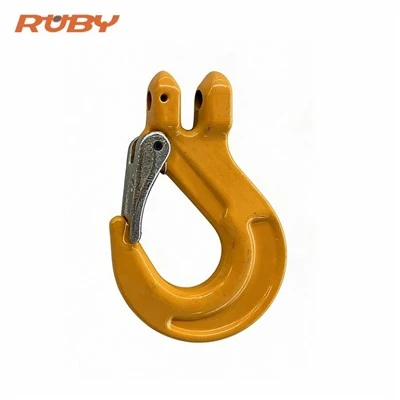
Adjusting the tension of a chain sling is an important skill for anyone working with chain slings and hardware riggings. By using methods like turnbuckles, chain tensioners, manual adjustment, or load cells, you can ensure that the chain sling is properly tensioned, which is crucial for safety and the efficient operation of your lifting equipment.
Chain Sling If you’re in the market for high – quality chain slings and hardware riggings, or if you have any questions about tension adjustment or other related topics, don’t hesitate to reach out. We’re here to help you find the right products and provide the support you need for your lifting operations.
References
- "Chain Sling Handbook" by an industry expert in rigging
- Manufacturer’s manuals for turnbuckles, chain tensioners, and load cells
Hangzhou Ruby Imp. & Exp. Co., Ltd.
As one of the most experienced chain sling and hardware riggings manufacturers and suppliers in China, we offer a wide range of products with superior quality. We warmly welcome you to wholesale custom made chain sling and hardware riggings at competitive price from our factory.
Address: Taoyuan Industrial Park, Puyang Town, Xiaoshan, Hangzhou, Zhejiang, China.
E-mail: Sales5@z2lifting.com
WebSite: https://www.rubylifting.com/
