As a supplier of DIN Rail Energy Meters, I often encounter customers who are eager to understand how to convert the data from these meters into a usable format. In this blog post, I’ll share some insights and practical steps to help you make the most of the data collected by DIN Rail Energy Meters. DIN Rail Energy Meter

Understanding DIN Rail Energy Meters
Before delving into data conversion, it’s essential to have a basic understanding of DIN Rail Energy Meters. These meters are designed to measure electrical energy consumption in industrial, commercial, and residential settings. They are typically installed on DIN rails, which are standardized metal rails used for mounting electrical equipment.
DIN Rail Energy Meters can measure various parameters, including voltage, current, power, energy consumption, and power factor. The data collected by these meters is crucial for energy management, billing, and monitoring electrical systems’ performance.
The Importance of Converting Meter Data
The raw data collected by DIN Rail Energy Meters is often in a format that is not directly usable for analysis or decision-making. Converting this data into a more accessible format allows you to:
- Gain insights: Analyze energy consumption patterns, identify peak usage periods, and detect anomalies.
- Make informed decisions: Optimize energy usage, reduce costs, and improve the efficiency of electrical systems.
- Generate reports: Create detailed reports for internal use, regulatory compliance, or client presentations.
Steps to Convert Meter Data
Step 1: Determine the Data Output Format
DIN Rail Energy Meters can output data in various formats, including Modbus, Profibus, Ethernet, and wireless protocols. The first step is to identify the output format of your meter. This information can usually be found in the meter’s user manual or technical specifications.
Step 2: Select a Data Acquisition System
Once you know the data output format, you need to choose a data acquisition system (DAS) that can interface with your meter. A DAS is a device or software that collects, processes, and stores data from multiple sources.
There are several types of DAS available, including:
- PLCs (Programmable Logic Controllers): These are industrial controllers that can be programmed to collect and process data from DIN Rail Energy Meters.
- Data loggers: These are standalone devices that can record and store data over a period of time.
- SCADA (Supervisory Control and Data Acquisition) systems: These are software-based systems that can monitor and control electrical systems in real-time.
When selecting a DAS, consider the following factors:
- Compatibility: Ensure that the DAS is compatible with the output format of your meter.
- Scalability: Choose a DAS that can handle the number of meters and data points you need to monitor.
- Functionality: Look for a DAS that offers features such as data logging, analysis, and reporting.
Step 3: Configure the Data Acquisition System
Once you have selected a DAS, you need to configure it to communicate with your meter. This involves setting up the communication protocol, baud rate, and other parameters.
The configuration process may vary depending on the type of DAS you are using. However, most DASs come with user-friendly software that guides you through the configuration process.
Step 4: Collect and Process the Data
Once the DAS is configured, it can start collecting data from your meter. The data is typically stored in a database or file for further processing.
You can use various software tools to analyze and process the data, including:
- Spreadsheets: These are simple and widely used tools for data analysis. You can use Excel or Google Sheets to import and analyze the data collected by your DAS.
- Data analysis software: There are several data analysis software packages available, such as MATLAB, R, and Python. These tools offer more advanced features for data analysis and visualization.
- Energy management software: These are specialized software packages designed for energy management. They can help you analyze energy consumption patterns, identify energy-saving opportunities, and generate reports.
Step 5: Convert the Data into a Usable Format
Once you have analyzed and processed the data, you need to convert it into a usable format. This may involve exporting the data to a spreadsheet, generating a report, or integrating the data into a larger system.
The format of the data will depend on your specific needs and requirements. For example, if you are using the data for energy management, you may want to export it to a spreadsheet in a format that is easy to analyze and visualize. If you are using the data for regulatory compliance, you may need to generate a report in a specific format.
Tips for Successful Data Conversion
- Ensure data accuracy: Make sure that the data collected by your meter is accurate and reliable. This may involve calibrating the meter regularly and checking for any errors or anomalies in the data.
- Use standardized protocols: Use standardized communication protocols, such as Modbus or Profibus, to ensure compatibility between your meter and DAS.
- Implement data security measures: Protect the data collected by your meter from unauthorized access and manipulation. This may involve using encryption, access controls, and other security measures.
- Regularly monitor and maintain your system: Regularly monitor the performance of your DAS and meter to ensure that they are functioning properly. This may involve checking for any errors or warnings, performing maintenance tasks, and updating the software.
Conclusion
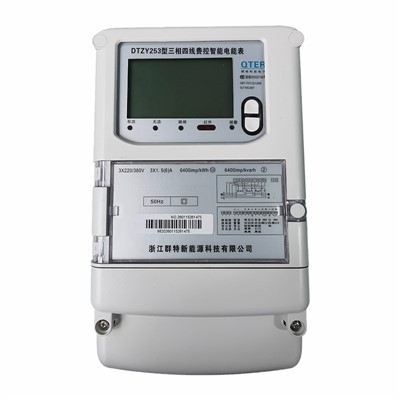
Converting the data from a DIN Rail Energy Meter into a usable format is an essential step in energy management. By following the steps outlined in this blog post, you can collect, process, and analyze the data collected by your meter to gain insights, make informed decisions, and improve the efficiency of your electrical systems.
Prepaid Energy Meter If you are interested in learning more about DIN Rail Energy Meters or need help with data conversion, please contact us. Our team of experts can provide you with the information and support you need to make the most of your energy management system.
References
- "DIN Rail Energy Meters: A Comprehensive Guide" – Industry publication on energy meters.
- "Data Acquisition and Processing for Energy Management" – Academic paper on data handling in energy systems.
- "Energy Management Software: Features and Benefits" – White paper on software for energy analysis.
Zhejiang Qunte New Energy Technology Co., Ltd.
As one of the most professional din rail energy meter manufacturers in China, we’re featured by quality products and good price. Please rest assured to buy discount din rail energy meter made in China here from our factory. We also accept customized orders.
Address: No. 56, Fengxi Road, Tang’ao Yu Village, Liushi Town, Yueqing City, Wenzhou City, Zhejiang Province
E-mail: 251951196@qq.com
WebSite: https://www.zjqtmeter.com/
