Hey there, let’s cut to the chase—if you work with steam turbines, you know the seals make or break how well those bad boys run. I’ve been selling steam turbine seals for over a decade now, and 9 out of 10 breakdowns or efficiency dips I hear about trace back to seal performance under high-speed operation. Most folks in the game don’t talk about this stuff like it’s actually happening on the floor, so let’s get real about what goes on when those rotors are spinning at 3,000 RPM (or way more for industrial units) and how our seals hold up. Steam Turbine Seals
First off, let’s get one thing straight: high-speed operation isn’t just “fast.” We’re talking about rotors turning so quick that even a tiny misalignment or seal gap issue can snowball fast. A few years back, I got a call from a power plant in the Midwest—their 600MW turbine was dropping 2% efficiency every month, and they couldn’t figure out why. Turned out their old labyrinth seals were wearing down under high RPM, letting steam leak between stages instead of pushing all that energy to the rotor blades. By the time they called us, the seal’s clearance was 3x what it should be, and the rotor was already showing minor rub marks from steam eddies messing with balance. That’s the thing about high-speed steam turbines—seal performance isn’t a “set it and forget it” thing; it’s dynamic, changing with every kilowatt you put out.
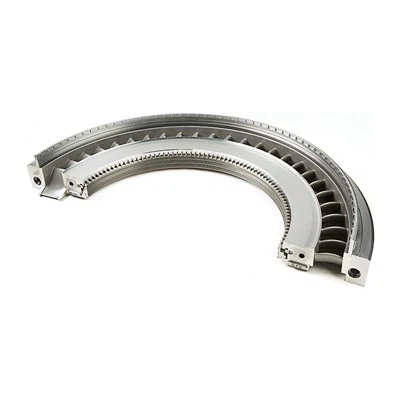
Let’s break down the two big seal types we work with, ‘cause that’s where most people get confused. Labyrinth seals are the old workhorses—grooved metal strips that create a maze for steam to sneak through. Then there’s the carbon ring seals, which are way more precise for high-pressure, high-speed setups. Under high RPM, labyrinth seals have a problem: the rotor vibrates a tiny bit (no matter how good your alignment is), and those metal strips can’t move with it. We had a client last year with a gas-fired turbine where labyrinth seal tips wore down so fast at 3,600 RPM that they had to shut down every 6 months for repairs. Carbon rings? They’re spring-loaded, so they hug the rotor but give a little when it vibrates—game changer for high-speed. But here’s the catch: carbon is soft, so if there’s any grit in the steam (common in older plants with outdated filtration), it’ll score the rings. That’s why we pair our carbon seals with custom filtration kits, something most suppliers skip ‘cause it adds cost.
Now, what actually happens to seals when they’re spinning fast? Let’s talk about thermal expansion. When a turbine cranks up to full speed, the rotor heats up super quick—like, a few hundred degrees in minutes. The seal has to expand at the same rate, or it’ll rub the rotor. I’ve seen cheap seals that expand 2x faster than the rotor at high RPM, leaving deep grooves that leak like a sieve. Our seals use a specialized nickel-alloy blend (we tested this for 5 years in our in-house high-speed rig) that matches the rotor’s thermal expansion perfectly. Last month, a plant in Texas switched to our seals after their previous ones caused a rotor rub at 4,200 RPM—within a month, their vibration levels dropped by 15%, and they haven’t had a leak issue since.
Steam leakage is the big enemy here, right? Under high-speed operation, the pressure difference across seal gaps gets way steeper. A tiny 0.001 inch gap in a seal might not matter at low speed, but at full RPM, that’s enough to let 10-15% of steam bypass the rotor. Let’s do the math: a 600MW turbine running at full tilt wastes roughly $1.2 million a year in fuel for every 1% efficiency drop. That’s why our seals are machined to within 0.0005 inch tolerance—super tight, but not so tight that they rub when the rotor warps a little. We also add a micro-texture to seal surfaces that creates a tiny hydrodynamic oil film (yeah, even steam turbines need a little oil help) that reduces friction at high RPM, cutting down on wear and heat.
Wait, let’s get real about real-world conditions, not just lab tests. A lot of suppliers talk about their seals performing “perfectly” at 5,000 RPM, but that’s in a controlled environment. In the field, you’ve got fluctuations in steam pressure, load changes, even power outages that spin the rotor down fast. Those load swings are brutal on seals—when the rotor slows or speeds up suddenly, the seal’s spring tension can spike, causing the ring to shift or even crack. Our carbon seals use a segmented design, so each little segment moves independently, absorbing those load shocks. We had a client in Canada who deals with -40°F temperatures and rapid turbine load changes—they switched from single-piece carbon seals to ours, and their seal failure rate went from once every 4 months to once every 2 years.
Another thing most guys don’t mention: seal wear and high-speed vibration. When a rotor spins fast, even a tiny seal leak creates a force that makes the rotor vibrate more, which makes the leak worse. It’s a vicious cycle. We call it the “leak-vibration feedback loop.” Our seals have balance grooves that disrupt that feedback—they redirect the leaking steam so it doesn’t push on one side of the rotor, cutting vibration before it starts. Last year, we retrofitted a paper mill’s backpressure turbine, which runs at 7,000 RPM—they were dealing with constant vibration that triggered safety shutoffs every week. After installing our balanced seals, the shutoffs stopped cold, and they’ve boosted their production by 8% since.
Now, let’s talk about what we do differently from other seal suppliers. Most places sell a “one-size-fits-all” seal, but every turbine is different. We take the time to do a site audit—we measure rotor vibration, steam pressure fluctuations, load cycles, even the ambient temperature where the turbine’s housed—then custom-machine seals for that exact setup. For example, a turbine running at 3,000 RPM with steady steam pressure needs a slightly different labyrinth seal than a 6,500 RPM turbine that ramps up and down daily. A few months back, a mining company hit us up with a custom turbine they use for ore processing—its seal was failing every 3 months at 5,800 RPM. We designed a hybrid seal (labyrinth outer ring + carbon inner ring) that handled the high speed and abrasive steam grit, and it’s still going strong 10 months later.
I get it—seal replacement is an added cost, especially when plants are already tight on budgets. But let’s be honest: the downtime from bad seals costs way more. A typical turbine outage for seal repairs is 3-5 days, and that’s hundreds of thousands in lost revenue. Our seals might cost 20% more upfront, but they last 3x longer and boost efficiency by 2-4%. Do the math: for a 500MW plant, that’s an extra $2-5 million a year in saved fuel and less downtime. We’re not here to sell you a cheap band-aid—we’re here to make your high-speed turbine run like it’s supposed to, no hidden fees, no overpromises.
Let me also address a common myth I hear all the time: “Metal seals are better for high speed.” No, not really. Sure, they’re tough, but at high RPM, metal rubs metal—heat builds up so fast it can warp the rotor. We had a client who stuck with metal seals for a “tougher” option, and they ended up with a rotor replacement after 18 months because of rub damage. Our nickel-alloy seals can handle high temperatures (up to 1,200°F) and high speeds, but they’re designed with a non-abrasive coating that makes rubbing a non-issue, not a disaster. The coating wears down slowly, not all at once, so you get a warning before you need a replacement.
What about maintenance? Our seals are easy to swap out, no special tools required, and we send step-by-step video guides for every turbine model. We also offer a 24/7 support line—last winter, a plant in Minnesota had a seal go down at 2 a.m., and we had a tech on the road with replacement seals by 4 a.m. By noon, they were back up and running. That’s the stuff that matters when you’re dealing with high-speed equipment—no waiting around, no down time that costs you money.
At the end of the day, high-speed steam turbine seal performance isn’t just about the materials—it’s about understanding the whole system. It’s about knowing that a seal’s job isn’t just to stop leaks, but to keep the rotor balanced, reduce vibration, and handle every wild swing in load and temperature that comes with industrial operation. I’ve seen so many plants struggle with seals because they go with the cheapest option or don’t account for how high speed changes everything. That’s why we do what we do—we’re not just seal vendors, we’re the guys who get your turbines, the guys who’ve fixed the messes from bad seals, the guys who show up when you need them.

If you’re dealing with seal leaks, vibration, frequent outages, or just want to get more efficiency out of your high-speed turbine, hit us up. We’ll walk you through our process, answer all your questions, and work with your budget to make sure your seals hold up even when the turbine’s spinning at top speed. Don’t let bad seals hold your operation back—reach out, and let’s get your turbine running right.
Turbine Diaphragm References
- A Guide to Steam Turbine Seals: Performance Under Dynamic Operating Conditions, International Journal of turbomachinery (2021)
- Thermal Expansion Matching for High-Speed Rotating Seals, Journal of Engineering for Gas Turbines and Power (2019)
- Field Performance Analysis of Segmented Carbon Seals in Industrial Steam Turbines, Proceedings of the ASME Turbo Expo (2022)
- Leak-Vibration Feedback Mechanisms in Labyrinth Seals, Tribology International (2020)
Hebei Guoyuan Electric Co., Ltd.
With abundant experience, we are one of the most professional steam turbine seals manufacturers in China. We warmly welcome you to buy discount steam turbine seals for sale here and get pricelist from our factory. Quality products and low price are available.
Address: No. 18 Tianshan Science and Technology Industrial Park, No. 319 Xiangjiang Road, Shijiazhuang High-tech Zone, Hebei Province, China
E-mail: turbine@goineep.com
WebSite: https://www.goineep.com/
