If you’ve ever worked with forged parts—especially high-temperature ones fresh off the press—you know that rushing straight to machining is a surefire way to run into headaches. As a forging part machining supplier with 12 years on the job, I’ve seen every mistake a team can make when they skip critical pre-machining steps, from broken tooling to scrapped workpieces. Last year alone, a local construction equipment manufacturer brought us a batch of steel forgings they’d tried to machine themselves right after forging; they ended up snapping three expensive end mills and wasting two full shifts, all because they didn’t let the forgings cool and stabilize properly. That’s why I’m breaking down the science-backed steps we swear by for handling high-temperature forged parts before machining—steps that save our clients time, money, and frustration. Forging Part Machining
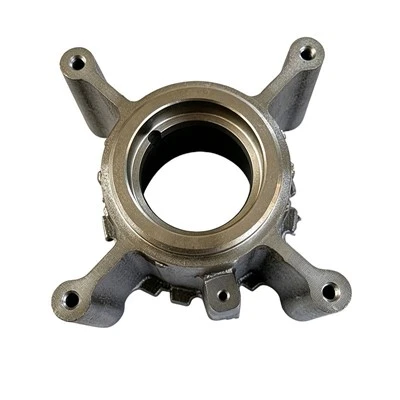
First, let’s talk about the single most important first move: controlled cooling, not fast cooling. When a part is forged at 1,100°C to 1,250°C (the standard range for carbon and alloy steels, the most common materials we work with), its internal structure is in a state of flux. Forging deforms the grain structure, and that high heat leaves the part with residual stress—think of it as tiny, invisible knots in the metal. If you blast a hot forging with fans, dunk it in water, or even just leave it out in 30°C summer humidity, that rapid cooling will harden the outer layer of the part way faster than the core. This creates a huge difference in hardness between the surface and the interior, a condition called “cold shortness” in forging terms. We once had a client bring in a set of automotive crankshafts they’d quenched in a factory’s wastewater tank; the surface hardness was 58 HRC (hard enough to scratch glass), but the core was only 28 HRC. When they tried to machine the crankpins, the hard outer layer caused their carbide tools to chip, and the soft core led to dimensional shift once the machining forces were applied.
Our standard cooling process for high-temperature forgings is called “air cooling in a temperature-controlled staging area.” We set our staging area to hold a consistent 25°C, with gentle cross-ventilation from low-speed ceiling fans—no direct blasts of air. For parts thinner than 20mm, we spread them out on flat steel racks in a single layer, so air circulates evenly on all sides. For thicker components, like the 150mm-diameter hydraulic cylinder forgings we do for construction, we place them on wooden pallets with gaps between each part to let cool air reach the bottom, and we rotate them every two hours to ensure uniform cooling. We never stack hot parts directly on top of each other; even a 10mm thick hot plate will transfer heat unevenly, leading to warping. The rule of thumb we follow is: never machine a part until its surface temperature is within 5°C of the ambient cooling area temperature. For most medium-sized forgings, that takes 12 to 24 hours; for very thick or complex parts, we extend it to 48 hours.
Once the part is cool, the next critical step is stress relieving. I can’t stress this enough—residual stress from forging is the #1 cause of dimensional inaccuracy after machining. Here’s why: when you machine a part, you’re removing material from its surface, which disrupts the internal stress balance. If that balance was never fixed, the part will warp, twist, or even crack as the stress redistributes. We learned this the hard way back in 2015, when a customer ordered a set of 20 large gear blanks for a mining conveyor. We skipped stress relieving to meet their tight deadline, and within three months of installation, six gears had warped so badly they had to be replaced. That cost us a lot more than the rush fee we’d tried to earn, and we revised our process immediately to make stress relief non-negotiable for all high-temperature forgings.
Stress relieving isn’t just throwing a part in an oven, either—it has a specific temperature profile that varies by material. For carbon steel forgings, we heat the parts slowly (100°C per hour) to a holding temperature of 620°C to 650°C, hold them there for one hour per 25mm of material thickness, then cool them back down at a rate of 50°C per hour. For alloy steels, like 4140 or 4340, we bump the holding temperature up to 680°C to 700°C, because their residual stress is more concentrated at higher alloy levels. The slow heating and cooling are key here; heating too fast can create new stress, and cooling too fast can undo all the progress. We use computer-controlled furnaces that track the temperature of every part in the load, so we never have variations that lead to inconsistent stress relief. A side benefit of this process is that it evens out the hardness across the part, so the entire material has a uniform structure that machine tools can cut evenly.
After stress relieving, we do a quick visual and dimensional check, but we also look for something called “scale formation.” When a forged part is at high temperature, it reacts with oxygen in the air to form a hard, brittle oxide layer called mill scale. Mill scale is a nightmare for machining—it’s harder than the base metal, so if you try to cut through it with a regular end mill, it will cause the tool to vibrate (called “chatter”), leave a rough surface finish, and even wear the tool 2 to 3 times faster than normal. We’ve seen cases where a client skipped descaling and machined a 10mm thick part only to have the final surface finish be so bad they had to scrap it. Even worse, the scale can get packed into the flutes of a cutting tool, causing it to break mid-operation, which can ruin a perfectly good forging.
Our go-to descaling method for high-temperature forgings is shot blasting, but we adjust the shot size and pressure based on the part. For small, delicate parts like hydraulic fittings, we use 0.2mm steel shot at low pressure, so we don’t damage the precision-forged edges. For larger, heavy parts like mining equipment components, we use 0.8mm steel shot at higher pressure, which blasts the scale off quickly without leaving dents or burrs. We never use chemical pickling for our forgings, because it can etch the surface and create tiny pits that are hard to machine later, and it requires handling hazardous chemicals that we prioritize avoiding for worker safety. After shot blasting, we always blow off any remaining shot particles with compressed air, especially in holes or threaded areas, because leftover shot can get caught in machining fixtures and cause misalignment.
Wait a second—what about parts that have already been machined before? No, we’re talking about parts that come straight from the forging press, before any cutting. But here’s a common mistake we see clients make: they assume that because a part is cool, it’s ready for machining. That’s not always the case. For some high-alloy steels and specialty materials, like titanium or stainless steel forgings, even controlled cooling and stress relief might leave the material with a slightly higher hardness than ideal for machining. For these parts, we recommend a softening anneal, not full stress relief. Titanium forgings, for example, have a tendency to harden at the surface when cooled quickly after forging, so a low-temperature anneal at 550°C for two hours will soften the surface just enough to make machining easier without compromising the part’s strength. We worked with a medical device manufacturer last year on titanium hip implant forgings; they tried machining them straight from forging and wore out their tools after 5 pieces, but after we did a low-temperature anneal, they got 25 pieces per tool, which cut their machining costs by 80%.
Another step that’s often overlooked is fixture preparation. Before you even pick up a cutting tool, you need to make sure your machining fixtures are clean and calibrated, because forged parts—even after cooling—can have slight dimensional variations, and mill scale can leave particles that throw off alignment. We always test our fixtures with a test cut on a scrap forging piece first, to make sure the clamping pressure is set correctly. Too much pressure and you’ll warp the part after machining; too little and it will move during the cut, leading to dimensional errors. For complex parts with multiple features, we use custom soft jaws on our vices, lined with rubber to protect the forged surface from scratches, and we always double-check the alignment with a dial indicator before starting the first cut.
I know what some of you are thinking: this process takes time. Our clients often have tight lead times, and waiting 12 hours for a part to cool or 24 hours for stress relief feels like a delay. But here’s the thing: rushing these steps costs more in the long run. Let’s do the math: a client brings us a 50kg steel forging that would cost $1,200 to replace. If they machine it straight from forging and break a tool mid-cut, that’s $300 for the new tool plus the cost of the scrap part—$1,500 total, not to mention the downtime waiting for a new forging. Taking the extra 36 hours to do controlled cooling, stress relief, and descaling costs us $50 in electricity and labor for that part, but it ensures the part machines correctly on the first try, no broken tools, no scrap, no delays. We’ve had clients who used to rush through pre-machining steps cut their overall production time by 15% once they adopted our process, because they stopped having to rework parts or wait for replacements.
We also adjust our process for different material types, because not all high-temperature forged parts are steel. For aluminum forgings, for example, they cool much faster than steel, so we don’t need a 24-hour cool time—we can machine them after 4 hours in our staging area. We also do a lower-temperature stress relief for aluminum, around 290°C, to avoid softening the material too much. For brass and bronze forgings, we skip stress relief entirely because they don’t develop the same level of residual stress as steel, but we still always do shot blasting to remove the scale. The key here is understanding the material’s unique properties—generic “forging handling” steps don’t work for every part, and that’s why we take the time to test each material and adjust our process accordingly.
Over the years, we’ve built our reputation on getting the pre-machining steps right, and that’s why our clients come back to us time and again. A few months ago, we had a job to machine 200 custom forged steel parts for a solar panel mounting system. The client had tried a smaller local shop that rushed the pre-machining steps, and 30% of the parts were scrapped due to warping after machining. When they sent them to us, we followed our standard process: controlled cooling, 6-hour stress relief, shot blasting, fixture calibration, and every single part machined perfectly on the first try. That one job led to a long-term contract where we handle all their forging machining needs, because they knew we cared about getting the basics right, not just meeting a deadline.
If you’re working with high-temperature forged parts and have been dealing with broken tools, scrap parts, or dimensional inaccuracies, don’t rush the pre-machining steps. The small investment in time and effort upfront saves a lot of hassle and cost later. Whether you’re a small machine shop or a large manufacturing facility, partnering with a supplier that understands the science of forging handling before machining makes all the difference. We’re always here to answer questions, walk you through our process, or help you troubleshoot any issues you’re having with your forged parts. If you’re ready to streamline your forging machining process and cut down on costs, we encourage you to reach out to discuss your next project.
Investment Casting Machining References
- ASTM A370, Standard Test Methods and Definitions for Mechanical Testing of Steel Products
- Forging Industry Association (FIA) Technical Report: Residual Stress in Forgings and Mitigation Strategies
- Kalpakjian, S. & Schmid, S.R. (2020). Manufacturing Processes for Engineering Materials (7th ed.). Pearson Education
Ningbo Yirui Machinery Manufacturing Co., Ltd.
As one of the most professional forging part machining manufacturers and suppliers in China, we’re featured by quality products and good price. Please rest assured to wholesale durable forging part machining made in China here from our factory. Customized orders are welcome.
Address: No.107, Wanzhong Village, Jishigang Town, Haishu District, Ningbo City
E-mail: James.he@yiruitek.com
WebSite: https://www.yiruime.com/
