Hey everyone, let’s cut the crap – if you’ve ever stood in a parking lot staring at a big truck and a flashy SUV, you’ve probably wondered what actually separates them beyond the obvious size. I’m not some car snob who’s gonna throw around jargon you’ll forget in 10 minutes; I’ve spent 12 years selling and fixing trucks (yeah, the real workhorses, not the posh ones) and seen way too many people mix these two up, especially when they’re shopping for something that fits their actual needs. Truck

First off, let’s ditch the myth that it’s just “one’s bigger.” I’ve had a couple of customers come to me, say they need a “heavy-duty truck for hauling their landscaping gear,” and end up buying a full-size SUV because they thought it was the same thing. Spoiler: they were stuck getting a tow service halfway through moving a pile of mulch because their “truck” couldn’t handle the load. So let’s break this down the way I see it, not some textbook definition that’s 20 years old.
Let’s start with the whole “what they’re built to do” thing, because that’s where the line gets drawn, plain and simple. I see SUVs marketed as “family vehicles that can go off-roading” all the time – which is cool, don’t get me wrong, but their main design goal is passenger comfort. They’re based on car platforms, right? Unibody construction, which means the frame and the body are one single piece, like a Honda Civic or a Toyota Camry just jacked up a little. They’re built to absorb bumps, make each ride feel smooth for your grandma’s Sunday drive to church, and fit 7 or 8 people with enough legroom for soccer practice.
Trucks, on the other hand? They’re body-on-frame. Two separate pieces bolted together: the chassis (that long, sturdy frame that looks like a ladder) is the core, and the body – the cab, the bed, whatever – is just mounted on top. That’s not a design choice for comfort; that’s for getting shit done. I’ve helped a construction contractor last year haul 4,000 lbs of concrete blocks in a work truck, and that frame didn’t even flex. A comparable-size SUV? The max payload is like 1,500 lbs tops. Try cramming 3,000 lbs of stuff into an SUV and you’ll be scraping bottom on speed bumps, dealing with sketchy brake performance, and wondering why you didn’t talk to a real truck supplier first.
Then there’s towing, which is the biggest pain point for people mixing these two up. I hear it all the time: “my new SUV says it can tow 8,000 lbs, that’s just as good as a truck!” Wait, hold on – let’s check the fine print on that SUV. A lot of those numbers are with the smallest engine, no extra passengers, no gear in the car, and maybe even a special tow package that costs an extra $3,000 that the dealership didn’t mention. My full-size work trucks? Our base models have a tow rating of 10,000 lbs, and that’s with a regular V8, no add-ons needed. Last month, a guy brought a 7,500-lb travel trailer to our lot to check it out – he’d rented an SUV to tow it cross-country and spent two weeks worried he’d tip going over mountain passes. When he test drove our truck, he texted his wife mid-drive like, “Never buying an SUV for towing again.”
Off-roading is another area where people get fooled. Yeah, a lot of modern SUVs have off-road trim packages – think the Jeep Grand Cherokee Trailhawk, or the Ford Explorer Timberline – that can handle a dirt trail or a muddy campsite. But if you’re talking about real off-roading – crawling over boulders, deep snow, steep hills that make your palms sweat – that’s where trucks win. Why? Most serious off-road trucks (like our midsize or heavy-duty models) have better ground clearance, locking differentials, and that tough body-on-frame that can take a hit without cracking. I’ve had a customer take an SUV on a back trail in Colorado, get stuck in a snow drift, and have to wait 3 hours for a tow. When he bought our 4×4 truck a month later, he went back to that same trail and drove right through that drift no problem. The biggest thing here is: SUV off-roading is for “adventure,” truck off-roading is for “getting to the job when the road’s gone.”
Wait, but what about size? It’s not just how big the vehicle is, it’s where that space is used. SUVs have three rows of seats and cargo space behind the third row – perfect for hauling the whole family plus all their hockey gear, coolers, and Christmas trees. The bed of a truck? That’s open space, built for loading stuff that won’t fit in a car: ladders, furniture, livestock, construction supplies, you name it. You can’t put a sectional sofa in an SUV and expect to fit all the passengers too, right? But in a truck, you can have a crew cab (four full doors, back seats that fit adults) and a 6.5-foot bed at the same time. I had a firefighter buy one of our crew cab trucks last year – he hauls his gear for calls in the back seat, and has a slide-in camper for when he’s on wildfire duty. No SUV can do that.
Let’s talk about reliability, too, because that’s something that doesn’t get talked about enough. Trucks are built for heavy, constant use – think delivery drivers who put 100k miles a year on their work truck, or farmers hauling grain back and forth every day. The components (transmission, brakes, suspension) are made to handle that kind of wear and tear, not just weekend joy rides. SUVs are built for lighter, more occasional use – even if someone uses theirs for “road trips,” most SUV owners put under 15k miles a year. I’ve got a customer who’s had our basic work truck for 8 years, and he’s just now had to replace the transmission at 280k miles. A similar-size SUV from the same brand? The average transmission life is around 150k miles. That’s a huge difference when you’re buying something that’s supposed to last.
But wait, I’m not here to bash SUVs – they’re great for what they’re meant for. If you’re a family of 5 or 6 that only needs to haul stuff for vacations, school, and groceries, an SUV is perfect. If you’re a contractor, farmer, landscaper, or anyone who needs to tow heavy loads, haul big gear, or use a vehicle for work on a regular basis? A truck’s the way to go. The confusion comes from brands marketing SUVs as “truck-like” to cash in on work needs, but they’re never actually built to match a real truck’s capabilities.
I’ve had way too many people come to me after making that mistake. Like the guy a few months back who bought a new luxury SUV to haul his construction tools, and his tools got ruined when he drove over a pothole that shook a compartment loose in the back. When he bought our truck, he got a durable bed liner and a toolbox that bolts down, and he hasn’t had a problem since. That’s the difference: trucks are designed for the stuff that breaks other vehicles.
Now, let’s cut to the chase. If you’re still on the fence, ask yourself two questions: How much stuff do I actually need to haul on a regular basis? And will that stuff weigh more than 1,500 lbs, or need to fit in an open space? If the answer is yes, you don’t need to guess – you need a real truck. If you’re just hauling people and light stuff, an SUV works, but don’t call it a truck, and don’t try to make it do a truck’s job.
At the end of the day, it all comes down to intended use. Trucks are built for work, for hauling heavy, for going places where the road might not be perfect, and for lasting through years of tough use. SUVs are built for comfort, family trips, and light duty. The line isn’t just a number on a spec sheet – it’s in the bones of the vehicle.
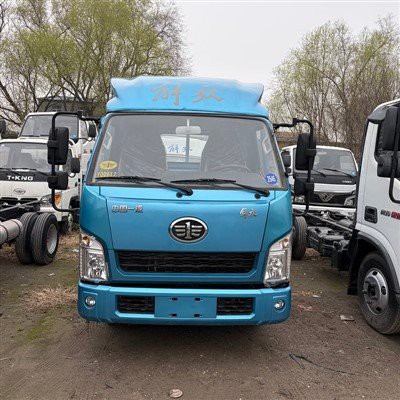
If you’re in the market for something that’s gonna actually get the job done, stop messing around with trying to fit an SUV into a truck’s role. Reach out to us, and we can walk you through our line of trucks that fit every need – from midsize work trucks perfect for small contractors, to heavy-duty models that can tow whatever you need. We don’t do flashy marketing or overpromise on specs, we just build trucks that work, and help you pick the one that fits what you need. Don’t waste your time on something that’s not built for the job.
Shovel Transport Machinery References:
- U.S. Department of Energy. (2023). Light-Duty Vehicle Fuel Economy Trends. Office of Energy Efficiency & Renewable Energy.
- National Highway Traffic Safety Administration. (2022). Vehicle Classification Guidelines for Passenger and Commercial Vehicles. NHTSA Vehicle Safety Compliance.
- International Organization for Standardization. (2021). Road Vehicles – Terminology for Light Commercial and Heavy Duty Vehicles. ISO 3833:2021.
- Truck Industry Council. (2023). North American Truck Market Report: Workhorse vs. Utility Vehicle Design Specifications. TIC Industry Data.
Liangshan Guanyue Auto Trading Co., Ltd.
As one of the leading truck manufacturers and suppliers in China, we warmly welcome you to buy bulk high quality truck at low price from our factory. If you have any enquiry about pricelist and quotation, please feel free to email us.
Address: Liangshan County, Jining City, Shandong Province
E-mail: guanyuetruck@gmail.com
WebSite: https://www.gytruck.com/
