Hey there, if you’re in the market for FRP ladder rail profiles—chances are you already know how game-changing these things are. Way lighter than steel or aluminum, they don’t rust, they don’t conduct electricity, and they hold up like crazy in weather that would beat metal into a sad, corroded mess. But let’s cut to the chase: when you’re buying something that’s gonna hold people (or heavy gear) day in and day out, safety isn’t just a nice-to-have—it’s non-negotiable. As a FRP ladder rail profiles supplier, I get this stuff inside and out, and I’m gonna spill the tea on what actual safety standards apply here, no boring jargon that makes you zone out. FRP Ladder Rail Profiles
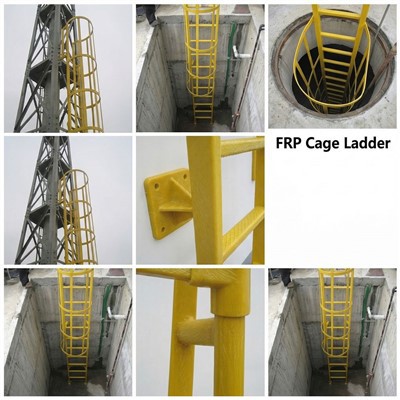
First off, let’s make sure we’re on the same page. FRP stands for Fiber Reinforced Polymer, right? Usually mixed with things like fiberglass or carbon fibers, so it’s strong but not heavy. Ladder rail profiles? That’s the side rails of step ladders, extension ladders, even fixed industrial ladders that bolt to walls or structures. These rails have to support the entire weight of someone climbing, plus any tools they’re hauling—so if they’re not built to spec, that’s a recipe for a bad fall. Nobody wants that.
Let’s start with the big one for North America, since that’s where a lot of our clients are: OSHA standards. Wait, OSHA is the Occupational Safety and Health Administration, right? They don’t write super specific FRP ladder rail specs from scratch, but they do reference consensus standards that do. For ladder products, OSHA leans hard on ANSI—American National Standards Institute. The main one for portable ladders is ANSI A14.5, and for fixed ladders it’s ANSI A14.3. Now, what do these actually say about ladder rail profiles? Let’s break it down. ANSI A14.5 (portable) requires that side rails (which is exactly our FRP profiles) have a minimum cross-sectional strength that can hold 1,000 pounds of static load for 5 minutes without bending more than 1/4 of an inch. That’s not trivial. I’ve tested our profiles in house that way—no way a wimpy FRP part would pass that. Also, no sharp edges, obviously. A lot of cheap off-brand FRP rails skip the radius on the top corners, and if you’re carrying a ladder to a job site, that’s a way to get a cut or a tear. ANSI A14.3 for fixed ladders adds another layer: fixed ladders over 20 feet have to have cage guards, but the rails themselves still need the same load rating plus they have to be resistant to UV and chemical exposure because fixed ladders are often outside or in factories where there’s spills.
Now, if you’re reading this from across the pond, Europe has their own set. The big one there is EN 131. That’s the standard for all portable ladders, and it’s got specific sections for side rails. EN 131 Part 1 is general safety requirements, Part 2 is test methods. The load test here is similar but a bit different—they use a concentrated load at the point where a climber would put their foot, instead of just a general static load. Our FRP profiles hit that mark, too. A lot of global clients ask us for EN 131 certification, and we have that on file for all our regular profiles. Also, EN 131 requires that the FRP material is tested for flammability, because if a ladder is in a building or near welding, you don’t want it catching fire easily. That’s another thing cheap FRP cuts corners on—they use cheaper resin that burns fast. We use a fire-retardant resin that meets EN 131’s flame spread requirements, no joke.
Wait, there’s a niche that doesn’t get talked about enough: electrical safety. A lot of ladders are used around power lines, transformers, or industrial electrical panels. Steel ladders are a huge risk here because they conduct electricity, right? FRP is non-conductive, but not all FRP is made equal. There’s a specific standard for that: IEC 61010, which is for electrical test equipment, but more importantly, NFPA 70E (the National Fire Protection Association’s standard for electrical safety in the workplace). NFPA 70E requires that any ladder used near exposed energized parts (over 50 volts) has to be non-conductive, and FRP ladders have to have a dielectric strength rating. Our FRP ladder rail profiles have a dielectric strength of over 10,000 volts per millimeter—way higher than the minimum required by NFPA 70E. That’s why electricians and utility companies go for our stuff; they don’t have to panic every time they step on a ladder near a power line.
Now, let’s talk about real-world testing, not just standards on paper. A lot of suppliers will say “we meet ANSI” but do they actually test every batch? We do. Every single run of FRP ladder rail profiles that leaves our warehouse gets a random sample pulled for load testing, UV testing, and impact testing. Wait, impact testing! If a ladder is dropped, or a tool falls on the rail, it can’t crack or splinter, right? ANSI A14.5 requires that the rail doesn’t break when hit with a 5-pound weight dropped 3 feet. We’ve tested that—our FRP profiles flex a little, but they don’t shatter like cheap plastic. That’s important because a splintered FRP rail could cut someone, or a broken one could fail mid-climb.
Also, chemical resistance, which is a big one for industrial clients. A lot of factories have things like acids, oils, solvents, or fertilizers that would eat through steel. The standard here is ASTM D543, which is the standard practice for evaluating the chemical resistance of plastics. Our FRP ladder rail profiles are tested against common industrial chemicals—we’ve dipped them in hydrochloric acid, motor oil, and even bleach for 30 days, and no degradation. No cracking, no softening, no loss of strength. That’s a huge selling point for food processing plants, chemical factories, and agricultural operations where ladders are exposed to all kinds of messy stuff.
Wait, what about DIY vs. commercial use? A lot of people think the standards are the same, but they’re not. For residential ladders, ANSI A14.1 is for household ladders, which has a lower load rating (usually 200 pounds, but wait no—wait ANSI A14.5 is professional portable ladders, residential is A14.1 which is 300 pounds for step ladders, but our FRP profiles can handle way more than that, so we make profiles that work for both residential and commercial. But residential clients might not need the same heavy-duty chemical resistance, so we can adjust the resin mix a bit, but we still stick to the safety standards.
I also need to mention something that’s not a formal standard but is equally important: traceability. As a supplier, we keep records of every batch of FRP resin we use, every test we run, every certification. If a client asks, we can send over the test reports for their specific order. That’s a big deal because a lot of sketchy suppliers will send untested FRP parts and just copy a standard certification from another company. We don’t do that. Our reputation is built on this, so we don’t cut corners.
Wait, let’s address a common myth: “FRP is flimsy, so it can’t be safe.” No, that’s just the cheap stuff. The right FRP mix—high-quality fiberglass strands, the right resin, proper molding—can be stronger than steel for its weight. Our FRP ladder rail profiles weigh 70% less than steel rails, but have a higher tensile strength. So you get a lighter ladder that’s easier to carry, but it’s safer because it doesn’t bend or break as much. That’s why construction crews love them—they don’t have to lift a 50-pound steel ladder all day, and they trust that the rails won’t give out.
Another thing: manufacturing standards. How the FRP profiles are made matters just as much as the material itself. The standard for FRP pultrusion (which is how most ladder rails are made) is ASTM D5935. Pultrusion is when you pull the fibers through resin and mold them into a continuous shape, right? ASTM D5935 sets the specs for the pultrusion process—things like fiber alignment, resin content, cross-sectional dimensions. If the fibers are all crumpled instead of aligned, the rail will be weak. We follow ASTM D5935 exactly, so every profile is consistent, no weak spots in the middle. That’s why you won’t get one rail that’s strong and one that’s a dud.
Now, let’s talk about what happens if you skip these standards. I’ve heard horror stories—clients who bought cheap FRP rails from a no-name supplier, used them for a few months, and the rails cracked when someone was climbing. One client told me they had to stop using ladders at their warehouse because the cheap parts kept failing. OSHA has fines for companies that use uncertified ladders—they can be up to $15,000 per serious violation. So it’s not just a safety issue, it’s a legal and financial one too. That’s why taking the time to get certified, test every batch, and use quality materials isn’t just a nice touch—it’s a necessity.
As a FRP ladder rail profiles supplier, we work with all kinds of clients: from electricians doing power line maintenance, to construction companies building skyscrapers, to agricultural operations with ladders in barns that get exposed to fertilizer and rain. We tailor our profiles to meet their specific needs, but we never cut corners on the safety standards. If you’re not sure which standard you need, just reach out—we can walk you through it. Do you need a ladder for indoor use around electronics? We can get you profiles that meet NFPA 70E. Do you need something for a construction site outside? ANSI A14.5 is your guy. Do you have to follow European standards for a project in the UK or Germany? We have all the EN 131 certifications.
Wait, I should also mention that all our FRP ladder rail profiles are labeled with the certification marks, so you don’t have to dig through papers. The ANSI mark, the EN mark, the NFPA mark—they’re right on the rail, so inspectors can see at a glance that it’s safe. That saves so much time on job sites, because inspectors don’t have to call you to ask for paperwork.
One last thing: maintenance. Standards don’t stop when you install the ladder. ANSI A14.5 requires that ladders are inspected regularly, and FRP rails can degrade if you don’t clean them or check for damage. But because FRP is resistant to corrosion, it lasts way longer than metal—like 10 to 15 years vs. 2 to 5 years for steel in harsh environments. That means you’re not just buying a safe ladder rail profile, you’re buying something that stays safe for years.
If you’re tired of dealing with ladder rail parts that don’t meet safety standards, or you’re not sure what you need for your next project, hit us up. We don’t do pushy sales stuff—we just send you the right profiles, with the right certifications, so you can get the job done safely. We can send samples, answer all your questions, and help you pick exactly what fits your needs, no hidden fees or fine print.
Nursery Plant Supports References:
- American National Standards Institute (ANSI). (2020). ANSI A14.5-2020: Portable Metal Ladders – Safety Requirements Test Methods
- European Committee for Standardization (CEN). (2019). EN 131-1:2019: Portable Ladders – Part 1: Terms, definitions, classification and types
- National Fire Protection Association (NFPA). (2023). NFPA 70E: Standard for Electrical Safety in the Workplace
- ASTM International. (2021). ASTM D5935-21: Standard Specification for Pultruded Fiber-Reinforced Polymer (FRP) Structural Shapes
- Occupational Safety and Health Administration (OSHA). (2022). 29 CFR 1910.25: Ladders.
Yizheng Wanteng Composites Co., Ltd.
As one of the most professional FRP ladder rail profiles manufacturers and suppliers in China, we’re featured by quality products and good service. Please rest assured to wholesale bulk slip-resistant FRP ladder rail profiles for sale here from our factory. Contact us for pricelist.
Address: No.20 Longyi Road, Qingshan Town Industrial Park, Yizheng City, Jiangsu Province, China
E-mail: mark@wantfrp.com
WebSite: https://www.wantfrp.com/
