If you’ve ever stood next to a tractor pulling a baler, tiller, or hay rake at a farm show, you’ve probably spotted the thick, metal shaft connecting the tractor’s rear end to the implement—its name is the PTO shaft, and it’s the unsung workhorse of farm attachments. As someone who’s spent 12 years selling tractor attachments, I’ve seen first-hand how a PTO shaft doesn’t just “spin power” for implements; it’s a precision system that, when matched correctly, turns a tractor’s engine power into real, usable farm work. A lot of folks new to farming, or even veteran operators who never dug into the mechanics, ask how it all comes together. Let me break it down like I do with every customer who walks into my shop looking for a reliable PTO solution. Tractor Attachments

First, let’s set the basic stage: PTO stands for Power Take-Off, and it’s a 540-rpm or 1000-rpm shaft on the back of most modern tractors that transfers mechanical power from the tractor’s transmission directly to attached implements. Unlike hydraulic systems that run at variable pressures, the PTO provides a constant, high-torque rotation that’s perfect for equipment that needs to cut, chop, beat, or pull—think rotary cutters, grain augers, post hole diggers, and balers. But the shaft itself isn’t just a solid metal rod. It’s a multi-part system designed to handle the two big challenges of tractor-implement operation: misalignment and movement.
Let’s start with the tractor’s side, because that’s where power originates. When a tractor operator activates the PTO (usually via a switch on the dashboard or a lever near the three-point hitch, the setup that mounts implements to the tractor), the transmission sends power to the PTO yoke. That yoke is a heavy-duty, tapered metal piece that slides onto the tractor’s PTO spline—those are the evenly spaced, teeth-like grooves on the end of the tractor’s shaft that lock the yoke in place so power transfers instead of slipping. I’ve seen customers cut corners here, using a generic yoke that doesn’t match the tractor’s spline, and it leads to slipping, wobbling, or even yokes flying off mid-operation. It’s a quick, cheap fix to match your yoke to your tractor’s PTO size, and it prevents a lot of headaches.
Next, the implement’s side: the implement has its own input yoke, mounted to the equipment’s drive shaft. The big middle section between the two yokes is what makes the PTO shaft work for uneven terrain and bumpy lifts. It’s a telescoping tube system, made of two nested metal shafts that slide in and out like a telescope. That’s non-negotiable. When you’re pulling a tiller over a hill, the implement tilts up and down, and the three-point hitch moves the implement closer or farther from the tractor. Without the telescoping design, the shaft would stretch, snap, or bind every time the tractor hit a rut. I sell only PTO shafts with a smooth, galvanized telescoping finish—no rust buildup means that sliding action stays consistent, even after years of being stored outside in mud and rain.
But there’s one more critical part here: universal joints (U-joints) at both ends of the shaft. U-joints are cross-shaped metal assemblies with bearings that let the shaft bend at angles, up to about 55 degrees on most standard shafts. If you’ve ever tried to push a long, straight rod around a corner, you get why this is necessary. When the tractor turns, or the implement tilts, the U-joints let the PTO shaft keep spinning without binding. Cheap shafts often use weak U-joints with plastic bearings, but I only stock shafts with heavy-duty, grease-filled U-joints that last for thousands of hours of use. I always tell customers to grease those U-joints every 10 hours of operation—skip that, and the joints seize up, leading to shaft failure or, worse, damage to the implement’s gearbox.
Now, let’s talk about how all this works together in real life. Let’s say you’re running a rotary cutter to clear overgrown fence lines. You mount the cutter to the tractor’s three-point hitch, connect the implement’s input yoke to the PTO shaft, then connect the other end to the tractor’s PTO. When you engage the PTO, the tractor’s engine sends power through the tractor’s spline, into the front yoke, through the U-joint, down the telescoping tubes, through the back U-joint, into the implement’s input yoke, and straight to the cutter’s blades. The telescoping section adjusts as you drive over uneven ground, the U-joints let the shaft bend when you turn, and the constant torque from the PTO spins the blades fast enough to cut brush 2 inches thick.
I’ve seen a lot of customers make the mistake of using a PTO shaft that’s too long for their setup. A shaft that’s too long will bend when the implement is lifted, putting extra stress on the U-joints and telescoping section. I always measure the distance between the tractor’s PTO end and the implement’s input yoke when the implement is fully lowered and fully raised, then subtract about 6 inches to get the right shaft length. That extra clearance prevents binding when you lift the implement to move it around the farm—simple measurement, but it saves you from buying the wrong shaft and dealing with damage down the line.
Safety is another part I never skip when explaining this to customers. PTO shafts spin at super high speeds—540 rpm is 9 revolutions per second, which is fast enough to pull in loose clothing, hair, or even a glove if you get too close. That’s why every PTO shaft needs a shield—a metal or plastic tube that covers the spinning middle section. I always remind customers to check their shields before every use; if a shield is cracked or missing, it’s not just a broken part—it’s a safety hazard. I keep replacement shields in stock because I’ve seen too many farmers grab a broken implement and try to run it without a shield, putting themselves at risk.
Now, what about different implement types? Let’s break down a few common ones, because the PTO setup changes a little for each. For a grain auger, which lifts grain from a truck to a storage bin, the PTO needs to deliver constant torque without too much vibration, because augers rely on smooth rotation to move grain evenly. For a post hole digger, which has to dig through compacted clay, you need a shaft rated for higher torque, because digging a hole 3 feet deep puts a lot of stress on the drive system. For small implements, like a lawn aerator pulled behind a compact tractor, you can use a lighter-duty PTO shaft, but you still need to match the rpm (most compact tractors use 540 rpm, same as full-size models).
I’ve been in this business long enough to know that a lot of attachment issues aren’t the implement’s fault—they’re a bad PTO shaft. I had a customer last year who was having constant problems with his hay rake, where the tines would stop spinning mid-bale. He’d replaced the rake’s gearbox twice, and he was ready to buy a new rake, until we looked at his PTO shaft. It was a generic, off-brand shaft that he’d bought online, and the U-joints were seized up, so power wasn’t getting to the rake. We swapped it for a heavy-duty, greaseable shaft, and the problem was gone. That’s the thing about PTO shafts: they’re the middleman between your tractor’s power and your implement’s work, so if they’re not set up right, nothing works.
Let’s get into some technical details to make this clear, without getting too jargon-heavy. The PTO splines on tractors are standardized: most North American tractors use 6-spline, 21-spline, or 21-spline with a quick-disconnect, and implements match that. The 540-rpm PTO is the standard for most small to mid-size tractors, while 1000-rpm is for larger tractors that need more power for heavy implements like balers or large tillers. When you’re shopping for a PTO shaft, you need to confirm three things: the tractor’s PTO spline size, the implement’s input spline size, and the correct shaft length for your three-point hitch.
Another point I always highlight: PTO shafts are not one-size-fits-all. A 6-foot shaft for a 4WD tractor won’t work for a small compact tractor, because the distance from the tractor’s PTO to the implement is shorter. I once had a customer who tried to use a 7-foot shaft for his 25-horsepower compact tractor, and when he lifted the lawnmower implement, the shaft bent so bad it snapped. He ended up with a broken shaft and a damaged mower gearbox, which cost him way more than the price of a correctly sized shaft. That’s why I always recommend coming to the shop to get measured, or sending a photo of your tractor and implement so I can help you pick the right one.
I also want to mention maintenance, because that’s a big part of making a PTO shaft last. Every time you use the shaft, inspect the U-joints for play (wobbling), grease the U-joints and telescoping section according to the manufacturer’s instructions, and check the shield for cracks. When you’re done for the day, clean off the dirt and mud from the shaft, because mud can get into the telescoping section and cause rust or sticking. Store the shaft in a dry place, not leaning against a wall in the mud—hanging it up on a wall rack keeps it in good shape for years.
Now, if you’re a farmer just starting out, or someone who’s had bad experiences with PTO shafts that wear out too fast, let me leave you with this: a good PTO shaft isn’t just a part—it’s an investment in your farm’s efficiency. When it’s set up right, it transfers power smoothly, lasts for years, and prevents damage to your tractor and implements. I’ve sold hundreds of PTO shafts over the years, and the ones that give customers the least trouble are the ones that match their specific tractor and implement, with heavy-duty U-joints and a proper telescoping design.
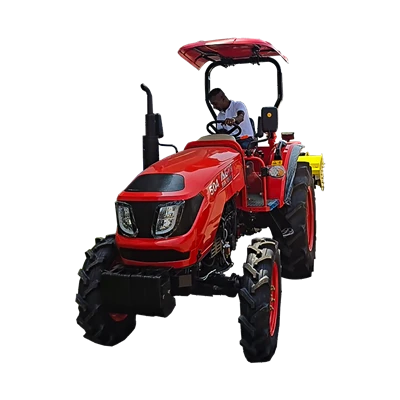
If you’re looking to replace a worn-out PTO shaft, or need a new one for an implement you just bought, don’t guess at the size or strength. Reach out, and I’ll help you figure out exactly what you need. Whether you’re clearing brush, planting crops, or tending to livestock, the right PTO setup is the difference between a day of work and a day of stress from broken parts. I’ve been in the tractor attachment business long enough to know that reliability is everything—for your equipment, your time, and your farm. Let’s get you set up with a PTO shaft that works as hard as you do.
Tractor References:
- Agricultural Engineering Department, Purdue University. "Power Take-Off (PTO) Systems for Tractors and Implements." Farm Power and Machinery Handbook, 2022.
- National Agricultural Safety Database. "PTO Safety Guidelines for Farm Equipment." USDA Extension Service, 2021.
- ASABE Standard SAE J602. "Tractor Power Take-Off Shafts, General Requirements and Dimensions." American Society of Agricultural and Biological Engineers, 2020.
Shandong Ling Ke Industry Group Co., Ltd.
As one of the most professional tractor attachments manufacturers and suppliers in China, we’re featured by quality products and good price. Please rest assured to buy cheap tractor attachments for sale here from our factory. We also accept customized orders.
Address: Room 1505 Fortune International Commerce Building, No.4931 Beihai Road, Kuiwen District, Weifang City, Shandong Province, China
E-mail: aileenlin@sdlingkegroup.com
WebSite: https://www.lingketractor.com/
