If you’ve ever stood on the deck of a drilling rig in 50-below-zero wind, watching ice the size of small trucks crack and churn 100 yards away, you know arctic drilling isn’t just a job—it’s a test of every engineering decision you make. For 12 years, I’ve been a drilling rig supplier, and half my work isn’t just selling equipment—it’s walking clients through why our arctic rigs aren’t just standard rigs with extra heaters slapped on. Every design choice is a battle against a dozen unique, brutal arctic challenges, from shifting sea ice to darkness that lasts three months straight. Let me pull back the curtain on what actually goes into designing a rig that can survive, and perform, in the harshest corners of the planet. Drilling Rig
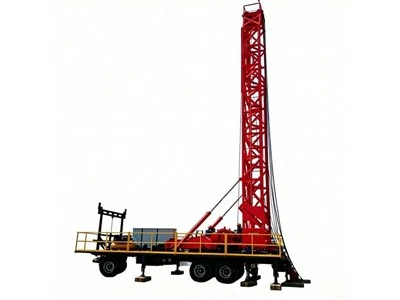
First, let’s talk about the biggest enemy no one sees coming: level ice drift. In the Arctic, ice doesn’t just sit still—it moves, pushed by wind and current, at speeds up to two meters per second. A single year of ice drift can exert forces of 10,000 tons on a fixed structure, enough to twist steel like tinfoil. Early on, we made the mistake of building a traditional jack-up rig with a fixed hull and steel legs for a client in the Beaufort Sea. They lasted three weeks before a 800-meter ice floe punched a 12-foot gash in the hull and bent three leg sections so bad we had to cut them off mid-operation. That failure taught us our first core rule: arctic rigs don’t fight ice—they work with it.
Now, our jack-up rigs have a full-coverage hull-mounted ice steel system: we use Grade FH-360 ice-class steel, a high-toughness, low-alloy steel that stays ductile at temperatures down to -60°C, way lower than standard offshore steel which can shatter like glass below -20°C. The hull’s leading edges—where ice makes first contact—are reinforced with 1.5-meter-thick steel plating curved at a 30-degree angle, designed to deflect ice rather than stop it. But we didn’t stop there. We added a dynamic ice load monitoring system that uses 24 subsea and hull-mounted sensors to track ice thickness, drift speed, and impact force in real time. If a large floe is on a collision course, the rig’s positioning thrusters adjust in 0.2 seconds to shift the hull, so the ice hits a thinner, angled section instead of the reinforced bow. Last year, one of our rigs in the Barents Sea withstood a 12,000-ton ice floe that would have crumpled a standard rig—our sensors detected it 15 minutes before impact, and the thrusters shifted the hull just enough to deflect 90% of the force.
Next, the legs of arctic jack-up rigs are another critical design. Standard jack-up legs are cylindrical, but round ice can wedge between leg and seabed like a cork, locking the rig in place if it needs to move. That’s a death sentence in the Arctic, where ice can pile up on a rig in a single storm. Our legs are octagonal, with 12-meter-long serrated teeth along the sides. These teeth break up ice that tries to wedge, so if a storm rolls in, the rig can retract its legs in under 90 minutes—fast enough to move to a safe location before ice flow becomes too severe. We also added ice-resistant spud cans (the wide, flat bases that sit on the seabed) that are made of the same FH-360 steel and coated in a non-stick polymer. I’ve seen old spud cans coated in ice, too heavy to lift, but our polymer coating cuts ice adhesion by 70%—one operator told me last winter he could knock 2 tons of ice off a spud can with a single water hose.
Then there’s the substructure, the part that supports the drilling floor, the derrick, and all the heavy equipment above the hull. In standard rigs, the substructure is bolted directly to the deck, but in the Arctic, extreme cold causes steel to contract unevenly, and ice-induced vibrations can loosen bolts within months. Our arctic rigs use a floating substructure system, mounted on large rubber-and-steel bearings that absorb both thermal contraction and ice vibration. We tested this on a test rig in Svalbard, subjecting it to 100 days of -45°C temperatures and ice impacts, and found the substructure shifted less than 2 millimeters total, compared to 12 millimeters for a standard bolted substructure. That’s the difference between a rig that stays calibrated and one where your well path is off by enough to ruin a multi-million dollar well.
Now, let’s talk about the power and systems that keep the rig running, because even the toughest hull is useless if your engines or computers freeze solid. Most offshore rigs heat individual rooms, but in the Arctic, that’s inefficient and unreliable—if a heater fails in the middle of winter, you lose that room. Our rigs use a central thermal management system that circulates a glycol-water mix heated by the engines through insulated, buried piping that covers every inch of the rig, from the drill floor to the control room to the gear storage bays. But we don’t just waste heat—we capture waste heat from the engines and exhaust to run the heating, so we cut fuel use by 35% compared to standard rigs.
The control room is probably the most critical space of all, because even a single sensor failing in total darkness and -50°C can shut down a well. We designed our control room with heated, double-paned windows that have an anti-ice coating, so you don’t have to scrape them for 20 minutes before a shift. Every piece of equipment in the control room is rated for arctic use: our industrial computers use military-grade processors that work down to -60°C, and all wiring is sheathed in a cross-linked polyethylene that stays flexible in cold, instead of brittle PVC that cracks. We also installed redundant systems—two separate power grids, two sets of drilling controls, even two satellite communication systems—because if one fails, the other kicks in in 0.5 seconds. Last year, a client in the Chukchi Sea had a satellite antenna fail during a blizzard; our backup system automatically took over, and they never lost a single second of well data.
Ice isn’t the only arctic challenge—there’s also the environment. Operators don’t just need a rig that survives; they need one that doesn’t harm the fragile arctic ecosystem. We don’t just add an environmental afterthought to our arctic rigs—we built environmental protection into every design. The hull has a double-bottom system with a 1-meter gap between layers, so if there’s a spill, the oil stays trapped in the gap, not leaking into the ocean. All wastewater from the rig—from drilling mud to kitchen water—is treated on board using a closed-loop system, so zero waste is dumped into the arctic. We also use low-noise drilling equipment, because arctic marine mammals like bowhead whales rely on sound to navigate, hunt, and communicate. Our rigs have sound-dampening enclosures around all engine and drilling equipment, cutting noise levels by 40% compared to standard offshore rigs, which reduces the risk of disturbing whale migration routes or disorienting marine life.
Wait, but what about when you need to move a rig between drilling sites? Most arctic drilling is done in remote areas, so ice conditions along the transit route are unpredictable. Our jack-up rigs have a streamlined transit mode where the legs are fully retracted, and the hull’s ice deflectors are locked into a position that cuts through ice floes without damaging the hull. We also added an ice management pod on the bow, which is a small, remotely operated vehicle that clears a 50-meter path in front of the rig as it moves. This cuts transit time by 25% compared to older arctic rigs, because operators don’t have to wait for ice breakers to clear the route for them.
I know what some of you are thinking: this sounds expensive. And it is—designing an arctic rig that works isn’t cheap. But let’s do the math: a standard offshore rig costs around $150 million, while our arctic rig costs around $220 million. But the failure cost from an unplanned shutdown or a rig damage in the Arctic can run $1 million a day. Last year, one of our clients told us they saved $12 million in a single season by using our rig instead of a competitor’s modified standard rig, which had three unplanned shutdowns due to ice damage and heater failures. That’s the real value here—you’re not buying a rig, you’re buying reliability in a place where every day of downtime costs you a fortune.
But design is only half the battle. We also work hand-in-hand with our clients before they even order a rig, because every arctic site is different. The Barents Sea has thin, fast-moving ice, while the Beaufort Sea has thick, slow-moving multi-year ice. A rig that works in Svalbard might not work in the Chukchi Sea, so we customize every detail. For a client working in shallow coastal arctic waters, we can add a lightweight ice-breaking bow that’s easier to maneuver. For a client drilling in deep arctic waters, we can adjust the leg length and positioning system to handle deeper seabeds. We don’t do a one-size-fits-all design—because the Arctic doesn’t do one-size-fits-all conditions.
Over the years, I’ve learned that the best arctic rig designs aren’t about having the most high-tech gadgets. They’re about anticipating the things no one tells you about the Arctic. Like how in winter, metal expansion joints can freeze solid, so we designed our joints with heated fluid lines that keep them flexible. Or how polar night means workers can go weeks without seeing sunlight, so we added circadian lighting systems in living quarters that mimic natural light cycles to reduce fatigue and improve safety. Those small, human-focused designs are just as important as the steel and the sensors, because a rig is only as good as the people operating it.
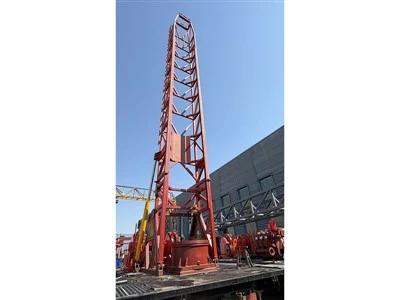
If you’re looking for a drilling rig that can handle the full fury of arctic conditions, reliability isn’t something you can leave to chance. Every one of our arctic rigs has been rigorously tested, with thousands of hours of field data from sites across the Arctic, and we back every design with 24/7 support when your rig is on location. Whether you’re a small operator drilling your first arctic well or a major energy company working on a 10-year project, we can work with you to build a rig that fits your exact needs. If you’re ready to discuss your project and what a purpose-built arctic drilling rig can do for you, we’re here to help. Contact our team to start a conversation, and we’ll walk you through every detail of our designs and how we can support your operations in the harshest environments on Earth.
Water Well Drill Pipe References:
- American Bureau of Shipping. (2021). Guide for Building and Classing Mobile Offshore Drilling Units for Arctic Operations. ABS Group.
- International Association of Oil & Gas Producers. (2020). Arctic Drilling: Design Considerations for Offshore Structures. IOGP Report No. 480.
- National Energy Technology Laboratory. (2019). Arctic Offshore Drilling Rig Technology Assessment. U.S. Department of Energy.
- Society of Petroleum Engineers. (2022). Advances in Arctic Drilling Structure Design and Ice Load Mitigation. SPE Paper 210457.
Hebei Zhongxin Machinery Equipment Co., Ltd.
As one of the most experienced drilling rig manufacturers in China, we also support customized service. We warmly welcome you to buy high quality drilling rig for sale here from our factory. If you have any enquiry about pricelist, please feel free to email us.
Address: Wangxizhang Industrial Zone, Zhao County, Shijiazhuang City, Hebei Province, China
E-mail: zxnjbzg@163.com
WebSite: https://www.hbzxdrilling.com/
