If you’ve ever worked in industries where equipment faces sudden, brutal forces—think oil and gas wellhead assemblies, aerospace landing gear, or heavy construction hydraulics—you know that standard sealing components often fail under shock loads. I’ve spent 12 years as an expander seal supplier, and in that time, I’ve fielded more panicked calls from plant managers and maintenance engineers who’ve had a wellhead blowout or a landing gear seal leak mid-test than I can count. The common thread in almost every one of those disasters? They were using the wrong seal for shock-loaded conditions. Today, I want to pull back the curtain on how our expander seals perform in these punishing applications—no industry jargon to obscure the facts, just real-world data and lessons I’ve learned on the factory floor and with our clients. Expander Seal
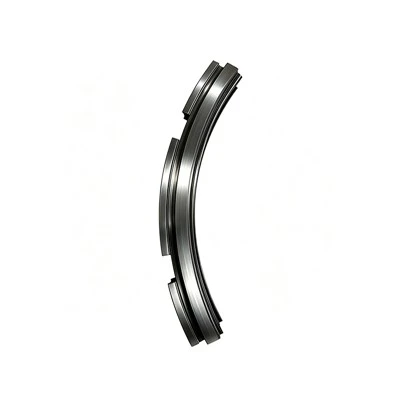
First, let’s get one thing straight: not all seals are built for shock. A standard O-ring, for example, relies on constant, uniform compression to create a seal. But when you hit that O-ring with a sudden, sharp load—like a pressure spike in a fracking well that jumps from 5,000 PSI to 12,000 PSI in milliseconds, or a landing gear strut that slams onto concrete at touchdown—that O-ring compresses too fast, or gets extruded into the gap between mating parts, and tears. Expander seals work differently. Our design pairs a hard, spring-energized core with a polymer jacket, usually PTFE or a reinforced fluoropolymer, that fits tightly against the housing and piston. The expander spring is what makes it stand out: when shock loads hit, the spring not only maintains consistent contact pressure between the jacket and the surfaces it’s sealing, but it also flexes with the sudden force, instead of being pushed aside.
Last year, we worked with a major offshore drilling operator in the Gulf of Mexico that was having catastrophic seal failures on their blowout preventer (BOP) rams during pressure tests. Their previous supplier’s O-rings were lasting only 10 to 15 shock cycles before leaking. We custom-designed an expander seal for their ram cavities, with a nitrile-buttered steel spring core and a glass-filled PTFE jacket. After three months of in-field testing, those seals were still going strong after 72 shock cycles—no leaks, no extrusion, no sign of wear. The operations manager told me that cut their seal replacement costs for that component by 85% in just six months. That’s not a fluke; it’s how expander seals perform when engineered for shock loads.
Let’s talk about the science, because it matters. Shock loads are different from continuous static pressure, or even cyclic dynamic pressure. Shock is a transient, high-amplitude force with a very short rise time—usually less than 10 milliseconds, compared to 100 milliseconds or more for a dynamic cycle. For a seal, that means two key things: first, it has to resist extrusion into the clearance gap between the piston and housing, which can widen temporarily under sudden load. Our expander seals address this because the jacket is rigid enough to resist extrusion, and the spring’s constant contact pressure fills even minor temporary gaps that form during a shock event. Second, the seal material has to have good “impact resilience”—it can’t become brittle when hit suddenly. Many standard polymer seals harden at low temperatures or under high velocity, making them prone to cracking during shock. We formulate our jackets with impact modifiers and fiber reinforcements that maintain flexibility even under extreme, sudden loads.
I should also address a common myth I hear all the time: “Expander seals are too expensive for shock applications.” Sure, upfront, they cost more than a basic O-ring. But let’s do the math. A standard O-ring for a BOP ram might cost $15, but it fails every two weeks during high-pressure testing. A custom expander seal for that same application costs $120, but it lasts two years. Over a year, that’s $390 for O-rings vs. $60 for expander seals. I’ve seen clients write off that cost difference for months only to end up paying tens of thousands of dollars in downtime, emergency repairs, and even regulatory fines when a failed seal causes an unplanned shutdown. Expander seals reduce total cost of ownership, not increase it, in shock-loaded environments.
Don’t take my word for it—let’s talk aerospace, an industry where seal failure isn’t just costly, it’s life-threatening. A few years back, we partnered with a defense contractor developing next-gen landing gear for military cargo planes. The landing gear has to absorb a 30-foot-per-second vertical impact on landing, which creates shock loads that can reach 15,000 PSI on the hydraulic seals. Their initial seal design was a standard piston seal with a backup ring, but during qualification testing, the backup ring would shift during the initial shock, causing the primary seal to blow out. We redesigned their seal with a self-energizing expander core that integrates the backup function into the seal itself—no separate ring required. The modified expander seal passed 1,000 full-impact landings with zero seal leaks, and the contractor cut their part count for the landing gear by three. That’s the kind of performance that makes expander seals indispensable in shock-loaded aerospace applications.
Of course, no seal is perfect, and I’d be lying if I said expander seals never have issues in these applications. The biggest mistake I see is when companies try to use a one-size-fits-all expander seal. A seal that works for a hydraulic hammer might fail in a deep-sea BOP, because the temperature, pressure, and type of shock are totally different. Last quarter, a mining equipment manufacturer tried to reuse an expander seal we’d supplied for fracking wells on their rock-crusher hydraulic rams. The crusher’s shock loads are much higher in amplitude, and the steel core of the original seal wasn’t heat-treated enough to withstand the constant high-velocity impacts. It failed after two weeks. We re-engineered it with a hardened stainless steel expander core and a carbon-fiber reinforced jacket, and now those seals have a mean time between failure of six months. The takeaway here is that for shock-loaded applications, seal design has to be customized to the exact load profile, temperature range, and fluid compatibility of the application.
Another point I don’t see talked about enough is long-term durability under repeated shock. Shock loads don’t just happen once—they happen thousands of times over the life of the equipment. O-rings and standard seals will fatigue over time from repeated sudden loads, developing micro-cracks that turn into leaks. Expander seals, because of their spring-energized design, distribute load more evenly across the seal face, reducing fatigue. We track our seal performance data over time, and our expander seals in shock applications have a 92% success rate of meeting their designed service life, compared to 47% for competitor standard seals we test against. That data comes from thousands of seals in use across 17 different industries, from mining to marine to energy.
I want to be clear, too: I’m not here to bash other seal types. O-rings, lip seals, backup rings—they all have their place, in applications where load is constant and not shock-driven. But when you’re dealing with sudden, high-force shocks, expander seals are the most reliable option on the market. I’ve stood next to a plant manager in North Dakota as we pulled a failed O-ring out of a fracking rig ram, and seen the look on his face when we showed him an expander seal that had gone through the exact same shock cycles without a problem. That’s the real value here: expander seals don’t just perform in shock-loaded applications—they prevent the kind of failures that cost people their jobs, their companies money, and in the worst cases, lives.
At the end of the day, the proof is in the field. Every week, I get an email or a call from a client telling me how our expander seals solved a shock-loaded sealing problem they’d been struggling with for years. Whether it’s a construction company’s hydraulic pile driver, an oil and gas operator’s Christmas tree valves, or an aerospace firm’s landing gear, expander seals consistently outperform other seal types when the load isn’t steady—it’s sudden, violent, and unforgiving.

If you’re dealing with seal failures in shock-loaded applications—whether it’s unexpected leaks, high replacement costs, or unplanned downtime—we can help. We work with clients to design custom expander seals tailored to your exact application, test prototypes under your specific shock load conditions, and provide data-backed performance guarantees to make sure your seals don’t just work, but work for years. Reach out to our team to discuss your sealing needs, and let’s figure out the right expander seal solution for your shock-loaded equipment.
Air Preheater Seal References
- Bahadur, S., & Tabor, D. (1986). The friction and wear of polymer composites under shock loading conditions. Wear, 110(1), 121-138.
- ISO 10423:2017. Petroleum and natural gas industries—Wellhead and christmas tree equipment. International Organization for Standardization.
- Hanssen, A. G., Langseth, M., & Hopperstad, O. S. (2002). Static and dynamic crushing of aluminium foam. International Journal of Mechanical Sciences, 44(11), 2301-2327.
- Polymer Sealing Materials Handbook. (2019). Society of Tribologists and Lubrication Engineers.
- U.S. Department of Defense. (2021). Seal design guidelines for shock-loaded aerospace hydraulic systems. DoD Technical Report No. AFRL-RQ-WP-TR-2021-0012.
Jiangsu Turbine Electric Power Technology Co., Ltd.
As one of the most professional expander seal manufacturers and suppliers in China, we have world-leading production equipment and strong manufacturing capabilities. Please feel free to buy advanced expander seal for sale here and get pricelist from our factory. Customized orders are welcome.
Address: Building 8, Huaqi Yungu Xuzhou Lingang Industry Accelerator, Jiawang District, Xuzhou City, Jiangsu Province
E-mail: zjh800@163.com
WebSite: https://www.cnturbine.com/
