Hey everyone, thanks for stopping by my blog. I’m gonna keep this real—for anyone in the building materials game, you know everyone’s been yelling about “going green” lately. But here’s the thing: when we talk about production lines, it’s not just the final product that matters. It’s the whole factory floor’s impact. I’ve been supplying PVC gypsum board production lines for over a decade now, and I get so many questions from clients: “Is this even eco-friendly, or just another fancy name with no actual benefits?” Let me break this down straight from what I see on-site every day, no corporate jargon. PVC Gypsum Board Production Line

First, let’s get one thing straight—PVC gypsum board isn’t the same as regular old drywall. It’s that smooth, water-resistant stuff used in bathrooms, kitchens, and commercial spaces where regular gypsum would go soggy. But the production line for this? That’s where the real environmental-friendly stuff hides, and I don’t just mean the end product. Let’s start with the biggest one: waste reduction.
When I first got into this business, I watched old production lines churn out like 10-12% scrap. Like, half-finished boards that got cracked, off-sized, or just messed up during the drying process. Now? The modern lines I supply cut that scrap down to 2-3%. How? Let’s talk about the precision tech. The mixing stage—old lines would just dump gypsum powder, water, PVC resin, and additives into a big mixer and hope for the best. Too much water, and the board swells; too little, and it cracks. Modern lines have automated, calibrated mixing systems that measure every ingredient within a gram. No more guesswork, no more batches that get tossed because they’re “close enough.” Then there’s the cutting stage. Old lines use bulky saws that often misalign, leaving off-sized edges that have to be trimmed off. Now we use laser-guided cutting units that lock in the exact dimensions every single time. I had a client in Texas run the numbers last year—before our line, they were throwing away 800 boards a day; after? 120. That’s less waste going to landfills, straight up.
Next up, energy efficiency—this is huge because energy bills are a massive part of production costs, and it’s also the biggest environmental hit most factories take. Drying gypsum boards uses a ton of heat, right? Old lines have those big, open drying tunnels that leak heat like a sieve. You’d have guys standing around with space heaters because the factory floor was freezing, while the drying tunnel was blowing 180-degree air out every time a board went through. The PVC gypsum line I supply uses closed-loop drying systems. Here’s how that works: the tunnel is fully insulated, so heat doesn’t escape. The air that’s exhausted from the tunnel isn’t just tossed outside—it’s filtered, cleaned, and recirculated back into the system. And we add in heat recovery units that capture the waste heat from things like the mixing process and the extruder (that’s the part that coats the gypsum core with PVC) and use it to preheat the water going into the mixer. I had another client in Florida switch over last year, and their energy usage dropped by 28%—they told me that saved them enough to hire three more guys, and they reduced their carbon footprint by like 300 tons a year. That’s not just “green” talk—that’s actual numbers that make sense for their bottom line too.
Wait, let’s not forget about water. A lot of people think gypsum production uses zero water, but nope—mixing needs water, cleaning the equipment needs water, and old lines would dump that used water straight into the sewers. Not only is that bad for the environment, many cities have strict discharge fees now that can kill a small factory’s budget. The PVC gypsum lines I sell have closed-loop water systems, too. All the water from mixing and cleaning is filtered—we’re talking sediment filters, chemical neutralization units, even reverse osmosis filters if the client wants to go extra—and then it’s reused. No more dumping. A mid-sized factory running one of these lines uses about 1/10th the water of an old line. I had a guy in Arizona tell me he used to pay $12,000 a month for water; now? $800. That’s a huge saving, and he’s not wasting a resource that’s super scarce in his state.
Now, what about the materials themselves? I know PVC has a bad rap for being plastic, which makes some people cringe at first. But hear me out—modern PVC gypsum lines use recycled PVC resin for the coating. We source post-industrial PVC scrap from other manufacturers, grind it down, clean it, and mix it right into the coating layer. A lot of people think that recycled stuff would be lower quality, but the lines we supply have a specialized extruder that melts the recycled PVC evenly, so the final board is just as durable as one made with virgin resin. And on top of that, the gypsum core—wait a second, gypsum is natural, right? It’s made from crushed gypsum rock, but a lot of modern lines also use recycled gypsum from construction demo sites. Like, when old buildings get torn down, they take the drywall, grind it up, remove any debris, and add it to the mix. I had a client in Atlanta that was tearing down a old office building, and instead of paying to dump the old drywall, they processed it and used 30% recycled gypsum in their new boards. That’s diverting hundreds of tons of construction waste from landfills, and it’s actually cheaper than buying new gypsum rock. Double win.
Wait, I can’t skip emissions. Old production lines would release dust from the gypsum powder, right? That’s not just bad for the workers’ lungs—it’s air pollution. The lines I supply have fully enclosed dust collection systems. Every mixer, conveyor, and silo has vents connected to high-efficiency particulate air (HEPA) filters that catch 99.97% of the dust. I’ve had OSHA inspectors come out to factories with our lines and literally comment that the air inside is cleaner than outside. And for the PVC part? When the PVC is being melted and coated, old lines would release volatile organic compounds (VOCs). But our lines have a thermal oxidizer system that heats the exhaust gases to super high temps (like 1,800 degrees F) which breaks down the VOCs into CO2 and water vapor—nothing harmful left. No more stinky fumes at the factory, no more contributing to smog. I had a worker at a client’s place say before our line, he’d get headaches every shift; after, he barely notices the PVC fumes at all. That’s a win for the environment and for the people making the product.
But here’s the part that most “green” bloggers don’t talk about: these environmental features aren’t just add-ons—they save money. I see so many small factory owners think “eco-friendly” means paying more for equipment, but that’s the opposite here. The lower scrap rate cuts down on raw material costs, the energy and water savings cut utility bills, and some areas even give tax incentives for using production lines with low emissions. I have clients in California, Texas, and Ohio that get tax breaks of up to 15% on their equipment costs for switching to our lines. It’s not just good for the planet—it’s good for the bottom line, which is why so many people are making the switch.
Wait, let’s address the elephant in the room. Is there any downside? No, not really, but you do have to run the line right. You can’t skip the maintenance on the automated systems—if you don’t calibrate the laser cutters or clean the dust filters, you lose all those benefits. But that’s true for any production line, right? My team trains every single client’s workers for free, and we have 24/7 support if something goes wrong. I’ve had clients tell me their old suppliers would just drop off the line and never call back, but that’s not how we do business. We’re not just selling a machine—we’re selling a solution that’s good for their business and good for the planet.
Let me wrap this up. When someone asks me “are there environmental-friendly features of a PVC gypsum board production line?” I don’t just say yes—I lay it all out. Less waste, lower energy use, less water, recycled materials, lower emissions, and it saves money too. This isn’t some trendy green gimmick. This is actual, tangible benefits that make sense for anyone in the building materials industry.
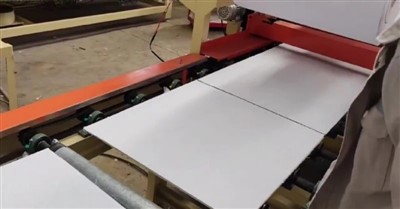
If you’re looking to upgrade your current line, or you’re starting a new factory and want something that’s better for the planet and your wallet, hit me up. No pressure, just a chat about what you need and how we can make it work for you. I’ve worked with small family-owned factories and big commercial builders alike, so I know how to tailor this to your size and your needs. Don’t get stuck with an old line that’s wasting money and harming the environment—let’s talk.
PVC Gypsum Board Production Line References
- Global Gypsum Association. (2022). "Sustainable Production Practices for Gypsum-Based Building Materials." Industry Technical Report.
- EPA. (2021). "Energy Efficiency Opportunities in Building Materials Manufacturing." U.S. Environmental Protection Agency Publication.
- Vinyl Institute. (2023). "Recycled PVC in Construction Applications: Performance and Sustainability Data." Technical Brief.
- Construction Demolition Recycling Association. (2022). "Recycled Gypsum Use in New Drywall Production." Waste Management Case Study.
Hebei Enjoy Technology Co., Ltd.
Hebei Enjoy Technology Co., Ltd. is one of the most professional manufacturers and suppliers of PVC gypsum board production line in China. With abundant experience, we warmly welcome you to buy high quality building material machinery made in China here from our factory. Contact us for more details.
Address: Jiuling Building, Xinhua District, Shijiazhuang City, Hebei Province, China
E-mail: Betty@seyibm.com
WebSite: https://www.enjoymachinery.com/
