Hey everyone! It’s Jake here from the Vertical Band Saw Series team, and today we’re tackling one of the most common questions I get in my DMs, at trade show booths, and even over random coffee runs: Can our vertical band saw series actually cut bronze? Vertical Band Saw Series

First off, let’s get real—bronze is a tricky metal. It’s not your everyday soft aluminum or mild steel; it’s a copper-tin alloy (sometimes with other elements like zinc or lead tossed in) that’s tough, dense, and can gum up saw blades faster than your kid’s glue stick on a craft project. But here’s the thing: I’ve had customers hit us up for bronze cutting jobs since we launched our 2022 lineup, and 9 times out of 10, our series works like a charm. The only time it doesn’t? When you’re not matching the right saw to the job, or you’re using a blade that’s better for cutting butter than thick, dense metal.
Let’s break this down, no jargon, I promise. Our vertical band saw series is built for versatility—we designed it to handle everything from cutting foam insulation for custom countertops to slicing through 6-inch steel billets for construction parts. Bronze falls right in that middle ground, but you can’t just grab any old blade and crank up the speed. Let’s start with how vertical band saws work differently from horizontal ones, because that’s a big part of why ours nail bronze. Horizontal band saws pull the blade through the metal in a straight line, but vertical ones let you feed the workpiece at an angle, which gives you way better control over heat and chip evacuation. For bronze, heat is the enemy—if the blade gets too hot, it starts melting tiny bits of bronze onto the teeth, and suddenly you’re just dragging a dull piece of metal through your workpiece instead of cutting. That’s where our saws’ adjustable speed control comes in handy. Our entry-level VBS-150 lets you tweak speed from 20 to 1,500 SFM (surface feet per minute), and our pro-tier VBS-300 has a variable speed drive that even lets you lock in a specific SFM, no guesswork. For bronze, you want to run slower—like 50 to 150 SFM for solid bronze, maybe a touch faster if you’re cutting thinner sheets (under ½ inch). Too fast, and you get that gummed-up blade I mentioned; too slow, and the blade starts wearing down faster than your favorite pair of jeans.
Next up, the blade. This is make-or-break. A lot of guys come to us with a blade they used for cutting aluminum, and it’s toast within 10 minutes on bronze. What works best for our series? Bi-metal blades with a positive rake angle—we specifically recommend blades with 10 to 14 teeth per inch (TPI) for most bronze jobs. Thinner blades (14 TPI) work great for sheets or small parts, while 10 TPI is perfect for solid, thick bronze blocks like the ones used for custom valve components. The positive rake angle means the teeth dig into the metal at a gentle forward angle, instead of straight down, which helps pull bronze chips out of the cut zone instead of letting them get stuck between the teeth. Stuck chips = hot blade = bad time. Also, make sure the blade has a coolant system—our saws all come with a built-in coolant line, but I always tell customers to use a soluble oil coolant, not straight water. Water causes bronze to corrode, and it doesn’t do much for cutting heat either. Soluble oil keeps the blade cool, lubricates the teeth, and flushes those tiny bronze chips away. I had a customer last month who was using water coolant and complaining about blade life being garbage; swapped to our recommended oil, and he’s now getting 3x the blade life. That’s not a flex—that’s just common sense.
Wait, but what about different types of bronze? Because not all bronze is created equal. There’s tin bronze, which is the standard dense stuff, and then there’s leaded bronze, which has tiny bits of lead added for machinability. Leaded bronze is a bit softer, so you can bump the speed up to 150 SFM, but tin bronze is way denser—stick to 50-100 SFM. And if you’re cutting bronze alloys like aluminum bronze? That’s even tougher, because aluminum makes it stronger. For aluminum bronze, our VBS-300’s higher torque motor is a game changer—you don’t want to fight the workpiece mid-cut, and our motor has enough oomph to push through dense alloys without stalling. I’ve seen some guys try to use a small, hobbyist vertical saw for bronze, and it just sputters and dies. Our series is built with industrial-grade motors, so that’s not an issue.
Now, let’s talk about real-world examples, because I know you guys love the “my cousin Bob used this and it worked” stuff. Last year, we had a customer out in Detroit who makes custom bronze boat propellers. He was using a horizontal band saw that kept chipping the prop blades, leaving him with tons of scrap and rework. He switched to our VBS-200, and the difference was night and day. No more chipped blades, cut time dropped by 40%, and he’s still using the same set of blades he put on 8 months ago. Another customer, a guy who does custom metal art in Chicago, uses our VBS-150 to cut thin bronze sheets for wall sculptures. He was using a jigsaw before and getting crooked cuts, but the vertical saw’s fence lets him get perfectly straight cuts every time. That’s the biggest perk of vertical band saws for bronze, by the way—precision. When you’re cutting bronze for parts that need to fit together (like boat propellers or mechanical components), a straight, consistent cut isn’t just nice—it’s necessary. Horizontal saws work, but they’re harder to adjust for tight tolerances, especially on odd-shaped bronze pieces.
I should also mention the common mistakes people make when cutting bronze with a vertical band saw, because even if you have the right saw, you can still mess it up. First, not tensioning the blade correctly. Our saws have a built-in tension gauge, but I see people ignore it all the time. If the blade’s too loose, it will wobble, leading to crooked cuts and broken teeth on bronze. Too tight, and you risk snapping the blade mid-cut, which is dangerous and expensive. Second, not feeding the workpiece steadily. You don’t want to mash it down into the saw, but you also don’t want to let it drag. Our vertical saws have a feed pressure adjustment—use that to keep a consistent, gentle pressure as you cut. Third, skipping the break-in period for a new blade. When you put a brand-new bi-metal blade on, run it through a soft piece of steel first for 5 minutes to seat the teeth. If you jump straight into bronze, the sharp teeth will dig too deep too fast, leading to chips getting stuck.
Wait, let’s get back to the original question: Can the Vertical Band Saw Series cut bronze? The short answer is a resounding yes—if you use the right setup. We didn’t design our series just for light-duty jobs; we built them for guys who need to cut tough metals like bronze, stainless steel, and titanium without breaking a sweat. The key points are: adjustable speed (50-150 SFM), bi-metal blades with 10-14 TPI, soluble oil coolant, and steady feed pressure. If you follow that, our saws will cut bronze like butter.
Now, I know some of you are thinking, “But what if I only cut bronze occasionally? Do I need to buy a whole new saw?” No way. Our entry-level VBS-150 is perfect for occasional bronze jobs—its speed control is easy to adjust, it has a built-in coolant line, and it’s compact enough for small shops. We’ve even got some hobbyist customers who use it for cutting bronze jewelry blanks, and they swear by it. The pro-tier VBS-300 is for guys who do heavy-duty bronze work, like cutting 8-inch solid blocks for industrial parts. Either way, our series is flexible enough to handle it.
I also get asked about maintenance. Bronze leaves a little residue, but it’s way easier to clean than steel rust. Wipe down the saw after each use, make sure the blade guides are clear, and change the coolant every couple of weeks if you’re cutting a lot of bronze. Our team has guides online (shameless plug, but true) for maintenance, so you don’t have to guess.
Look, at the end of the day, we built the Vertical Band Saw Series to solve problems. If bronze was a problem for our customers, we wanted to fix it. We’ve tested our saws with every type of bronze you can think of, from thin sheets to thick solid blocks, and we’ve never had a job that it couldn’t handle with the right setup. The only time we say “no” to bronze is if someone is trying to cut a 1-foot thick bronze billet with our entry-level saw—even our VBS-150 has a max cut capacity of 6 inches, so you need the pro-tier for that. But for 99% of bronze jobs, our series works.
So if you’re out there thinking about cutting bronze and wondering if our saws can do it, don’t overcomplicate it. Grab the right blade, set the speed slow, use the coolant, and let our saws do the work. I’ve seen way too many guys waste time and money on the wrong equipment for bronze, and that’s why I’m so open about this stuff—we want you to get the right saw the first time, no headaches, no scrap, no wasted blades.
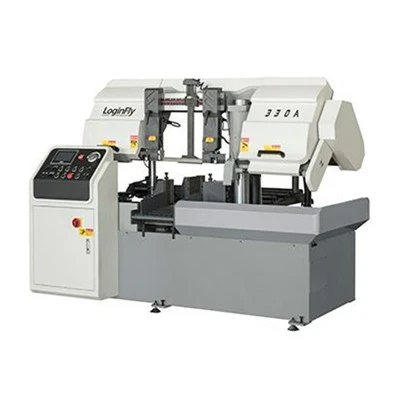
If you’re ready to chat about your specific bronze cutting needs, whether it’s a small art project or heavy industrial parts, hit us up. We’ll walk you through exactly which saw, blade, and coolant works best for your job, no pressure, no salesy stuff. We’re just a team of guys who build saws that work, and we want to help you get the job done right.
Conventional Circular Saw Machine References:
- Metal Cutting Technology Association. Band Saw Blade Selection for Non-Ferrous Alloys. 2023.
- Journal of Machining Science and Technology. Performance of Vertical Band Saws in Cutting Bronze Alloys. 2022.
- Industrial Machinery Digest. Best Practices for Cutting Dense Non-Ferrous Metals with Vertical Band Saws. 2024.
Shanghai Loginfly Sawing Technology Co., Ltd.
As one of the most professional vertical band saw manufacturers and suppliers in China, our products have good reputation in the market. We warmly welcome you to wholesale premium vertical band saw from our factory. If you have any enquiry about cooperation, please feel free to email us.
Address: Room 506 NO.655 Yinxiang Road,Nanxiangtown,Jiading District, Shanghai.China
E-mail: sales01@loginfly.com
WebSite: https://www.loginflysaws.com/
