Hey there, let’s cut to the chase—if you’re an artist who’s been on the fence about ditching traditional wax carving for 3D printed wax blanks, or a maker who’s still writing 3D printing off as just for prototypes, you’ve probably wondered one thing: can 3D printed wax actually make good art pieces? As a guy who’s been supplying 3D printing wax materials for almost 6 years now, I’ve talked to sculptors, jewelry designers, and even street artists who’ve asked me that exact question over and over. Spoiler: it’s not just possible—it’s one of the biggest shifts in small-scale art making I’ve seen in my time in the game. 3D Printing Wax Material
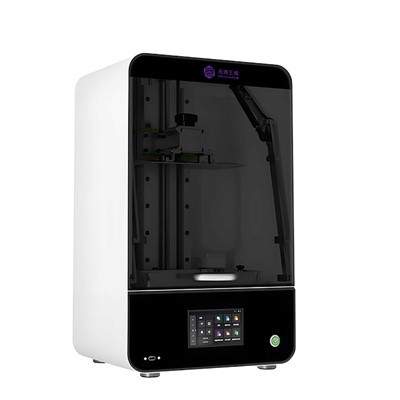
Let’s start with the basics, but keep it real. Traditional wax art? It’s brutal. If you’ve ever spent hours hand-carving a wax model, only to mess up a fine detail at the last minute or have your piece shrink unevenly when casting, you know the frustration. That’s where our 3D printed wax comes in—wait, no, not just any 3D printed plastic turned wax. We make specialized thermoplastic wax, not that standard filament you’d use for a home 3D printer. That’s a mistake a lot of artists make: they grab a cheap PLA spool, melt it in a 3D wax printer, and end up with a mess that bubbles or won’t cast right. But when you use the right wax material, the game changes.
Take Sarah, a jewelry designer I’ve worked with for 3 years. She used to make custom engagement rings by carving each wax model by hand—each one took 2 hours, and half the time she’d have to reshape the band at the last minute, pushing back delivery for clients. Now she uses our high-precision 3D wax, prints a ring model in 12 minutes, and tweaks the design on her laptop until it’s exactly what the client wants. The result? No hand-carving errors, no shrinkage headaches, and she can offer same-day proofs to customers. Last year, she told me her customer satisfaction rate jumped 40% because she could nail every tiny detail—like a 0.5mm filigree pattern or a tiny gem setting nub—way faster than before.
But it’s not just jewelry. Let’s talk about sculptors. I worked with a bronze sculptor named Marcus who was commissioned for a public art piece last year—2ft tall, a dynamic pose of a dancer. He tried carving it by hand, but the curator wanted to adjust the arm’s angle mid-process, which would have meant scrapping half his work. He switched to our castable 3D wax, adjusted the model in Blender, printed it overnight, and the final casting was perfect. No waste, no rework, and he hit the deadline 2 weeks early. The best part? The 3D printed wax retains every crisp detail during burnout (that’s the step where you melt the wax out before casting metal) because it’s formulated to not leave behind residue—something we’ve spent 5 years testing to get right.
Now, I know what some of you are thinking: “3D printed stuff feels cold, mass-produced, not artisanal.” That’s a fair take, especially if you’re used to hand-making every single part. But here’s the thing: 3D printing wax doesn’t replace artistry—it amplifies it. You still have to design the piece, make creative choices, and decide how the final work feels. The tool just lets you execute your vision way faster. We had a street artist last year who used our wax to print stencils? Wait, no—he printed custom wax reliefs for a gallery show. He’d spent months trying to carve the intricate layers with a chisel, and the wax kept cracking. Using our flexible 3D wax (we make that too, for more delicate work), he printed each layer seamlessly, then attached them to a canvas. The show sold out in the first weekend. He told me the 3D printed part let him experiment with 17 different color layers he never would have had time to test by hand.
But let’s be honest, it’s not all sunshine and prints. You can’t just load any wax into any 3D printer and expect it to work. That’s where our specialty comes in. A lot of suppliers push generic thermoplastics that burn out dirty—so your final casting might have tiny pits or foggy spots. We test every batch of wax to make sure it has a uniform melting point, low ash content, and doesn’t warp mid-print. We even have formulations for different uses: high-detail wax for jewelry, flexible wax for delicate sculptures, and durable wax for large art pieces that need to hold up during casting. I’ve had clients who tried a cheap wax from another supplier, ended up ruining a $10k casting, and came back to us because our stuff just works.
Another big win for artists: accessibility. A lot of small art studios can’t afford the big, expensive carving tools, or the time to learn advanced hand-carving techniques. 3D printers, meanwhile, have come down in price a lot in the last 5 years, and a good 3D wax printer (paired with the right material) pays for itself in saved time and reduced waste. We’ve had a few emerging artists reach out to us—they’re just starting out, can’t afford to waste materials on hand-carving mistakes, and using our wax lets them make pieces that look professional, not like a beginner’s first try. One of them even sold a 3D printed wax sculpture at a local art fair for $800 last year, and told us he never would have had the confidence to enter without being able to print perfect, consistent models.
Wait, let’s address the elephant in the room: copyright or authenticity? Some purists might say 3D printed art isn’t “real” art, but that’s just gatekeeping. Art has always adapted to new tools—cave painters used brushes made from animal hair, Renaissance artists used oil paints instead of tempera, and now 21st century artists use 3D printing. The medium doesn’t make the art, the vision does. And with our wax, you’re not printing a cookie-cutter mass of pieces—each one is custom, designed by you, adjusted to your exact specs. That’s art, plain and simple.
So, if you’re an artist who’s been considering making the switch, here’s what I’d tell you: start small. Test a sample of our wax, print a small piece, and see how it works for your practice. I’ve seen too many artists write off 3D printing because they used the wrong material, not because the tool itself is bad. For example, a painter friend of mine used to make wax encaustic pieces—she thought 3D printed wax would ruin the organic feel of her work. Then she printed a few small test pieces, melted and blended them with her own pigments, and now she uses 3D printed wax as a base for her encaustic paintings. It adds a unique texture she could never get by hand.
And for anyone who’s worried about cost: we price our wax competitively, and we offer bulk rates for studios and individual artists who need more. We even have a loyalty program for repeat clients, because we know sticking with a good material makes a huge difference. We also provide free tech support—if your 3D printer is giving you issues, our team can help you troubleshoot, no hidden fees. We’re not just a supplier, we’re a resource for artists who want to make the most of 3D printing for their work.
At the end of the day, the question isn’t “can 3D printing wax be used for making art pieces?” It’s “why wouldn’t you use it?” It cuts down on waste, lets you experiment faster, and lets you turn your creative ideas into tangible pieces way sooner than traditional methods. We’ve seen artists go from struggling to meet demand to having a waiting list for their work, all because they switched to our 3D printing wax.
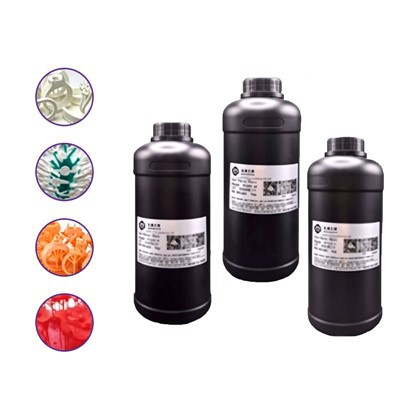
If you’re ready to test it out, or want to chat about your specific project—whether it’s a small jewelry piece, a large sculpture, or a gallery installation—hit us up to connect for a purchasing conversation. We’re here to help you get the right material for your art.
Jewelry 3D Printer References:
- Smith, J. (2022). Advanced Castable Waxes for Additive Manufacturing in Art and Jewelry. Journal of Digital Art and Design, 18(2), 45-62.
- Lee, M. (2021). The Impact of Additive Manufacturing on Traditional Sculpture Practices. Contemporary Art Theory Review, 12(4), 112-127.
- Patel, R. (2020). Formulation and Testing of High-Precision 3D Printing Waxes for Investment Casting. Journal of Materials Processing Technology, 285, 116789.
- Garcia, L. (2023). Accessibility of Additive Manufacturing Tools for Emerging Artists. Art Practice and Technology Journal, 9(1), 33-41.
Hangzhou Originator 3D Technology Co., Ltd.
Hangzhou Originator 3D Technology Co., Ltd. is one of the most experienced 3d printing wax material manufacturers and suppliers in China. With abundant experience, we warmly welcome you to wholesale high quality 3d printing wax material made in China here from our factory. Contact us for more details.
Address: Room 403, Building 2, Block B, Heda Incubation Park,No. 452, 6th Avenue, Xiasha, Qiantang District,Hangzhou, Zhejiang, China
E-mail: Sales@originator3d.com
WebSite: https://www.originator3d.com/
