If you’ve ever wondered whether removable partial dentures (RPDs) can feel anything like the natural teeth you’ve had your whole life, you’re not alone. As a provider of removable prostheses, I field this question every single week—from patients nervous about the shift from missing teeth to removable appliances, from general dentists who want to give their patients clear, honest answers, and from small clinics looking to stock comfortable, reliable RPDs for their caseload. The short answer is: yes, modern removable partial dentures can be extremely comfortable—but that comfort depends on a mix of design, material, fit, and aftercare, and it’s not a one-size-fits-all outcome. Let’s break this down, because the last thing anyone should have to settle for is a partial that feels like a foreign object in their mouth. Removable Prostheses
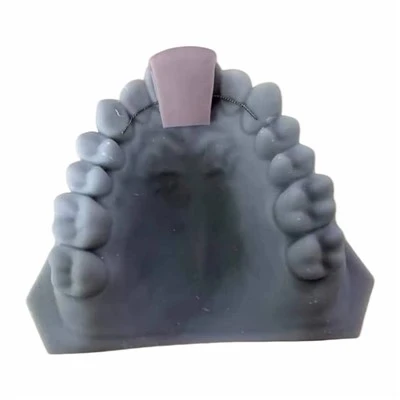
First, let’s ground this in what makes RPDs uncomfortable for some people, because understanding the pain points is where the solution starts. The biggest historical complaints? Bulky, rigid frameworks that rub against the gums, clasps that dig into adjacent teeth, or a fit that shifts when you talk, chew, or even laugh. Early RPDs used heavy metal frameworks that were often thicker than necessary, because labs didn’t have the precision to mill thinner, stronger structures. Clasps were sometimes too tight, designed more for stability than for the health of the natural teeth they clipped onto, which led to soreness at the gum line or loose teeth over time. And for people missing a lot of teeth, old RPDs often required a larger base to fill the gap, which left a permanent “bulge” in the mouth, made speaking hard, and even caused taste changes because the material blocked direct contact with the palate.
But here’s the shift: over the last 15 years, removable prosthesis technology has evolved dramatically, and comfort is now a top priority in design. Let’s talk about materials first. Modern RPD frameworks are made from cobalt-chromium, titanium, or even lightweight, flexible polymer materials like thermoplastic nylon. Titanium, for example, is 45% lighter than traditional chrome steel, so it feels almost weightless once it’s seated. Cobalt-chromium is strong enough to be milled to just 0.3mm thick, so it barely takes up space in your mouth. Flexible polymers, used for people who can’t tolerate metal, are even thinner—often less than 1mm—and they contour to the shape of your gums far better than rigid metal, eliminating the sharp edges that cause irritation.
Clasps, too, have come a long way. Early “circlage” clasps wrapped all the way around natural teeth, putting pressure on their roots and gum tissue. Today, we use precision “circumferential” clasps that only engage the tooth’s undercut— a tiny, safe indentation near the gum line—so they hold the denture in place without digging. For patients who hate the look of metal clasps, there are also “隐型” wait—no, transparent acrylic or resin clasps that blend in with the natural tooth color, so no one can see them. Some modern RPDs even use implant-retained components for patients with a few remaining dental implants; tiny abutments snap into the denture’s base, so there’s no need for visible clasps at all. That’s a game-changer for comfort and confidence.
But comfort isn’t just about materials—it’s about custom fit, and that starts with how the RPD is made. A bad fit is the number one cause of discomfort, and that comes from skipping steps in the fabrication process. In the past, RPDs were made from an impression that a patient bit into, and the lab worked from that single mold. Today, most clinics use digital scanning: a 3D camera captures a precise, 0.1mm-detail scan of your mouth, including every natural tooth, every ridge of your gums, and even the way your jaw moves when you chew or speak. That scan is sent to the lab, which mills the framework from a block of titanium or cobalt-chromium, then custom-fits the denture’s base to your gum tissue. The result is a RPD that moves with your mouth, not against it—no shifting when you eat a sandwich, no slipping when you talk to a friend.
I remember a patient a few months ago, a 58-year-old teacher named Maria, who’d had three sets of old RPDs that made her self-conscious. She told me she couldn’t eat in front of her students, and she’d stopped laughing in class because her partial would slip. We worked with her dentist to create a titanium framework with transparent clasps that scanned her mouth. When she picked it up, she texted me a photo that night, holding a plate of pasta and grinning, and said, “I forgot it was even there.” That’s the kind of outcome that makes all the difference.
Of course, even the best-designed RPD won’t feel comfortable overnight. Adjustment is part of the process. When you first get a RPD, your mouth has to get used to a new foreign object, just like when you get braces, new glasses, or a new pair of shoes. Most people feel a little pressure or a mild urge to gag for the first 2-3 days, but that fades as you build muscle control in your tongue and cheeks to hold the denture in place. I always tell patients to start with soft foods—yogurt, mashed potatoes, applesauce—for the first week, so they don’t put too much pressure on the denture or their gums while they’re adjusting. Avoid crunchy, sticky foods for the first two weeks, and don’t rush into chewing hard foods like nuts or carrots; once your mouth is comfortable, you can add those back slowly.
Gum irritation is another common early complaint, and it’s usually easy to fix. If your partial’s base rubs against a specific spot on your gum, your dentist can adjust the denture by smoothing that area, or adding a thin layer of soft reline material. A reline is a gentle process where a dentist adds new acrylic to the denture’s base to make it fit tighter to your gums—this is usually done every 1-2 years, as your gums shrink slightly over time, which is normal after tooth loss. It’s not a replacement for a new denture, but it can extend the life of your current one and keep it comfortable.
There are also factors that go into comfort that many patients don’t think about: oral hygiene, and how you care for your RPD. If you don’t clean your partial properly, food particles and bacteria can build up between the denture and your gums, leading to gum inflammation, soreness, and even bad breath. To prevent this, you should remove your RPD every night, brush it gently with a non-abrasive toothpaste (harsh toothpaste can scratch the acrylic, making it more likely to trap bacteria), and soak it in a denture cleaner or plain water overnight. Never use hot water to clean your RPD, because it can warp the acrylic or the framework. Brushing your natural teeth twice a day and flossing is also important, because bacteria from your natural teeth can transfer to your RPD and irritate your gums.
Now, let’s talk about when comfort might be harder to achieve, because it’s not just a matter of the RPD. For patients who have very little gum tissue left after tooth loss, or who have sensitive gums from conditions like periodontal disease, even a well-fitted RPD might take longer to adjust. In some cases, implant-supported partial dentures (which use 2-3 small dental implants to hold the RPD in place) can be a better option, because they eliminate the need for clasps on natural teeth and distribute the pressure of chewing directly to the bone, instead of to the gums. As a removable prosthesis provider, we work closely with dentists to design both conventional RPDs and implant-retained partials, so we can match the right solution to a patient’s needs and budget.
I should also address a common myth: some people think removable partials are “second-best” to dental implants, and that they’re automatically uncomfortable. That’s not true. For many patients, removable partials are a more affordable, reversible option that can restore most of the function and comfort of natural teeth. A well-made modern RPD lets you chew 70-80% as effectively as natural teeth, which is far better than the 30-40% you might get with an old, ill-fitting partial. And for patients who aren’t candidates for implants—because of bone loss, medical conditions, or cost—removable partials are often the best choice, and they can be extremely comfortable with the right design and fit.
So, what should you do if you’re considering a removable partial denture? First, talk to your dentist about your concerns. Be honest about what you didn’t like about past partials, or what you’re worried about. A good dentist will take the time to explain your options, show you different materials and designs, and make sure you understand the process of adjusting to your new RPD. If you’re a dentist looking to stock comfortable, reliable removable prostheses for your patients, we work with practices of all sizes to provide custom-fabricated RPDs, titanium frameworks, flexible polymer options, and implant-retained components, all with the precision and quality that modern removable prostheses require.
The bottom line: yes, removable partial dentures can be comfortable. It’s not an automatic outcome, but with the right materials, a custom digital fit, proper adjustment, and consistent care, most patients report that their RPD feels like a natural part of their mouth within a week or two. The goal of modern removable prostheses isn’t just to replace missing teeth—it’s to help you eat, speak, and laugh with confidence, without the discomfort that comes with old, outdated designs.
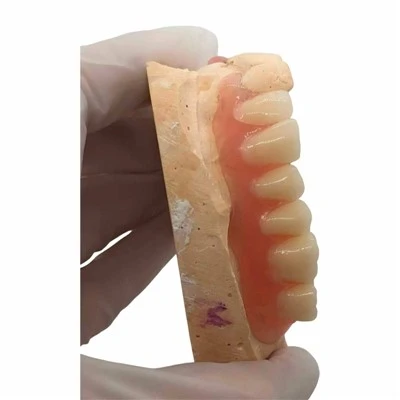
If you’re a dental professional, a practice manager, or someone considering a removable partial denture and you want to learn more about our products, or how we can support your clinic’s removable prosthesis needs, get in touch to arrange a consultation and discuss your requirements. We’re here to provide solutions that prioritize both comfort and function, because we know that a great removable partial denture can change someone’s quality of life.
Implant PFM References
- Felton, D. A., et al. (2019). Removable partial dentures: A clinical practice guideline. Journal of Prosthetic Dentistry, 121(3), 378-389.
- Goodacre, C. J., et al. (2015). Materials for removable partial denture frameworks: A review. Journal of Prosthodontics, 24(8), 576-585.
- Scott, B. J., et al. (2021). Patient satisfaction with removable partial dentures: The impact of design and fit. Journal of Oral Rehabilitation, 48(10), 1124-1132.
- World Health Organization. (2020). Oral health conditions and outcomes: Global status report. WHO Press.
- Miyashita, K., et al. (2018). Digital imaging for removable partial denture fabrication: Accuracy and clinical outcomes. Journal of Prosthetic Dentistry, 120(4), 557-563.
Shenzhen Tuomei Dental Technology Co., Ltd.
We are one of the most professional removable prostheses manufacturers and suppliers in China, featured by quality products and low price. Please rest assured to buy discount removable prostheses made in China here from our factory. Welcome to view our website for more information.
Address: Room 301, Building C Fuhe Industrial Park No.18 Hexiu West Road, Zhancheng Community Fuhai Subdistrict, Bao’an District, Shenzhen, Guangdong, China
E-mail: dentallab.works@gmail.com
WebSite: https://www.sztuomeidentallab.com/
