If you’ve walked through a grocery store at 2 a.m., driven past a well-lit warehouse at dawn, or ordered a custom part online that arrived on your doorstep in two days, you’ve interacted with the work of automation and production solutions long before you realized it. For over a decade, my team and I have partnered with manufacturers, distribution centers, and specialized operations to build and integrate systems that turn repetitive, error-prone tasks into consistent, scalable workflows. This isn’t just about robots replacing people—it’s about giving businesses the tools to grow, cut waste, and deliver better products to the end user. Today, I want to break down the industries where our work makes the biggest difference, and why automation isn’t a luxury anymore—it’s a necessity. Automation And Production Solutions
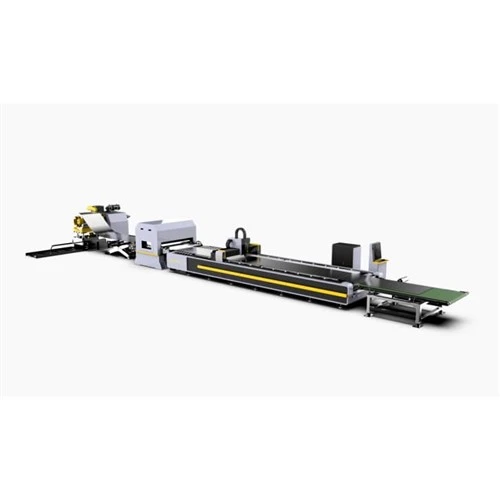
Let’s start with the industry where automation first moved from assembly lines to everyday operations: automotive manufacturing. When Henry Ford introduced the moving assembly line in 1913, he redefined production, but today’s automotive industry takes that foundation to a whole new level. Every car that rolls off a modern line relies on our solutions for welding, painting, and final assembly. For example, robotic arms handle spot welding for frames with 99.9% precision, a task that would take human workers hours to complete with the same consistency, and would carry far higher risk of injury. We also design custom conveyor systems that move car bodies between stations, syncing with software that adjusts speed and position in real time to match production targets. The shift to electric vehicles (EVs) has only accelerated this demand: battery packs for EVs require specialized handling, since they’re heavy, fragile, and must be assembled in a clean room environment. Our automation solutions for this industry aren’t just about speed—they’re about meeting regulatory standards for battery safety, reducing material waste from misaligned parts, and cutting downtime when demand for EVs outpaces supply.
Next up is food and beverage processing, an industry where consistency, food safety, and regulatory compliance are non-negotiable. Ten years ago, a lot of food processing relied on manual labor to sort fruits, fill containers, and package finished goods. Today, our automation solutions have eliminated most of those manual steps, and for good reason: a single contamination event, like a piece of plastic or a foreign object in a snack pack, can cost a brand millions in recalls and lost customer trust. We work with snack food manufacturers to build vision-guided sorting systems that can identify and remove damaged produce or foreign materials from a line in milliseconds, far faster than a human can. For beverage companies, we design filling and capping lines that adjust for different bottle sizes, from 8-oz. juice boxes to 5-gallon water jugs, with precise volume control that reduces product waste by up to 15%—a huge savings for brands that process millions of gallons a year. We also integrate traceability software into these lines, so every batch of food or beverage can be tracked from farm to shelf, a requirement that’s become even more strict with FDA and EFSA regulations in recent years.
Distribution and e-commerce warehousing is another industry that’s been transformed by automation, especially since the boom in online shopping over the last decade. When you order a book, a pair of shoes, or a kitchen gadget, the item has to be picked from a shelf, packed, and shipped to your door fast—and that’s where our solutions come in. We’ve designed and installed goods-to-person systems that move entire shelves of inventory to warehouse workers, instead of having workers walk miles a day to find each item. This not only cuts order picking time by 50% or more, but also reduces back injuries, one of the biggest health risks for warehouse staff. We also build custom packing lines that automatically seal boxes, apply shipping labels, and even adjust box size based on the item being shipped, which reduces cardboard waste and lowers shipping costs. For 3PL (third-party logistics) providers, who handle inventory for dozens of different brands, our scalable automation solutions mean they can ramp up capacity during peak seasons like Black Friday or back-to-school, without having to invest in new infrastructure every year.
Pharmaceutical and medical device manufacturing is a quieter but equally critical industry for automation, where precision and compliance are life-or-death. Every pill, vaccine, or surgical tool has to be manufactured to exact standards, with zero room for error. We work with pharmaceutical companies to design cleanroom automation systems that handle the mixing, filling, and packaging of medications, eliminating human contact that could introduce contaminants. For example, insulin pens, which require precise dosage measurements, are assembled on lines where robotic systems place components, inject medication, and test for leaks—all in a space that’s maintained at a sterile level far higher than a standard factory. We also develop traceability systems for medical device manufacturers, so every device can be traced back to its production date, batch, and location, a requirement for tracking recalls and ensuring patient safety. Unlike some industries where automation is focused on speed, in pharma, it’s about consistency: a 1% error rate in manual assembly can be a life-threatening risk, while our automation solutions have error rates of less than 0.001%.
Moving beyond discrete manufacturing and processing, we also work with the packaging industry, a sector that’s often the final step before a product reaches a consumer. Packaging isn’t just a box or a bag—it’s a key part of branding, protection, and supply chain efficiency, and automation has revolutionized how it’s produced and applied. We design high-speed packaging lines that can handle everything from flexible plastic bags to rigid corrugated boxes, with capabilities to print custom labels, add barcodes, and even insert promotional materials into packages. For consumer goods brands, the ability to switch between packaging styles quickly is essential—we build flexible lines that can adjust to a new product or packaging design in hours, instead of days, which helps brands get new products to market faster. We also work with packaging material manufacturers, providing automation for cutting, shaping, and printing cardboard and plastic, which reduces material waste by optimizing the layout of parts on each sheet.
A less talked about but fast-growing industry we serve is agriculture and farm automation, a sector that’s facing challenges like labor shortages and climate change, making automation a vital tool for sustainability. We partner with large-scale farms and agricultural tech companies to build automation systems for harvesting, crop sorting, and greenhouse management. For example, robotic harvesters for berries and leafy greens can pick ripe produce 24 hours a day, with 90% accuracy, a huge help when farm labor is scarce and demand for fresh produce is high. We also design irrigation and fertilization systems that use sensors to adjust water and nutrient levels based on real-time crop conditions, reducing water use by up to 30% compared to manual methods. For seed companies, we have automated lines that sort and package seeds by size and quality, ensuring higher germination rates for farmers. This industry is unique because it combines automation with environmental monitoring, so our solutions don’t just improve production—they help reduce the environmental impact of agriculture.
Now, it’s important to address a common misconception I hear all the time: automation is just for big companies, and it will replace workers. Over the years, we’ve worked with businesses of all sizes, from small family-owned food processing plants to large automotive manufacturers, and we’ve found that automation actually creates jobs, while making existing jobs safer. When we install a robotic welding system in an automotive plant, workers don’t lose their jobs—they move to roles that program, maintain, and oversee the system, roles that pay more and require specialized skills. In small food processing plants, automation allows them to compete with larger brands, instead of being priced out of the market, which means they can keep their doors open and retain their existing workforce. We also prioritize worker training with every installation, providing hands-on sessions so teams feel comfortable using the new tools, not intimidated by them.
The biggest mistake businesses make when considering automation is treating it as a one-size-fits-all solution. Every industry, every even every individual business, has unique workflows, pain points, and goals. A bakery needs a very different automation solution than a battery manufacturer, and a warehouse handling small e-commerce orders has different needs than a warehouse storing bulk raw materials. That’s why our approach isn’t to sell pre-built systems—we start by sitting down with a client, mapping out their current process, identifying where waste, errors, or bottlenecks are, and designing a custom solution that fits their needs, budget, and timeline. For example, when we worked with a small craft brewery, they couldn’t afford a full high-speed filling line, so we designed a modular system that let them start small, and add stations as their production grew. For a large auto parts manufacturer, we integrated their existing legacy equipment with our new automation, so they didn’t have to replace all their machinery at once.
Looking ahead, the demand for automation and production solutions will only keep growing. As labor costs rise, regulatory standards get stricter, and consumer expectations for fast, consistent products increase, businesses that don’t invest in automation will fall behind. The next wave of automation will be even more integrated with data and analytics: systems that use machine learning to predict downtime before it happens, adjust production schedules based on demand, and even identify patterns in waste that no human could spot. We’re already working on these next-generation solutions, partnering with clients to build flexible, intelligent systems that can adapt as their business changes.
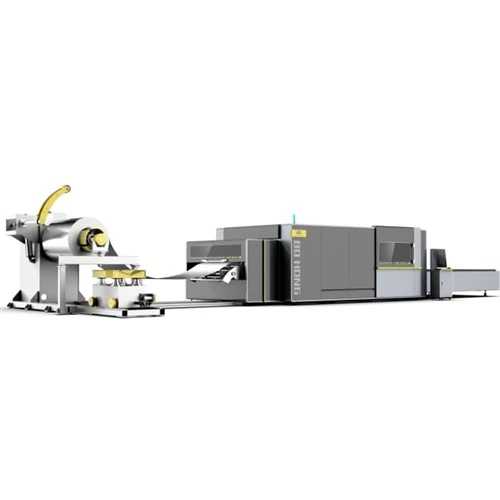
I’ve seen firsthand how automation can turn a struggling business into a leader in its industry, how it creates safer, more rewarding jobs for workers, and how it helps businesses reduce their environmental impact by cutting waste. If you’re in any of these industries, or you’re in a different sector looking to improve your production workflows, we’d be happy to discuss your needs. We don’t just provide equipment—we provide end-to-end support, from initial design and installation to ongoing maintenance and upgrades, to ensure your automation solutions work for you for years to come. Don’t hesitate to reach out to our team to start a conversation about how automation can improve your operations.
Fiber Laser Cutting Machines References:
- International Federation of Robotics. World Robotics 2023 Report: Industrial Robotics.
- U.S. Food and Drug Administration. Food Safety Modernization Act (FSMA) Traceability Requirements, 2021.
- Association for Advancing Automation. Automation Trends in Logistics and Warehousing, 2022.
- European Medicines Agency. Good Manufacturing Practice (GMP) for Medicinal Products for Human Use, 2020.
- Food and Agriculture Organization of the United Nations. Agricultural Automation for Sustainable Production, 2023.
- National Institute for Occupational Safety and Health. Robotics in Manufacturing: Worker Safety and Job Transformation, 2021.
Yongkang City Bohong Intelligent Equipment Co., Ltd.
As one of the most reliable automation and production solutions manufacturers and suppliers in China, we also support customized service. With abundant experience, we warmly welcome you to buy advanced automation and production solutions from our factory. If you have any enquiry about quotation, please feel free to email us.
Address: No. 176 Yinggui North Road, Chengxi New Area, Yongkang City, Zhejiang Province
E-mail: bohonglasertech@Outlook.com
WebSite: https://www.bohonglasertech.com/
