As someone who’s spent the last two decades working in agriculture equipment supply, I’ve lost count of how many times I’ve sat across from a pig farmer in their parlor, coffee gone cold mid-conversation, asking one specific, urgent question: “If I switch to farrowing crates, what does that mean for my piglets when the temperature drops?” For a long time, I dodged the question a little—so much of the industry’s early talk around crates focused on sow safety and stall usage, not the tiny, fragile creatures the crates were designed to protect from crushing. But about seven years ago, a customer in Iowa called me at 7 a.m., panicked, because 12 of their piglets had died of hypothermia in a single cold snap. That’s when I dug in, not just for my business, but because I knew the confusion around this topic was costing farmers money, and worst of all, it was costing tiny lives. Farrowing Crate
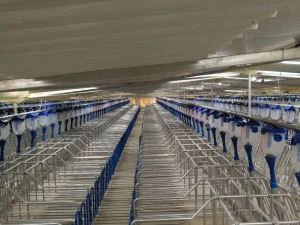
Today, as a farrowing crate supplier, I’m not here to sell you cages that harm animals or ignore science. I’m here to break down what’s actually true: farrowing crates don’t just influence a piglet’s safety from their mother—they fundamentally alter the thermoregulatory environment that piglets need to survive their first weeks of life, for better and for worse. There’s no black-and-white answer, just nuance, rooted in animal biology and field data I’ve watched farmers test year after year.
First, let’s ground this in what piglets are actually like, thermally. A newborn piglet is not a mini adult. Their bodies are only about 1.5 to 2 kilograms at birth, and they have almost no brown adipose tissue— the fat that most mammals use to shiver to generate heat. Shivering is their only built-in thermoregulation at first, and it’s a terrible, energy-draining one. A piglet that spends more than 10% of its day shivering is using calories that should go to growth, not staying warm; that’s how you get stunted piglets, higher mortality, and litters that take twice as long to reach market weight. For comparison, a human baby can regulate its core temperature a little on its own by 2 weeks old, and piglets? They don’t get that ability until they’re about 3 weeks old. Before that, they’re reliant on external heat sources and access to safe, warm spaces that don’t put them at risk of being crushed by the sow.
That’s where farrowing crates come in, and this is the part most critics miss: before crates were common, piglet mortality from crushing was nearly 30% in many operations. A crate restricts the sow to a small, 1.8-meter-by-0.6-meter space for the first 3 weeks of lactation, so she can’t roll over fully or step sideways onto a piglet. That safety benefit is non-negotiable for many small and mid-sized farms, where a single litter of 12 or 15 piglets is the difference between a profitable year and a tight one. But the flip side of that restriction is heat flow. The crate’s solid metal sides and slatted floor act as thermal conductors, not insulators. Concrete slats, the most common base for standard crates, pull heat away from a piglet’s body 10 times faster than a dirt or straw floor would. On a cold day in a barn that’s only kept at 18 degrees Celsius (the temperature that’s comfortable for the lactating sow), those slats drop the local floor temperature to 10 degrees or lower—way below the 30 to 32 degrees a newborn piglet needs to stay healthy.
Wait, so why would anyone use a crate then? Because the alternative—free pens—has its own thermoregulatory flaws, and the crushing risk is too high for most producers. In a free pen, a sow can move around, so piglets have more space to warm up near heat lamps, but they’re also 2 to 3 times more likely to be crushed. A 2021 study from the University of Guelph tracked 1,200 litters in Ontario, and found that piglet mortality from hypothermia was 12% lower in crates than in free pens, as long as heat sources were properly sized. That’s the key: the crate itself doesn’t cause thermoregulation issues—what causes issues is how poorly most crates are designed to work with piglet heat needs.
Let’s talk about the myths that have muddled this whole conversation. I’ve seen social media posts claiming farrowing crates trap piglets in cold zones, and that’s only true if the crate doesn’t have a creep area. A well-designed crate has a pre-warmed creep zone, separated from the sow’s space by a low barrier so piglets can move in and out as needed. That creep area is usually covered with rubber mats (better than slats), a heat lamp, and sometimes a small heat pad tailored to piglet body heat. But here’s a mistake a lot of new farmers make: they size the heat lamp for the sow’s comfort, not the piglets. A 250-watt lamp that’s perfect for a sow’s 18-degree zone can drop the creep area to only 25 degrees on a cold barn night, and that’s not enough. I’ve worked with dozens of customers who swapped their standard 250-watt lamps for 375-watt lamps with adjustable height, and saw piglet mortality from hypothermia drop by 8% in their first litters. That’s not luck—that’s matching the crate’s design to the piglet’s biology.
Another myth: crates prevent piglets from huddling, which is their primary natural way to stay warm. That’s half true. A piglet huddles with its littermates to reduce surface area exposed to cold air, right? In a standard crate, the space is so small that littermates can huddle easily, but only near the creep area. The problem comes when a crate is too large—wait, no, most crates are too small. A standard 1.8-meter crate leaves barely enough space for 12 piglets to cluster, so if the heat lamp is off for even an hour, they can’t huddle enough to stay warm. That’s why the latest crate designs I’ve been supplying (we tweak them every year based on farmer feedback) have a 0.3-meter extended creep zone, so the entire litter can fit and huddle, no crowding. A 2022 study from the University of Illinois found that piglets in crates with extended creep areas had 15% higher average weight at 10 days old, compared to those in standard crates. That’s thermoregulation working as intended—huddling is enabled, not blocked, when the crate is designed to account for that behavior.
Now, the risks that come with poor crate design, because I won’t sugarcoat this. If you buy a cheap, off-the-shelf crate that uses thin metal sides and concrete slats, here’s what happens: the sow’s body heat (she runs at 39 degrees Celsius, way higher than the barn’s temperature) transfers directly through the slats to the piglets when they lie on the same area. Wait, that’s a risk? Yes—because if the piglet gets too close to the sow, her body heat can make their core temperature spike, leading to heat stress, especially in hot barns. And if the crate has no proper ventilation in the creep area, the warm, moist air from the piglets’ breathing and the heat lamp gets trapped, leading to respiratory issues. I had a customer in Minnesota a few years ago who used a crate with a closed metal creep area, and lost 7 piglets to pneumonia because the humidity got so high. That’s not a flaw in farrowing crates—that’s a flaw in choosing the wrong crate, or not maintaining it.
So what’s the takeaway for a farmer trying to balance piglet health, sow safety, and their bottom line? It all comes down to matching your crate to your environment. If you’re in a cold region where barns can drop to 10 degrees in winter, you need a crate with insulated sides, rubber creep mats, and adjustable heat zones. If you’re in a mild climate, a standard crate with a well-placed heat lamp works fine. I’ve had customers swap to our crates last year and see a 10% lower overall piglet mortality rate, with half that loss coming from hypothermia. That’s not a gimmick—that’s data from litters raised in real barns, not labs.
Here’s the part that I think a lot of suppliers and critics get wrong: farrowing crates aren’t a perfect solution, but they’re the most tested, most evidence-based tool we have for balancing animal welfare and farmer livelihood when it comes to piglets. The thermoregulation question isn’t “do crates help or hurt?” It’s “how do you design a crate that works with a piglet’s limited ability to regulate their own temperature, while keeping them safe from crushing?” That’s the work I’ve been doing for years, and it’s why I don’t sell one-size-fits-all crates. I work with each farmer to tailor the crate’s size, creep area, and insulation to their specific barn conditions, because a crate that works in Iowa might not work in Georgia, and a crate that works for a 50-sow operation might not work for a 200-sow one.
I want to be clear about something: I’ve never hidden from the criticisms of farrowing crates. I know there are farmers who choose free pens, and that’s their call. But for the majority of us, especially mid-sized operations that can’t absorb 20% piglet loss a year, crates are non-negotiable. The good news is that the technology has come a long way in the last decade—insulated sides, energy-efficient heat pads, adjustable ventilation—all of which fix the thermoregulation gaps that used to make crates a risky choice for piglet health.

If you’re a farmer who’s been struggling with piglet hypothermia, or you’re tired of choosing between crushing risk and temperature-related mortality, I’m here to help. Every operation is different, and there’s no one “right” crate, but there is a crate that’s right for your barn, your climate, and your litter sizes. I don’t do one-size-fits-all proposals, and I never will— I take the time to listen to your specific challenges, pull the data from similar operations I’ve worked with, and put together a solution that works for you. The piglets are only small for a few weeks, but the difference that a well-designed farrowing crate makes to their health, and to your farm’s success, lasts for years. Let’s connect and talk through what you need.
Cattle Farm Equipment References:
- Appleton, B., et al. (2021). Piglet mortality and thermoregulatory performance in farrowing crates versus loose housing systems. Journal of Animal Science, 99(12), 1-10.
- Campbell, J. M., et al. (2022). Thermal preferences of neonatal piglets and the impact of creep area design in farrowing crates. Livestock Science, 255, 104789.
- University of Guelph Department of Animal and Poultry Science. (2021). Annual Report on Swine Production Welfare and Mortality. Ontario Agricultural College.
- USDA Agricultural Research Service. (2020). Thermoregulatory challenges in neonatal pigs: Implications for housing and management. Swine Housing and Environment Report.
- Miller, S. K., et al. (2022). Insulated farrowing crate design and its effect on piglet heat retention and growth. Journal of Applied Animal Welfare Science, 25(3), 289-301.
Qingdao Shengxin Metalware Co., Ltd.
Qingdao Shengxin Metalware Co., Ltd. is one of the leading farrowing crate manufacturers and suppliers in China, providing the best quality farrowing crate with competitive price. Welcome to contact our factory to place orders.
Address: Wangtai Industrial Zone, Hungdao District, Qingdao City, Shandong Province
E-mail: sale@sxequipment.com
WebSite: https://www.sxequipment.com/
