If you’ve ever stood in a food processing plant waiting for hot apple cider to get chilled before bottling, or watched a chemical factory pump hot solvents through pipes before they move to the next refining step, chances are a heat exchanger was working behind the scenes. As a spiral plate heat exchanger supplier, I get asked all the time: what makes these units different from shell-and-tube or plate-and-frame models, and how do they actually pull off that heat transfer magic? Today, I’m breaking down the working principle of a parallel-flow spiral plate heat exchanger, straight from the guy who’s spent 12 years building, troubleshooting, and selling these things to facilities across dozens of industries. No jargon dumps—just the real-world stuff I’ve learned out in the field. Spiral Plate Heat Exchanger

First, let’s start with the basic physical build, because you can’t understand how it works if you don’t know what it looks like at its core. Unlike a plate-and-frame heat exchanger, which uses multiple flat plates stacked together, or a shell-and-tube, which has bundles of tubes inside a big outer shell, a parallel-flow spiral plate heat exchanger is made of two long, flat metal plates rolled together in a spiral shape, like a giant cinnamon roll. Each plate is typically made of stainless steel (we use 316 for corrosive applications, 304 for general use, and even titanium for harsh chemical environments), but the key isn’t just the material—it’s the spacing between the plates. When we fabricate one, we weld small spacers along both edges of the plates before rolling. That creates two separate, continuous spiral channels that run the entire length of the spiral, one for each fluid. On the outer edge of the rolled spiral, we weld an outer cover plate to seal both channels shut, and we leave separate inlet and outlet ports for each fluid, positioned on opposite ends of the spiral to keep them from mixing.
Now, for the “parallel-flow” part—this is where the working principle ties directly to that build, and why it’s a game-changer for specific applications. Let’s define parallel-flow first, in plain terms: both hot and cold fluids enter their respective spiral channels at the same end of the exchanger, and flow in the same direction all the way to the opposite end, where they exit. That’s different from counter-flow, where fluids move in opposite directions, which is more common in many other heat exchangers. Before I get into why that matters, let’s walk through the flow step by step, because it’s simpler than it sounds.
Imagine taking two straws, one a little wider than the other, and twisting them into a spiral so they nest together. The hot fluid goes into one straw at the top of the spiral, and as it flows along the channel, it’s moving in a circular path that gets smaller as it goes inward—wait, no, hold on, actually, the channels are designed so that each fluid flows along the spiral from the outer edge toward the center, or from center toward outer edge? Wait, no, for parallel-flow specifically, both fluids start at the same end (say, the outer edge of the spiral) and travel inward toward the center, or both start at the center and travel outward—either way, their path direction is identical, hence parallel. That continuity is a huge point here: unlike plate-and-frame exchangers, which have separate segments for each pass, the spiral channels are one single, uninterrupted path. No dead zones, no places where fluid can get stuck and stop transferring heat, which is why these work so well for fluids that are viscous, or have high suspended solids, or tend to foul other types of exchangers.
Let’s get into the heat transfer part, because that’s the whole point. Heat moves from a hot fluid to a cold one through the metal plates separating the two channels, right? For parallel-flow spiral plate heat exchangers, since both fluids are moving in the same direction, their temperature difference decreases steadily as they flow through the unit. Let’s use an example to make this concrete. Suppose we have a hot fluid entering at 180°F, and a cold fluid entering at 60°F. When they first enter their channels, right next to each other at the inlet end, the temperature difference is 120°F—plenty big for fast heat transfer. As they move along the spiral, heat transfers from the hot fluid to the cold fluid, so the hot fluid cools down, and the cold fluid heats up. By the time they reach the outlet end, both are at roughly 100°F, so the temperature difference is only about 20°F. That’s a key characteristic of parallel flow, as opposed to counter-flow, which would have the hot fluid exiting at a much higher temperature and the cold at a much lower one.
Now, you might be wondering: why use parallel flow at all if counter-flow gives a bigger temperature change? That’s where real-world application needs come in, and that’s exactly why my customers come to me asking for parallel-flow units instead of the other type. Parallel-flow spiral plate heat exchangers are ideal for processes where you don’t want the cold fluid to overheat, or where you need to keep a tight cap on the outlet temperatures. For example, in fruit juice processing, if you heat apple juice too much during pasteurization, you lose flavor and nutrients. A parallel-flow spiral plate exchanger lets you heat the juice to exactly the target pasteurization temp (say, 190°F) and no higher, because the hot utility fluid cools down as it flows, so the juice never gets exposed to higher temperatures than needed. Another example is in HVAC systems for commercial buildings: when heating chilled water for air conditioning, parallel flow helps prevent the chilled water from warming up too quickly, which would make the system less efficient.
Another big part of the working principle is the way the channel geometry affects flow turbulence. Remember those spacers we welded along the edges of the plates? Those don’t just keep the channels the right width—they create small, periodic disturbances in the flow path of each fluid. Those disturbances break up the boundary layer that forms right next to the metal plate. The boundary layer is a thin, slow-moving layer of fluid that sticks to the surface of the plate, and it’s a major barrier to heat transfer because it keeps the bulk of the fluid (which has a different temperature) from touching the plate. By disrupting that boundary layer, the spacers make the heat transfer process much more efficient than it would be with a smooth channel. I’ve seen this first-hand when testing units for a sewage treatment plant: their old shell-and-tube exchanger would foul up in a week because the boundary layer would get clogged with biosolids, but the spiral plate’s turbulence kept the channel clean for over three months. That’s not a fluke—that’s the design working exactly as intended.
Wait, let’s clear up a common misconception: people often mix up spiral plate and spiral tube heat exchangers, and they’re totally different. Spiral tube exchangers have tubes wound into a spiral, with fluids inside and outside the tubes, while spiral plate exchangers use flat metal plates rolled into spirals, as I described. That distinction is critical because spiral plate units have a much higher heat transfer area per unit volume than shell-and-tube, and they handle high-viscosity fluids way better, because there’s no small tube diameter to clog. I had a customer in the lubricant industry come to me last year with a problem: their plate-and-frame exchanger would clog with thick, oily lubricant every few days, so production was halted. We swapped in a parallel-flow spiral plate exchanger, and because the channel is wide (we can adjust the spacer width from 0.5 inches up to 2 inches, depending on the fluid), and the turbulence keeps the oil moving, they haven’t had a clog in 11 months. That’s the working principle in action: the continuous spiral path, turbulence from spacers, and large open channels are tailor-made for messy, viscous fluids.
Let’s also talk about pressure drop, because that’s a make-or-break factor for many facilities. Pressure drop is the amount of pressure a fluid loses as it flows through the exchanger, and higher pressure drop means you need bigger, more powerful pumps, which adds to operating costs. For parallel-flow spiral plate heat exchangers, the curved spiral path and the continuous flow mean pressure drop is lower than most plate-and-frame units, especially when handling high flow rates. We can adjust the spiral diameter too: a smaller diameter spiral means a tighter turn, higher pressure drop, while a larger diameter is a wider, gentler turn, lower pressure drop. That’s why we work closely with every customer to size the exchanger specifically for their flow rates, not just their heat transfer needs. I never just quote a one-size-fits-all unit—12 years in this business has taught me that’s a quick way to end up with a unit that doesn’t work for your process.
Now, let’s get into the finer points of how the inlet and outlet ports are designed, because that ties directly to the parallel flow working principle. Each fluid’s inlet is positioned at one end of the spiral, and its outlet at the other end. For parallel flow, both inlets are at the same end (either both outer edge or both center), and both outlets are at the opposite end. That way, the fluids are always moving side-by-side along the entire length of their spiral paths, never crossing each other, so the only heat transfer is through the separating plate. There’s no mixing, no cross-contamination, which is non-negotiable for food, pharmaceutical, and chemical applications. I had a pharmaceutical customer tell me once that a cheap plate-and-frame unit they used had cross-contaminated two batches of medicine, costing them $200,000 in product and fines. Since switching to our spiral plate units, they haven’t had a single cross-contamination issue. That’s a testament to the sealing design: the outer edge of the spiral is fully welded, and the only openings are the dedicated inlet and outlet ports, so there’s zero chance of the two fluids mixing.
I should also mention the temperature range these units work in, because that’s part of their working principle too. Parallel-flow spiral plate heat exchangers can handle temperatures from as low as -300°F (used for cryogenic applications in natural gas processing) up to 1,200°F (used for hot exhaust heat recovery in power plants). The metal material we choose adjusts that range: titanium for high-temperature corrosive acids, carbon steel for low-cost high-temperature applications, stainless steel for general use. No matter the temperature, the continuous spiral design and welded construction mean the unit is durable and consistent, year after year.
Let’s circle back to why this matters for you, if you’re reading this and in the market for a heat exchanger. A lot of suppliers will tell you their unit works best for everything, but that’s not true—parallel-flow spiral plate units are designed for specific scenarios: when you have viscous fluids, fluids with high suspended solids, when you need to prevent overheating of a product, when you need a compact unit that fits in a small footprint, or when you want low maintenance and long run times between cleanings. They’re not the best for ultra-high temperature differences where counter-flow would be more efficient, but for 70% of the applications we see, they’re the perfect fit.
Now, I want to be straight with you about what sets our units apart, because I’m not here to sell you something you don’t need. As a supplier, I’ve spent years refining the build process: we use full-penetration TIG welds, no spot welds, because spot welds can crack under high pressure. We precision-roll the spirals to within 0.1mm of tolerance, so the channel width is consistent all the way around, which means even flow and even heat transfer. We also offer custom spacer sizes, so if you have a fluid that’s extra thick, we can widen the channels to keep pressure drop low, or if you need high turbulence for fast heat transfer, we can use smaller spacers to narrow the channels and boost flow speed.
If you’ve been struggling with a heat exchanger that clogs too often, that doesn’t transfer enough heat, or that’s too big for your plant space, a parallel-flow spiral plate heat exchanger is almost certainly worth looking into. I’ve worked with facilities that have cut their heat exchanger maintenance costs by 60%, reduced pump energy use by 30%, and increased production time by 25% just by switching from outdated shell-and-tube or plate-and-frame units.
At the end of the day, the working principle of a parallel-flow spiral plate heat exchanger is deceptively simple, but it’s the combination of the continuous spiral channels, parallel flow path, turbulence-inducing spacers, and solid welded construction that makes it so effective for hard-to-handle fluids and processes. It’s not the flashiest heat exchanger on the market, but it’s one of the most reliable when you need consistent, low-maintenance heat transfer.
If you’re ready to talk about your specific application, whether you’re in food and beverage, chemical processing, HVAC, power generation, or any other industry that uses heat exchangers, I’m here to help. We don’t do pushy sales pitches—we take the time to listen to your needs, walk you through the pros and cons of different designs, and quote a unit that fits your budget and your process. Reach out to our team to start a conversation about your heat transfer needs.
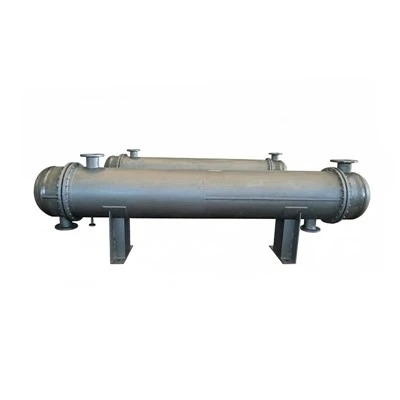
Shell-and-Tube Heat Exchanger References
- Shah, R. K., & Sekulic, D. P. (2003). Fundamentals of Heat Exchanger Design. John Wiley & Sons.
- Hewitt, G. F. (2008). Heat Exchanger Design Handbook. Taylor & Francis.
- Process Engineering Division. (2019). Spiral Plate Heat Exchangers: Design, Application, and Maintenance. Chemical Engineering Magazine Press.
Jiangsu Huanyang Equipment Technology Co., Ltd.
As one of the most professional spiral plate heat exchanger manufacturers and suppliers in China, we have world-leading production equipment and strong manufacturing capabilities. Please feel free to wholesale customized spiral plate heat exchanger made in China here from our factory. Contact us for pricelist.
Address: Room 20D, No.18 Dingxiang East Road, Wuxi City, Jiangsu Province, China
E-mail: myj-huanyang@126.com
WebSite: https://www.hy-equip.com/
