If you’ve ever scrolled through contemporary landscape design feeds, you’ve probably seen the sleek, minimalist yards and public spaces with sharp lines, native plants, and zero excess decor. For years, I’ve had folks DM me (they’re mostly homeowners or small landscape companies) asking the same question: “Wait, landscape boulders? Don’t those belong in that overdone, fussy 90s rock garden? Can they actually work in a modern space?” Landscape Boulders
Let’s cut to the chase: yes—if you stop treating boulders like afterthoughts and start using them like the intentional, design-forward elements they are. I’ve been in the landscape boulder supply game for 12 years now, and I’ve watched modern design shift from trashing hardscaping that feels “out of place” to embracing it, as long as it has purpose. The boulders we pull from local quarries and riverbeds aren’t the clunky, mismatched ones from that old DIY rock pile—they’re sourced to fit exactly what contemporary spaces need.
First, let’s talk about what “contemporary landscape” actually means right now, because a lot of people get that wrong. It’s not just white gravel and concrete patios with no personality. Contemporary design is about adaptability, sustainability, and clean lines that don’t feel cold. It’s using materials that look like they belong together, even if they’re not perfectly uniform. Boulders check every one of those boxes, as long as you don’t overdo it. Way too many new designers (and even a few seasoned ones I’ve partnered with) pile too many boulders in a yard like they’re filling a gap, and that’s when it looks dated. But use one, two, three carefully placed, scaled boulders? That’s game-changing.
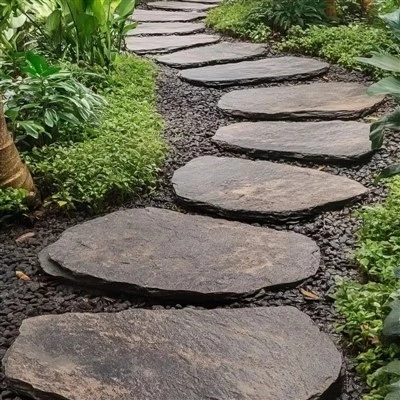
Take the example I worked on last spring in Portland, Oregon. A homeowner had a small, narrow front yard—only 12 feet wide—with a blank concrete strip and a wonky downspout that kept flooding into the street. They wanted no fancy decor, no fussy flower beds that needed constant watering, and something that matched their mid-century modern home. We brought in two large, flat river boulders (we call them “step stones” but they’re way bigger than the standard 12-inch ones) that weighed about 1,800 lbs each. We set them at angles to break up the concrete’s harsh straight lines, used them as stepping stones over a tiny gravel path, and tucked a couple of native sedges and low-growing creeping thyme around their bases. The best part? We used the boulders to redirect that downspout water right into a small rain garden they added on the side, so they fixed a drainage problem without any ugly piping. The whole space felt modern, calm, and intentional—no one would ever guess those boulders were “just rocks from a supply yard.”
Wait, but what about size and texture? A common mistake new designers make is grabbing big, jagged mountain boulders for a tiny urban yard. That’s like bringing a grand piano into a studio apartment—it overwhelms the space. Contemporary design is all about scale, and boulders are no exception. For small spaces, we recommend medium, rounded river boulders (usually 2 to 4 feet across) because they feel soft and fit without cramping. For larger commercial spaces—like a new office park or community garden—you can go with much bigger, more dramatic boulders, especially if you pair them with other modern materials like exposed aggregate concrete, weathered steel planters, or tall, thin ornamental grasses. Those boulders don’t just look good; they add structure to big, open spaces that would otherwise feel empty.
And let’s talk sustainability, because that’s a huge part of modern landscape design right now. A lot of people think boulders are bad for the planet because they’re mined, but that’s not always true. The boulders we supply come from local quarries within a 200-mile radius, so we cut way down on transportation emissions. Plus, using boulders means you don’t need concrete retaining walls or other hardscaping that uses way more carbon to make. We also work with designers who use boulders as a core part of native plant habitats—those big rocks hold heat at night, which protects tender native plants, and they give small wildlife like lizards and bees a spot to hide. Last year, a landscape architect in Seattle used a cluster of our large, flat boulders in a pollinator garden for a school; they became sunning spots for native bees and butterflies, and the kids love climbing on them during recess. That’s not just modern design—that’s functional, sustainable design that fits exactly what contemporary spaces need.
I know some folks are still stuck on the old “rock garden” stereotype. Let’s address that: the overdone rock gardens of the 90s were bad because they used too many rocks, no thought to scale, and no pairing with plants that felt modern. Today, contemporary boulder installations are minimal, intentional, and paired with plants that are native or low-water—no neon ornamental grasses or plastic flamingos (thank god). We regularly pair boulders with things like blue fescue, salvia, and even structured succulents that have clean lines, not the messy, overgrown plants from those old gardens.
Another thing I hear all the time: “Boulders are too heavy and expensive to work with.” Okay, yeah, they’re not cheap, but compared to other hardscaping materials? A single quality boulder can last 50 to 100 years—way longer than a concrete patio or even a wooden deck. And when you work with a local boulder supplier like me, you cut out the middleman, so you don’t get charged for extra transportation or markup. Also, we help with installation too—we have a network of licensed contractors who know how to set boulders so they’re stable, level, and look natural, not like they were just plopped down. We’ll even send you photos of similar projects we’ve done in your area, so you can see exactly how a boulder will fit in your space before you buy.
Wait, let’s get into a recent mistake I saw, just to make it real. A designer in Austin hit me up last month saying they “ruined” a contemporary backyard they were working on by adding too many sharp, angular boulders. They thought more = more modern, but it just looked cluttered and harsh. We went back and swapped out half the boulders for smaller, rounded ones, removed three of them entirely, and added a couple of our darker, smoother bluestone boulders to anchor the space. It cost the client almost the same amount, but the whole yard went from feeling busy to feeling calm—exactly what contemporary design is supposed to do. That’s the thing about boulders: it’s not about how many you use, it’s about how you place them and what you pair them with.
I think part of the stigma around using boulders in modern spaces is that people associate “boulder” with “casual” or “rustic.” But contemporary design isn’t just sleek and formal— it can be warm, too. A big, smooth river boulder as a seating spot in a small courtyard? That’s modern, functional, and way more interesting than a plain concrete bench. We supplied a set of those for a tiny apartment courtyard in Chicago last year, and the residents use them all the time for picnics or just sitting outside. No one called it “rustic”—they called it “cool” and “their favorite part of the yard.”
Let’s also talk about versatility, because that’s key for contemporary landscapes that have to work for different uses. Boulders can do so many things: act as a retaining wall for a sloped yard without the bulky look of concrete, define a seating area in a large open space, or even hide utility boxes that you don’t want to see. We had a job in Denver last year where a homeowner had a giant electrical box right by their front door—instead of building a wooden fence around it (which looked dated), we used three medium boulders to partially cover it, planted tall, thin ornamental grasses behind them, and no one notices the box anymore. That’s smart design, and boulders are perfect for that.
I get it, if you’ve only ever seen boulders used in those old rock gardens, it’s hard to wrap your head around them being in a sleek, modern space. But I’ve been in this business long enough to see design trends shift—from those overdone rock gardens to native plant landscapes, to now blending natural elements with modern hardscaping. Boulders aren’t going anywhere, and they’re only getting more popular with designers who want spaces that feel both current and connected to the natural world.
So if you’re a homeowner, a landscape designer, or a contractor who’s thinking about adding boulders to a contemporary project? Don’t overthink it. Reach out to us, send a photo of your space, and we can help you pick the right boulders—size, texture, color— that fit exactly what you need. We don’t do one-size-fits-all here, because we know every space is different. Whether you need one small boulder for a corner of your balcony or a dozen big ones for a commercial public space, we’ve got you.
At the end of the day, contemporary landscape is about creating spaces that work for people, look good, and don’t harm the planet. Boulders check all those boxes—you just have to use them right. And if you’re still on the fence, I’ll send you a free set of photos from projects we’ve done in your area, no strings attached. Let’s chat about how to make your space feel modern, intentional, and a little bit wild.
Landscape Boulders References:
- American Society of Landscape Architects. (2022). Contemporary Landscape Design Trends: Sustainability and Material Innovation. Landscape Architecture Magazine, 112(8), 45-52.
- Harris, R. W., et al. (2020). Landscape Design and Installation (3rd ed.). Wiley.
- City of Portland Office of Sustainable Development. (2021). Rain Garden Design Best Practices for Residential Properties. City of Portland, OR.
- Johnson, L. (2023). Using Natural Stone in Modern Hardscaping. Landscape Business Magazine, 48(5), 22-27.
Xinglong Landscape Greening Co., Ltd.
We are one of the most professional landscape boulders manufacturers and suppliers in China, also support customized service. We warmly welcome you to wholesale bulk high quality landscape boulders in stock here from our factory. If you have any enquiry about pricelist, please feel free to email us.
Address: Xiaoluli Natural Village, Wutongshan Village, Meishan Town, Changxing County, Huzhou City, Zhejiang Province
E-mail: 18667092034@163.com
WebSite: https://www.xinglonggreen.com/
