If you’ve ever sourced injection molded parts, you know that impact resistance isn’t just a nice-to-have—it’s non-negotiable. A component that cracks, shatters, or deforms under a sudden drop, collision, or repeated stress can derail an entire product launch, trigger expensive field failures, and erode customer trust. Over the past 12 years as an injection molded parts supplier, I’ve worked with everyone from automotive teams building underhood brackets to medical device makers crafting surgical instrument housings, and one lesson has stuck with me: impact resistance isn’t a fluke—it’s the result of intentional choices at every stage of the manufacturing process. Most suppliers fixate on the material or mold alone, but the real edge comes from integrating material science, tooling tweaks, process control, and post-mold finishing in sync. Today, I’m breaking down the actionable, science-backed steps we use at our shop to boost the impact resistance of injection molded parts—no shortcuts, no overhyped “one-size-fits-all” fixes. Injection Molded Parts
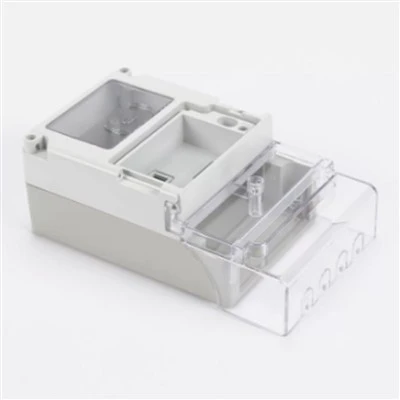
First, let’s ground this in what impact resistance actually means for molded parts. It’s not just surviving a single drop: it’s about two key metrics: tensile impact strength (how well a part withstands sudden, pulling forces) and notched Izod impact strength (how it performs under a concentrated, sharp force, which simulates things like a tool chip or a design feature like a notch in a housing). I’ve seen too many projects where a customer specifies “high impact plastic” but doesn’t define the loading condition, leading to parts that pass lab tests but fail in the real world. For example, a customer making a snow blower chute once insisted on a standard high-impact polypropylene (PP) for their first prototype, but when they tested it in -20°F weather, it shattered. Turns out, the impact event was a rock hitting the chute at 30 mph, not just a gentle drop, so we had to adjust more than just material. That’s why starting with matching your solution to the actual application is rule number one.
Now, the foundation of impact resistance is material selection—but not just picking a material with a high generic impact rating. Most standard impact data sheets are tested at 73°F, and performance drops sharply in extreme temperatures, under UV exposure, or with part geometry. For our snow blower client, we switched from homopolymer PP to a random copolymer PP with 15% ethylene co-monomer, and added a 2% maleic anhydride grafted polyolefin (MAH-g-PO) coupling agent. Wait—why? The ethylene co-monomer creates tiny, flexible domains in the PP matrix that absorb energy when stressed, and the coupling agent binds the PP to a 10% talc filler we used to add rigidity without brittleness. Before adding MAH-g-PO, the talc acted as stress concentrators, making cracks form more easily. That small additive changed the impact strength by 28% at -20°F, per our in-house impact testing. The takeaway here is: never rely on a material’s published impact rating without testing it under your part’s actual operating conditions, and don’t assume fillers and reinforcing agents only add rigidity—they can hurt impact if not properly bound to the polymer matrix.
Next, material processing is where even the best materials can fail. I’ve seen a customer send us a virgin resin that was rated for 5 ft-lb/in Izod impact, but when we molded it, it only hit 2.2 ft-lb/in, because they left the desiccant in the material bag and the resin absorbed moisture during transport. For hygroscopic materials like nylon, PET, or polycarbonate (PC), even 0.2% moisture content can create bubbles in the molded part that act as initiation points for cracks, cutting impact strength by up to 40%. That’s why at our shop, we have 12 dedicated drying hoppers, each calibrated to material: for nylon, we dry at 180°F for 4 hours, for PC at 250°F for 6 hours, and we test moisture content for every batch before processing, not just once a week. We also control melt temperature and injection speed based on the material’s chemistry. For example, PC needs a melt temperature of 520–550°F to flow properly without degrading, but if we go over 570°F, the polymer chains break down, reducing impact strength by 15% in as little as 10 minutes of barrel residence time. We track residence time with every job, and for long runs over 4 hours, we purge the barrel with virgin material to avoid degraded resin mixing with new batches.
Tooling and mold design are two areas that even experienced engineers overlook when optimizing impact resistance. I can’t tell you how many times we’ve received a mold from a customer that has a sharp corner or a thin wall transition, and that design feature alone cuts impact strength by 30%. Stress concentration is the enemy of impact, because a sharp corner creates a point where force is focused, leading to crack propagation. For a recent automotive door handle project, the initial mold had a 90° corner at the handle’s mounting point; we modified it to a 0.5mm radius, ran a flow analysis to confirm the mold would fill evenly, and saw the notched Izod impact jump from 3.8 ft-lb/in to 5.1 ft-lb/in—enough to meet the customer’s requirement of withstanding 10,000 door opening cycles. Another common mistake is variable wall thickness: if a part has a 3mm wall next to a 1mm wall, the thicker section cools slower, leading to sink marks and internal stress, while the thinner section is a natural weak point. We work with our customers to adjust part geometry to maintain a consistent wall thickness within 10% of each other, and add gentle radii to all transitions and corners. We also use ejector pin placement strategically—poorly placed ejector pins create localized stress that weakens the part, so we design them to distribute force evenly across the part’s surface, especially in high-stress areas.
In-mold processing parameters are where we make the biggest day-to-day gains for impact resistance, and it’s all about controlling cooling and packing pressure. Packing pressure is the force applied to the melt after it fills the mold, and it’s critical for reducing internal voids that act as crack starters. But too much packing pressure is just as bad as too little: over-packing creates residual internal stress in the part, which makes it more brittle and prone to cracking under impact. For most crystalline materials like PP or nylon, we use a packing pressure of 60–70% of the injection pressure, held for 10–15 seconds per inch of wall thickness, and we adjust it based on part size. For amorphous materials like PC, we use lower packing pressure (40–50% of injection pressure) because they’re less likely to shrink as they cool, and over-packing is more likely to cause stress. Cooling rate is another key factor: crystalline materials form larger, more ordered crystal structures when they cool slowly, which makes them stiffer but more brittle. When we need to improve impact, we adjust the mold temperature to cool crystalline materials slightly faster, which creates smaller, more uniform crystal structures that are more flexible and better at absorbing impact. For our PP snow blower chute parts, we raised the mold temperature from 80°F to 120°F for the first half of the cycle to slow cooling slightly, creating a more balanced crystal structure that improved impact strength by an additional 12% without sacrificing dimensional stability.
Post-mold finishing and secondary operations are often the final step, but they can either boost or ruin impact resistance, depending on how you handle them. Trim operations like cutting flash or gates, for example, can leave sharp edges or burrs that create stress concentrations, so we use precision CNC trimming or laser cutting for high-impact parts, and we deburr all edges with a medium-grit abrasive blast to create a smooth, rounded edge. We also avoid overusing sanding or polishing, which can thin the part wall in key areas. For parts that undergo secondary processes like painting or assembly, we test the bonding agent or adhesive to make sure it doesn’t chemically attack the part surface—some adhesives dissolve the surface layer of the molded part, creating micro-cracks that reduce impact strength by 20–25%. We always test adhesion samples for impact before full production, and we use surface preparation like plasma treatment only when necessary, because if done incorrectly, it can create brittle surface layers.
I want to be transparent about what doesn’t work for impact resistance too, because a lot of suppliers will push one-size-fits-all solutions that don’t apply. For example, adding more rubber modifiers to a material might seem like a quick fix, but too much rubber can reduce stiffness, leading to parts that flex instead of absorbing impact. I had a customer who added 25% ethylene propylene diene monomer (EPDM) to their PP, and while impact strength went up, the part was so soft it deformed under its own weight in high temperatures. That’s why our approach is always data-driven: every tweak—material, process, mold—gets tested in our in-house impact lab, using notched Izod and Charpy testing at different temperatures, to make sure it improves impact without compromising other critical properties like stiffness or dimensional stability.
At the end of the day, improving the impact resistance of injection molded parts isn’t about making expensive, over-engineered components—it’s about aligning every step of the process with the part’s actual use case. Whether you’re making a consumer electronics housing that gets dropped on concrete, a medical device part that needs to withstand sterilization cycles and accidental bumps, or an automotive component that needs to last 10 years under extreme road conditions, the right combination of material selection, process control, mold design, and post-mold finishing will get you there.
If you’re working on a project that needs consistent, reliable impact resistance, and you’re tired of parts that fail in testing or in the field, we’d be happy to partner with you to optimize your design and manufacturing process. We offer free part feasibility evaluations for all new projects, and our engineering team has decades of experience solving impact-related challenges across every industry. Reach out to our team today to start a conversation about your injection molded parts needs.
Plastic Bathroom Accessories References
- Rosato, D. V., Rosato, M. G. (2012). Injection Molding Handbook. Hanser Publications.
- Harper, C. A. (2002). Modern Plastics Handbook. McGraw-Hill.
- Crawford, R. J. (1998). Plastics Engineering. Butterworth-Heinemann.
- Izod Impact Testing Standard Test Method, ASTM D256-10 (2018). American Society for Testing and Materials.
- Charpy Impact Testing Standard Test Method, ASTM D6110-18 (2018). American Society for Testing and Materials.
- Paul, D. R., Newman, S. (1978). Polymer Blends, Volume 2. Academic Press.
Yongkang Shunjiang Plastic Products Co., Ltd.
As one of the most professional injection molded parts manufacturers and suppliers in China, we offer a wide range of products with superior quality. Please feel free to wholesale bulk customized injection molded parts from our factory. Also, pricelist is available.
Address: Kangzhuang Road, Xicheng Subdistrict, Yongkang City, Zhejiang Province, China
E-mail: 15158911623@163.com
WebSite: https://www.shunjiangplas.com/
