If you work in manufacturing, food processing, pharmaceuticals, or any industry that handles bulk dry solids, you’ve probably dealt with rotary airlock valves—you might even call them “rotary air locks” if you’re chatting with coworkers. But have you ever stopped to wonder why so many operations swear by automatic models instead of manual or basic variants? Let me break this down from the perspective of someone who’s been supplying these valves for over a decade, talking to plant managers, maintenance techs, and process engineers every week. Rotary Airlock Valve
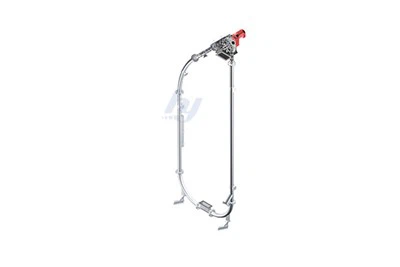
First, let’s get one thing straight: an automatic rotary airlock valve isn’t just a fancier version of the gate valves or manual rotary valves some small shops used to use. It’s a closed-loop system that balances two non-negotiables for any dry solid handling line: keeping air pressure from leaking (that’s the “airlock” part) and moving product from one section of your process to the next without spilling or contaminating batches. Manual valves require a tech to stand there, check the pressure gauge, adjust the gap between the rotor and housing, and clean it every shift—total waste of their time. Automatic models do all that on their own, and that’s just the start of the perks.
Let’s talk about pressure control first, because if your airlock doesn’t hold pressure, your whole process can go sideways. For example, if you’re in grain milling, you’re moving grain from a storage silo at 14 PSI into a cleaning room that’s at 12 PSI. A basic valve might leak pressure back into the silo, making your blower work 20% harder just to push product through. An automatic valve uses sensors—tiny, durable ones that can handle dust and vibration—to track pressure differentials in real time. If the pressure drops even 0.5 PSI, it adjusts the rotor’s gap automatically, instead of waiting for a tech to notice a dip. Last month, I worked with a feed mill in Iowa that switched from manual to automatic valves and cut their blower energy costs by $12,000 a year. That’s not a number I pulled out of thin air—they shared that exact save after three months of monitoring. No more wasted energy, no more sky-high utility bills, no more angry managers asking why the power use spiked.
Then there’s product integrity, which is make-or-break for food and pharma. I once had a call from a craft cereal company that was losing 5% of their cereal grain every batch because a manual valve would jam and spill product into the hopper, which meant they had to throw that batch out. Automatic valves come with built-in feature that sense when the rotor is getting clogged, then adjust speed or even reverse the rotor slightly to dislodge the gunk. No more jams, no more wasted product, no more cross-contamination risks from leftover old product in the valve housing. For pharma, that’s huge—even a tiny speck of the wrong active ingredient can ruin an entire batch, and automatic valves have better seals that prevent product from seeping into gaps where it can go bad over time. I’ve seen two pharma clients switch and reduce product waste by 8% and 11% respectively, just from that one feature alone.
Maintenance is another big win that most people overlook. Basic rotary valves require daily checks, weekly cleaning, and monthly gap adjustments—if you forget, you get leaks or jams, and a line shutdown can cost you $10,000 an hour easy. Automatic valves have predictive maintenance built in. They track how many hours they’ve run, how often they’ve had to adjust gap, and even alert you when a part is wearing out—before it breaks. A cement plant I supply to used to do full valve overhauls every 6 months; now they only do them once a year, because the automatic sensors flag minor issues before they turn into big problems. That cuts maintenance labor costs by 40% and eliminates unplanned line shutdowns, which is the bane of every plant manager’s existence. I can’t tell you how many times a plant has called me at 2 a.m. because a manual valve jammed, and their techs can’t fix it fast enough. Automatic valves don’t do that—they’re built to run 24/7, with only remote alerts if something’s off, so your team can handle it during regular work hours.
Wait, but what about cost upfront? I know some people look at an automatic valve and think, “That’s way more expensive than a basic one.” But let’s do the math. A basic manual valve might cost $1,500, installation $500, and maintenance $300 a month. An automatic valve is $3,500, installation $700, and maintenance $100 a month. Over 5 years, the basic one costs (1500+500) + (30060) = $20,000. The automatic one is (3500+700) + (10060) = $10,200. That’s a $9,800 savings. Plus, add in the energy savings, product waste savings, and no shutdown costs. It’s a no-brainer. I’ve had so many clients who were skeptical at first but came back a year later saying they should’ve switched years ago. That’s the thing about these valves—they pay for themselves in less than 12 months, usually.
Another thing people don’t talk about: adaptability. Modern automatic rotary airlock valves can sync with your existing process control system. So if you’re already using PLCs (programmable logic controllers) for your line, you can hook the valve up to that, so it communicates with other parts of the process. For example, if your screw feeder slows down because of a lull in product demand, the valve automatically slows too, instead of moving too much product and causing a backup. That makes your whole line run smoother, no more backups or overflow. I had a snack food company that switched and saw their line throughput go up 7% because of that sync—they were able to run more product through without having to adjust anything manually.
Don’t get me wrong, automatic valves aren’t perfect. They do need occasional calibrations, and if you’re working with super abrasive products (like aluminum powder or fiberglass), you might want a heavy-duty variant, but that’s true for any valve. The key is pairing the right automatic valve with your specific application, not just buying the cheapest one. That’s where I come in— I don’t just sell valves, I help clients figure out exactly what they need, based on their product, their line pressure, and their maintenance budget.

At the end of the day, the biggest advantage of an automatic rotary airlock valve is peace of mind. You don’t have to worry about pressure leaks, product waste, unplanned shutdowns, or your techs wasting time on manual adjustments. It runs reliably, saves you money, and keeps your process running smoothly. If you’re still using a basic rotary valve or manual airlock, it’s worth at least reaching out to chat—no pressure, just advice from someone who’s worked with these valves for years. If you’re ready to upgrade and see the savings for yourself, get in touch to discuss your needs.
Gravity Diverter Valve References
- American Society of Mechanical Engineers. Rotary Airlock Valve Performance Standards for Bulk Solids Handling. 2021.
- Food and Drug Administration. Current Good Manufacturing Practices (CGMPs) for Solid Dosage Forms. 2022.
- National Agricultural Aviation Association. Energy Efficiency in Grain Processing Equipment. 2020.
- Plant Engineering Magazine. Predictive Maintenance for Bulk Handling Systems. 2023.
- Powder and Bulk Engineering. 2024 Guide to Rotary Airlock Valves.
Shanghai Hanye Engineering Technology Co., Ltd.
As one of the most experienced rotary airlock valve manufacturers and suppliers in China, we offer a wide range of products with superior quality. We warmly welcome you to buy customized rotary airlock valve at competitive price from our factory. For more information, contact us now.
Address: Building 7, No. 428 Banqiao East Road, Shanyang Town, Jinshan District, Shanghai
E-mail: Windy@hanye-tech.com
WebSite: https://www.hanyeconveying.com/
