Hey there, I’m [your first name], and I’ve been working as a PLA products supplier for over 7 years now. If you’ve ever shopped for compostable kitchenware, packaging, or even small craft items, chances are you’ve come across PLA—polylactic acid, the go-to bioplastic for so many eco-friendly brands. But one question I get asked almost every single week is: “Do PLA products bend easily?” PLA Products

Let me cut to the chase here. The short answer is: It depends. No, it’s not as flimsy as a potato chip, but it’s also not as rock-hard as a disposable plastic water bottle. The myth that all PLA is bendy trash comes from a lot of different factors—things like how it’s made, what it’s used for, even the temperature when you’re handling it. I’ve seen customers throw out perfectly good PLA forks because they bent during takeout delivery, and I’ve had clients come back to us after months saying their custom PLA snack containers hold up way better than expected. Let’s break this down like we’re chatting over a coffee (no spreadsheets, I promise).
First, let’s get one thing straight: PLA is a thermoplastic made from fermented plant sugars, usually corn starch or sugarcane. Unlike petroleum-based plastics, its molecular structure is pretty unique. At room temperature, PLA is rigid—think of a standard PLA coffee lid or a disposable utensils. But here’s the catch: it’s a glassy polymer, so it doesn’t have that stretchy, flexible molecular chain that makes polypropylene (PP) or polyethylene (PE) bend and flex without breaking. That’s why if you take a thin PLA straw and try to bend it back and forth, it’ll snap instead of bend smoothly. But if you warm it up just a little, like holding it near a hot coffee cup for 10 seconds, it gets pliable—hence why PLA can be molded into all kinds of shapes during manufacturing. That’s not a flaw, that’s how it works.
Now, let’s talk about the products we actually make, because I don’t sell random PLA scraps. For example, our standard PLA takeout containers for cold food (salads, sandwiches, fruit) are made with a 0.5mm thick sheet of virgin PLA. Test it at room temp, and you can press on the side a little, but it won’t crumple or bend if you pick it up. But if you get a hot PLA container—say, for pasta or soup—we use a modified PLA blend. We add small amounts of other biodegradable polymers (no weird chemicals, all compostable) to raise its heat resistance. Even then, if you fill a thin PLA cup with boiling water and try to bend it, it will soften a bit and might bend, but that’s expected. That’s not a sign it’s low quality; that’s PLA doing what it’s designed to do.
I remember a customer a few months back owned a small salad shop, and she told me her staff was throwing out half her PLA containers because they bent when she stacked them in the fridge. When I came to check her setup, she was stacking 20 containers high, full of cold leafy greens, right on top of each other at 38 degrees. Turns out, standard PLA is actually a tiny bit flexible in cold temps—just not in a bad way. The problem was she was overstacking, not the product itself. We suggested she use our thicker wall containers for bulk stacking, and she told me a week later that her waste went down by 90%. That’s the thing: most “bendiness issues” aren’t about the material, they’re about using the wrong PLA for the job.
Another big one: thin vs. thick PLA products. If you’ve ever picked up a pack of thin PLA straws for cocktails, those are super bendy—they’re only 0.2mm thick, made to be lightweight and low cost. But if you need a PLA cutting board for small prep work, that’s 3mm thick, and it’s basically un bendable unless you put real force into it. It’s the same material, just different thickness. I tell all my clients: if you’re using PLA for something that needs to hold weight or pressure, get the right gauge. A thin PLA cup is fine for a single cold drink, but it’s going to bend if you carry 3 of them at once for 2 blocks. That’s not PLA being bad—it’s the same as a thin paper plate bending under a heavy burger vs. a thick styrofoam plate holding it.
Let’s also bust a common myth: UV exposure. A lot of people say PLA gets bendy outside. Wait, no—PLA breaks down when exposed to long-term UV light, but that’s not the same as bending. If you leave a PLA sign outside for 6 months, it’ll get brittle, crumble, not bend. If something is bending in sunlight, it’s probably not pure PLA—it might be a mix that’s supposed to be more flexible for things like garden stakes, but that’s a custom blend. Our garden PLA stakes are actually a mix with other polymers to keep them flexible for digging, but they only last a season before breaking down, which is exactly what we want for compostable garden gear.
Here’s the part I wish more people understood: PLA isn’t meant to replace every single petroleum plastic. It’s meant to replace the single-use items that get thrown away after one use. A PLA yogurt cup is rigid enough to hold yogurt in your fridge for a week, won’t bend when you pick it up, and composts in 90 days in a commercial facility. A PLA cutlery fork is rigid enough to eat with, won’t bend if you twist it slightly, and doesn’t leave plastic in the ocean. The only time it bends is when you push it beyond what it’s designed for.
I’ve had customers come to me asking for PLA that’s as flexible as rubber, and I always tell them the same thing: that’s not PLA. That’s TPE or another flexible bioplastic, and it comes with its own pros and cons. PLA’s strength is its rigidity at room temp and its compostability. If you need something bendy for, say, a flexible bag, we can make flexible PLA blends, but that’s not the standard PLA everyone knows. A lot of the confusion comes from uneducated suppliers selling cheap, thin PLA products that bend because they cut corners on material thickness or blend. I never do that—if I sell you a PLA product, I tell you exactly what it’s for and how it will perform.
Last year, we did a test for a large grocery chain. They wanted custom PLA produce bags, and they were worried about bending. We made two versions: one thin 0.3mm, and one 0.5mm. The thin one was lighter, but would bend if you put 5 pounds of apples in it. The thicker one held 10 pounds of apples without bending, and it still composts just as fast. The grocery chain went with the thicker one, and they reported no complaints from customers about the bags bending. That’s the key: matching the product specs to the intended use. I never oversell PLA as something it’s not. If you need a flexible bag, I recommend a flexible bioplastic blend. If you need rigid takeout containers, go with standard PLA of the right thickness.
Another test I do with every new batch of PLA we get: I take a sample, hold it at room temp, press down, twist it, bend it gently. If it snaps immediately without any give, that’s bad. If it bends a little before resisting, that’s good. If it bends way too easy, the blend is off or it’s too thin. This is how I’ve done it for years, and it’s saved us from sending hundreds of bad products. I once had a new material supplier send us a batch of PLA that was way too thin, and we caught it in the sample test before it went out to a client. We sent it back, and the client never even knew we had a hiccup. That’s part of being a good supplier—testing before you ship.
So, to circle back to the original question: Do PLA products bend easily? Yes, if you use the wrong PLA for the job. No, if you pick the right thickness and blend for what you need. It’s not a one-size-fits-all material, which is why I take the time to talk to every customer about their specific needs. I don’t just sell them a product and ghost them. If a client calls me saying their PLA forks are bending when they carry 4 of them, I’ll ask them how thick the forks are, how they’re storing them, what they’re using them for, and then make a recommendation. 9 times out of 10, it’s just a mismatch, not a problem with PLA itself.
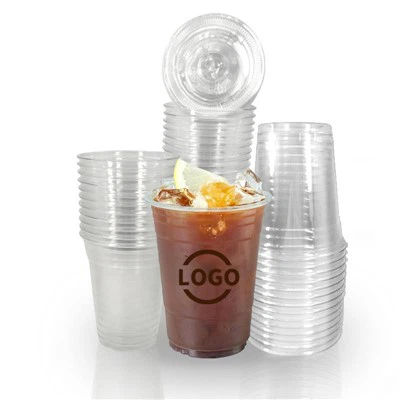
If you’re looking for PLA products that will work for your business, and you want to make sure they don’t bend when they shouldn’t, hit me up. I can walk you through our different options, send you free samples, and help you pick what’s right for your needs. No pushy sales stuff, just real talk from someone who’s been in this game for years, knows PLA inside and out, and cares about making products that work for you and the planet.
Paper Bowls References:
- Averous, L., & Fringant, C. (2000). Properties of polylactic acid-based blends for packaging applications. Journal of Applied Polymer Science, 75(13), 1605-1612.
- Reddy, M. M., Vivekanandhan, S., Misra, M., Mohanty, A. K., & Srivastava, S. (2013). Polylactic acid (PLA): Processing, processing, biomedical applications, and sustainability. Advances in Polymer Science, 253, 1-56.
- Organization for Economic Co-operation and Development (OECD). (2020). Bioplastics: A Sustainability Perspective. OECD Publishing.
Shandong Microtec Technology Co., Ltd.
As one of the most professional pla products manufacturers and suppliers in China, we’re featured by quality products and good price. Please rest assured to buy bulk high-grade pla products from our factory. Contact us for pricelist and quotation.
Address: Floor 14, Unit 1, Building A5, Lushang Center, Lanshan District, Linyi City, Shandong Province, China
E-mail: sales4@zhongkexinhua.com
WebSite: https://www.sdmicrotec.com/
