If you’ve ever stood on the floor of a plant, a construction site, or even inside the cabin of a large commercial truck, you’ve probably interacted with control cables without even realizing it. These thin, strong wires—whether operating a crane’s winch, guiding the throttle on a heavy-duty vehicle, or adjusting a damper in an industrial HVAC system—are the unsung workhorses of mechanical and electromechanical control. As a control cable supplier with 12 years of on-the-ground experience, one of the most common questions I get from engineers, project managers, and even do-it-yourself equipment builders is: What is the cross-sectional area of a control cable? Control Cable
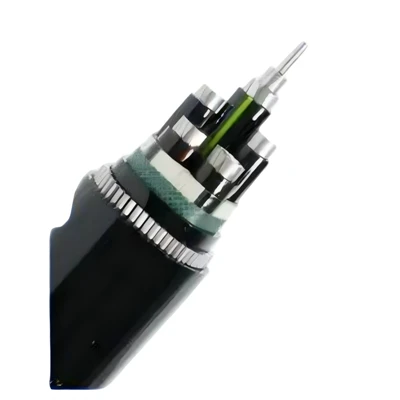
It’s a simple question, but the answer isn’t one number—it depends on what the cable is meant to do, the environment it will live in, and how much stress it has to handle day in and day out. Too small a cross-section, and the cable will stretch too much under load, snap unexpectedly, or wear out in months. Too big, and you’re wasting material, adding unnecessary weight, and making installation harder. Let’s break this down like I’d break it down for a customer walking into my shop, no jargon, no confusing formulas, just real-world context.
First, let’s define what we’re talking about when we say “control cable.” Unlike power cables, which carry electricity, control cables are mechanical. They’re made of multiple thin steel wires twisted together (called a strand) and then multiple strands twisted around a core to make a cable. The cross-sectional area here isn’t just a single number—it’s two key measurements: the total cross-sectional area of all the individual wires inside the cable, and the effective cross-sectional area of the cable itself as a whole, which includes the space between strands and any core material. Most of the time, when someone asks for cross-sectional area, they’re referring to the total metallic cross-section of the steel wires, because that’s what determines the cable’s strength and load capacity.
Let’s start with the basics of how cross-sectional area works for control cables. Each individual wire in the cable has a circular cross-section, so the area of one wire is calculated using the formula for the area of a circle: πr², where r is half the wire’s diameter. Multiply that by the number of wires in the cable, and you get the total metallic cross-sectional area. For example, a common small control cable we supply for light-duty applications (like controlling a boat’s throttle or a farm equipment’s clutch) is a 7×19 construction: 7 strands, each made of 19 thin wires. If each of those wires is 0.4mm in diameter, the area of one wire is π*(0.2mm)² = ~0.1257 mm². Multiply by 133 total wires (7*19), and you get a total cross-sectional area of ~16.7 mm². That works out to a cable roughly 2.5mm in outer diameter, which is perfect for low-load, frequent-movement applications.
For heavier-duty jobs—like the control cables that operate a construction crane’s load line or a mining truck’s brake system—we use thicker wires and more strands. A heavy-duty cable for these applications might be a 1×37 construction, meaning 37 solid strands twisted around a core, or a 6×37 + IWRC construction: 6 outer strands, each of 37 wires, twisted around an Independent Wire Rope Core (IWRC), which adds extra strength and prevents the cable from stretching too much. A common cross-sectional area for these heavy cables is anywhere from 50 mm² up to 200 mm², depending on the maximum load they need to handle. Let’s do that math: a cable with 6 strands, each 37 wires, each wire 1mm in diameter: area of one wire is π*(0.5mm)² = ~0.785 mm². 6*37 = 222 wires, so total area is 222 * 0.785 = ~174 mm². That cable has an outer diameter of around 16mm, and can handle a breaking load of over 15,000 Newtons—more than enough to lift a 1,500kg load, which is exactly what we need for crane and heavy truck applications.
But here’s the thing: cross-sectional area isn’t just about strength. The way the wires are twisted, and the core of the cable, changes everything. If two control cables have the same total metallic cross-sectional area, but one has a fiber core and the other has a steel core, their performance will be very different. The steel core (IWRC) adds rigidity and reduces stretch, so even if the total area is the same, the IWRC cable will have a higher working load limit. That’s why when a customer comes to me asking for a cable of a certain cross-sectional area, I always ask them two follow-up questions: what’s the maximum static load the cable will carry, and what’s the dynamic load, meaning how much will it move, bend, or cycle over its lifetime?
Let’s use real examples from customers I’ve worked with over the years. Last year, a small agricultural equipment manufacturer came to us because their existing control cables for a new line of hay balers kept breaking after only a few months of use. They’d ordered a cable with a total cross-sectional area of 12 mm², 7×19 construction, for operating the baler’s knotter system. But their application required a lot of frequent, sharp bending—each time the knotter cycled, the cable bent around a pulley, and the small wires in their 12 mm² cable couldn’t handle the repeated flexing. The thin wires fatigued and snapped. We recommended the same 7×19 construction, but with a cross-sectional area of 18 mm²—thicker wires, spaced a bit more, so they could bend without breaking. That customer has been using our cables for three years now, and they haven’t had a single failure related to the cable.
Another example: a municipal water treatment plant needed control cables to operate the large sluice gates that regulate water flow between tanks. These gates move slowly, but under extremely high static load—each gate weighs 12,000kg, so the control cable has to hold that weight without stretching. They initially asked for a 150 mm² cross-sectional area cable, but we explained that a fiber core cable with 150 mm² area would stretch too much under the static load, making the gates hard to position accurately. Instead, we supplied a 120 mm² total metallic cross-sectional area cable with an IWRC core. The steel core added rigidity, so the stretch was less than 0.5% under full load, which was exactly what the plant needed for precise gate positioning. The customer saved 20% on material costs too, since they didn’t have to go with a larger cross-section to get the rigidity they needed.
Environment is another big factor that affects cross-sectional area requirements. If a cable is going to be exposed to saltwater, extreme cold, or harsh chemicals, you need a larger cross-section to account for corrosion. Over time, corrosion eats away at the steel wires, reducing their effective cross-sectional area and their strength. For a boat’s throttle control, which is exposed to saltwater, we often recommend a cable with a slightly larger cross-section, or made with stainless steel wires, to compensate for corrosion. A 2.5mm diameter galvanized steel cable might last 5 years on a boat, but a 3mm diameter stainless steel cable will last 10 years, even in saltwater. That extra cross-section isn’t just a luxury—it’s a way to extend the cable’s service life in harsh conditions.
Now, let’s talk about how to calculate the right cross-sectional area for your specific application, because I don’t just give customers a number and send them on their way. First, you need to know the working load limit (WLL) of the cable. The WLL is usually 1/5 of the cable’s breaking strength, which is the maximum load the cable can handle before breaking. So if your application requires a working load of 2,000 Newtons, the breaking strength needs to be at least 10,000 Newtons. Then, you can look at the manufacturer’s data sheets for control cables to find what cross-sectional area gives that breaking strength. For example, a 7×19 galvanized steel cable has a breaking strength of approximately 800 Newtons per mm² of cross-sectional area. So to get a breaking strength of 10,000 Newtons, you’d need around 12.5 mm² of cross-sectional area—so you’d go with the next standard size, 13 mm², to be safe.
But there are safety factors to consider too. We always use a safety factor of 5 for most control cable applications, but if the cable is for a life-critical system—like a brake control on a heavy truck or a crane’s load control—we use a safety factor of 8 or 10. That means if your working load is 2,000 Newtons, the breaking strength needs to be 16,000 to 20,000 Newtons, which would mean a cross-sectional area of 20 to 25 mm². That extra cross-section might seem like overkill, but when a cable failure can cause injury, property damage, or even loss of life, it’s worth every extra millimeter.
I’ve seen too many customers cut corners on cross-sectional area to save a few bucks, and it almost always comes back to bite them. A few years ago, a small construction company came to us asking for cheap control cables for their new line of mini excavators. They ordered cables with a cross-sectional area of 10 mm², for the bucket control, instead of the 15 mm² we recommended. Within six months, two of their excavator cables snapped while digging in hard rock, causing $20,000 in damage to the equipment and several days of downtime. They ended up having to replace all 12 of their cables with our 15 mm² model, costing them twice as much as if they’d ordered the right size in the first place. That’s why I always stress to customers that cross-sectional area isn’t just a technical spec—it’s an investment in reliability and safety.
Another thing that’s often overlooked is the difference between total cross-sectional area and effective cross-sectional area. The total metallic area is what we calculate for strength, but the effective area of the cable as a whole is smaller because of the gaps between strands and the core material. For example, a 7×19 cable has a total metallic cross-sectional area of about 85% of its outer circular area, because the gaps between strands take up the rest of the space. So when a customer asks for a cable that fits into a 3mm pulley, the outer diameter of the cable is what matters, not the total cross-sectional area. That’s why we always provide both measurements in our product specs, so customers can choose the right cable for their pulleys and mounting points, while also getting the strength they need.
Let’s wrap this up with a quick guide to choosing the right cross-sectional area, based on common applications:
- Light-duty applications: Boat throttles, small farm equipment clutches, door controls. Cross-sectional area: 5 to 15 mm². These cables have low working loads (under 2,000 Newtons) and are designed for frequent, smooth movement.
- Medium-duty applications: Construction equipment controls, HVAC dampers, truck throttle and brake controls. Cross-sectional area: 15 to 50 mm². These cables handle moderate loads and repeated bending, so we use 7×19 or 6×19 construction for durability.
- Heavy-duty applications: Crane load controls, mining equipment brakes, large sluice gate controls. Cross-sectional area: 50 to 200 mm². These cables handle high static or dynamic loads, and we almost always use IWRC cores for rigidity and low stretch.
- Harsh environments: Saltwater, extreme cold, chemical exposure. Add 20 to 30% to the cross-sectional area you’d normally use, or go with stainless steel wires, to account for corrosion.

At the end of the day, the question “what is the cross-sectional area of a control cable?” doesn’t have a single answer—it’s tailored to your specific needs. Too small, and you’ll deal with frequent failures and downtime. Too big, and you’ll waste money on material that doesn’t add value. As a control cable supplier with decades of experience working with everyone from hobbyists to Fortune 500 industrial companies, I’ve helped hundreds of customers find the right cross-sectional area for their applications, balancing strength, durability, cost, and environment. If you’re not sure what size you need, don’t guess—reach out, send me the details of your application, and I’ll help you get the right control cable for the job. Whether you need a single cable for a small project or hundreds for a large construction site, we have the expertise and the products to meet your needs.
Flexible Cable References
American National Standards Institute. (2020). Standard for Wire Rope and Strand for General Engineering Applications. ANSI B29.17.
International Organization for Standardization. (2019). Steel Wire Ropes for Mechanical Control Systems. ISO 2408:2019.
Manufacturers Standardization Society. (2021). Control Cable Design and Application Guide. MSS SP-95.
Anhui Huawang Cable Co., Ltd.
As one of the most professional control cable manufacturers and suppliers in China, we also support customized service. If you’re going to buy discount control cable, welcome to get pricelist from our factory. Quality products and reasonable price are available.
Address: No. 32, East Street, Batian Street, Datong Town, Tianchang City, Anhui Province
E-mail: Linda@huawangcable.com
WebSite: https://www.huawang-cable.com/
